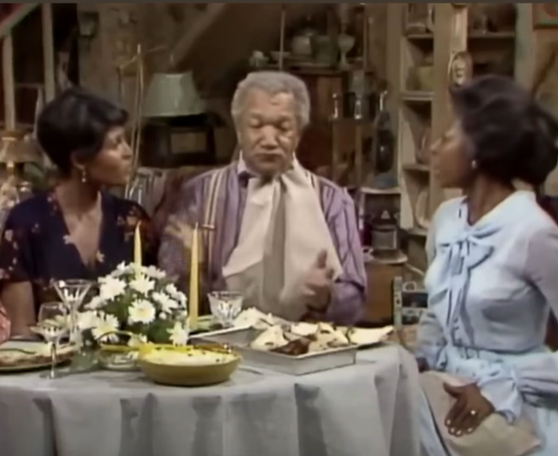
Fred Sanford, the irascible yet lovable patriarch of the iconic classic television series Sanford and Son, is a character whose foolhardy moments have become etched in the memories of vintage comedy enthusiasts for generations.
Played by the incomparable Redd Foxx, Fred’s antics combined sharp wit, slapstick, and a unique brand of gruff tenderness that made his “foolish” behavior not just funny but deeply endearing.
Among the many times Fred demonstrated his knack for acting like a fool, there are some standout moments that capture all the elements that made the show a timeless comedy classic.
At the heart of Fred Sanford’s comedic appeal is the clever way the show balanced his stubborn, often cantankerous personality with a vulnerability that viewers could relate to.
His foolish actions were never just random slapstick; they usually stemmed from his larger-than-life personality, his relentless schemes to get ahead, or his stubborn refusal to admit defeat in the face of trouble.
This combination of pride and folly created a rich ground for humor that transcended just simple gags.
For fans of classic television, watching Fred fumble his way through a situation was as much about the character’s humanity as it was about the comedy.
One of the most memorable aspects of Fred’s foolishness lies in the show’s use of physical comedy paired with razor-sharp dialogue.
Fred’s facial expressions, exaggerated body movements, and comedic timing helped turn simple setups into iconic TV moments.
Classic television fans appreciate how Redd Foxx could deliver a line dripping with sarcasm and then follow it up with a hilarious pratfall or a mock display of distress.
These layers of physical and verbal comedy made every instance of Fred acting foolish a complete experience, drawing viewers not only into laughter but also into the world of his colorful personality.
Another reason Fred’s foolish moments remain so cherished in TV nostalgia circles is the way they often highlighted the dynamic between Fred and his son, Lamont.
Their father-son relationship was the emotional backbone of the show, and Fred’s foolishness was frequently a source of comic tension and warmth.
Whether Fred’s antics frustrated Lamont or taught him unexpected lessons, those interactions added complexity to what might otherwise have been simple comedic routines.
The interplay between Fred’s old-school stubbornness and Lamont’s practical sensibilities created a formula that guaranteed both humor and heart.
The appeal of Fred acting like a fool also lies in the universal truth of the situations he found himself in.
Despite the show’s specific setting—a junkyard in Los Angeles during the 1970s—many of Fred’s blunders and schemes reflected broader themes of human folly: the struggle to get ahead, the pride that blinds, and the stubbornness that keeps people in their own trouble.
This timeless humor resonates deeply because viewers can see shades of their own experiences or those of people they know.
This relatability, combined with Foxx’s brilliant comedic performance, is why such scenes remain evergreen.
It’s worth noting the cultural significance of Fred Sanford’s foolishness as well.
As a comedy legend, Redd Foxx broke boundaries with this role, bringing to life a character that was both fiercely proud and unapologetically flawed.
Fred’s foolish behavior was not only a source of comedy but also a commentary on family dynamics, social hardships, and everyday resilience.
For many viewers, these moments offered a sense of validation and laughter in the face of life’s difficulties, which is a hallmark of the best classic television comedy.
In examining the top times Fred acted like a fool, one cannot overlook the emotional tone that underpins these instances.
Fred’s foolishness was rarely mean-spirited or malicious; instead, it was laced with a kind of self-deprecating charm that made it impossible not to root for him, no matter how ridiculous the situation.
This emotional connection amplifies the humor, inviting the audience to laugh with Fred rather than at him.
The comedy takes on a poignant quality that reinforces why Fred’s character and his antics are so memorable in the collective TV nostalgia of comedy lovers.
Moreover, the setups leading to Fred’s foolish behavior were crafted with a sharp understanding of comedic tension.
The scenarios often started with Fred’s confidence in a half-baked idea, quickly spiraling into chaos as his plans unraveled spectacularly.
The audience was taken on a roller-coaster of anticipation and surprise, which is a key ingredient in timeless humor.
The best comedy moments come from watching a character’s misplaced confidence clash with reality, and Fred Sanford embodied this perfectly through his foolhardy exploits.
What also distinguishes Fred’s foolish moments is the blend of contemporary social commentary wrapped in humor.
The show used Fred’s blunders to spotlight issues like economic hardship, generational gaps, and African American urban life in a way that was accessible and funny but also meaningful.
This multilayered approach is often why veteran comedy fans return to Sanford and Son, as each scene can be enjoyed both on the surface as a laugh-out-loud moment and on a deeper level as a piece of social storytelling.
Fred Sanford’s acting like a fool holds a special place in the realm of vintage comedy, particularly because it never feels forced or out of character.
It flows naturally from who Fred is—a man full of contradictions, boasting brashness, cleverness, and a generosity of spirit that shines through even his worst misjudgments.
For classic television aficionados, these moments are prime examples of how character-driven comedy achieves an enduring legacy, blending humor with heart and cultural relevance.
Lastly, these memorable TV moments featuring Fred’s antics have a replay value that keeps them alive through reruns and streaming services.
Fans of comedy legends often revisit these scenes to experience that perfect mix of comic timing, sharp writing, and authentic performance.
Watching Fred act like a fool is not just about the laugh in the moment, but about celebrating a golden era of television when simple setups produced rich, layered humor.
These scenes serve as a testament to why Sanford and Son remains one of the crown jewels of classic television comedy.
In the end, Fred Sanford’s top foolish moments remind us why vintage comedy can be both endlessly entertaining and emotionally resonant.
His unique blend of physical comedy, sharp dialogue, and heartfelt character work combines to create moments that are as funny today as they were decades ago.
Fans seeking a joyful glimpse into timeless humor and memorable TV moments will always find Fred’s antics a perfect illustration of why Sanford and Son deserves its place in television history.
Fred Sanford acting like a fool is much more than just slapstick or simple folly; it is a celebration of complex character work, cultural significance, and the enduring power of laugh-out-loud, heartwarming comedy that continues to delight audiences old and new.
For those who cherish classic television and vintage humor, revisiting these moments is like reconnecting with old friends who still know how to make us laugh through life’s ups and downs.