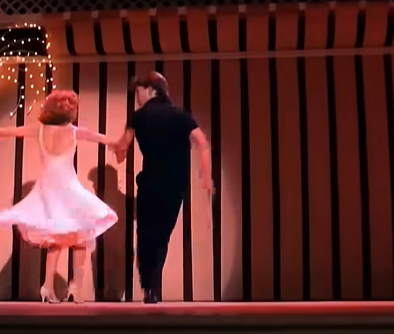
Some movie scenes entertain us for a moment, while others stay in our memories forever. The final dance in Dirty Dancing belongs to the second category. Featuring the unforgettable chemistry between Patrick Swayze and Jennifer Grey, this iconic sequence transformed a romantic drama into a cultural phenomenon. Decades after the film first reached theaters, audiences still recognize the music, the dance moves, and the legendary lift that brings the story to an exhilarating conclusion.
Released in 1987, Dirty Dancing became one of the most beloved romantic films of its generation. Its combination of romance, music, personal growth, and spectacular dancing continues to attract new audiences. But what makes the final performance so special is not simply the choreography. It is the emotional journey behind every movement.
A Story About Finding Your Voice
The film follows Frances “Baby” Houseman, played by Jennifer Grey, a young woman spending the summer with her family at a resort in the Catskills. At the beginning of the story, Baby is inexperienced, idealistic, and eager to make a difference in the world.
Her life changes when she meets Johnny Castle, played by Patrick Swayze, a talented dance instructor whose confidence hides personal struggles and uncertainty about his future.
Johnny and Baby come from different backgrounds. Johnny has spent years developing his dancing skills and navigating a world filled with difficult choices. Baby, meanwhile, has grown up with the expectations and protections of her family.
As they begin dancing together, their relationship develops into something deeper. Baby learns that the world is more complicated than she once believed, while Johnny discovers that someone genuinely believes in him.
Their partnership becomes a journey of trust, courage, and self-discovery.
The Music That Brings Everything Together
Music is one of the defining elements of Dirty Dancing. The soundtrack blends memorable songs with choreography that communicates emotions words cannot fully express.
The final dance is especially powerful because it brings together the film’s themes of freedom, confidence, and connection. Every movement reflects how much the characters have changed throughout the story.
The music builds excitement while allowing the performers to demonstrate their individual strengths. Johnny’s experienced, controlled movements contrast with Baby’s growing confidence and enthusiasm.
Their dance no longer feels like a teacher guiding a student. Instead, it becomes a performance between two people who have learned to trust each other.
The audience understands that Baby is no longer the uncertain young woman who first entered Johnny’s world. She has developed the courage to stand up for herself and express who she truly is.
This emotional transformation gives the final dance meaning beyond its impressive choreography.
Patrick Swayze: The Charisma of Johnny Castle
Patrick Swayze’s performance as Johnny Castle helped make the character one of the most recognizable romantic leads in film history.
A trained dancer with a strong background in movement, Swayze brought authenticity and confidence to the role. His dancing combines precision, athleticism, and natural charisma, making Johnny appear both powerful and graceful.
Yet the character’s appeal goes beyond his physical abilities. Johnny is proud, hardworking, and sometimes guarded because he has experienced disappointment and judgment.
His relationship with Baby challenges his assumptions about people and encourages him to believe in himself again.
During the final performance, Swayze’s confident presence creates a striking contrast with the film’s earlier moments of tension. Johnny finally has the opportunity to demonstrate his talent openly, without allowing other people’s opinions to define him.
His performance helps transform the dance into a celebration of personal freedom.
Jennifer Grey: Baby’s Transformation
Jennifer Grey gives Baby a distinctive combination of innocence, determination, and emotional sincerity.
At first, Baby is uncertain about her abilities and unfamiliar with Johnny’s world. As the story progresses, however, she becomes more confident and willing to challenge expectations.
Learning to dance requires patience, discipline, and trust. Baby makes mistakes, struggles with difficult movements, and discovers that improvement takes time.
These experiences make her final performance particularly satisfying.
By the time the climactic dance arrives, Baby has earned her place beside Johnny. She is no longer simply following instructions. She has become an active partner who understands the rhythm, trusts her abilities, and embraces the moment.
Grey’s performance makes the character’s development believable, allowing audiences to celebrate Baby’s achievement as much as the romance itself.
The Legendary Lift That Everyone Remembers
Few moments in romantic movie history are as recognizable as the final lift in Dirty Dancing.
The choreography culminates in a spectacular movement in which Johnny lifts Baby above him, creating an image that has become synonymous with the film.
The lift is visually impressive, but its emotional meaning makes it even more memorable.
Earlier in the story, Baby must overcome uncertainty and learn to trust Johnny. The final movement represents the confidence they have developed together. She commits to the moment, and he supports her.
The result is a breathtaking combination of athletic skill, timing, preparation, and trust.
The scene also rewards the audience for following the characters’ journey. The dance is not simply a surprise added for excitement. It represents the culmination of their work and personal growth.
That is why the moment continues to inspire dance recreations, tributes, and affectionate references throughout popular culture.
“Nobody Puts Baby in a Corner”
The famous line “Nobody puts Baby in a corner” has become one of the most recognizable quotes associated with the film.
When Johnny returns for the final performance, he refuses to