Sanford and Son remains one of the brightest gems in the crown of classic television and vintage comedy.
Beyond the razor-sharp wit and the unforgettable father-son duo, the show’s costumes played an often-underappreciated role in framing its humor and character dynamics.
When fans reflect on Sanford and Son’s best costumes, they are really tapping into a visual language that enhanced the timeless humor and memorable TV moments the show delivered week after week.
The costumes helped to define the characters in a way that was both authentic and endlessly amusing.
At the heart of Sanford and Son’s costuming was simplicity married with a subtle flair for comedy.
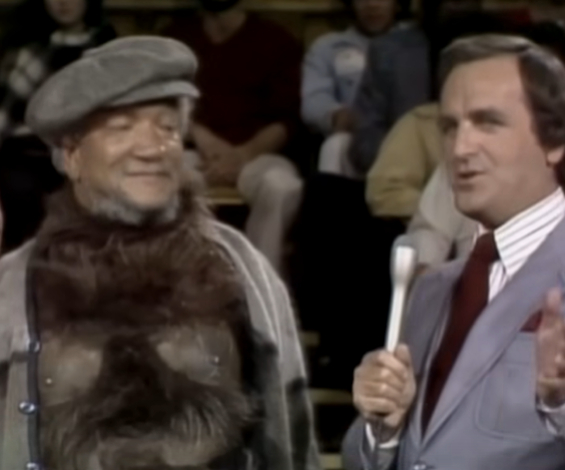
Fred Sanford, portrayed by the incomparable Redd Foxx, often donned outfits that perfectly complemented his cantankerous, no-nonsense personality.
His signature attire—usually wrinkled jackets, mismatched ties, and worn hats—reinforced his character’s blue-collar, scrappy essence.
The weathered look of his clothing intensified the show’s working-class milieu, letting viewers step right into the world of a junk dealer hustling day to day in South Central Los Angeles.
This grounding in reality made the comedic twists all the more relatable and funny for audiences.
Meanwhile, Lamont, Fred’s more polished and conscientious son, often wore attire that was a direct contrast to his father’s gruff ensemble.
His cleaner, more put-together style visually communicated his attempts at upward mobility and his role as the pragmatic counterpart to Fred’s irascible antics.
This costume distinction was not just a fashion choice, but a visual shorthand that underscored the show’s recurring theme of generational clash and family loyalty.
The contrast in their attire made their comedic exchanges sharper and more vibrant, drawing the viewer into their dynamic through both style and substance.
One of the enduring qualities of Sanford and Son’s wardrobe was how it captured the era’s cultural flavor without veering into cliché or caricature.
The costumes reflected actual street fashion from the 1970s, which helped the series resonate with its audience and maintain a genuine feel.
Vintage comedy often risks turning characters into stereotypes when relying solely on dress, but Sanford and Son’s approach was nuanced, letting the outfits enhance the personality and situation rather than define it outright.
This subtlety contributed to the show’s timeless appeal—a hallmark of classic television where details like costumes can age gracefully, adding to rather than detracting from the nostalgic experience.
Additionally, the costumes worked hand-in-hand with the show’s sharp dialogues and physical comedy.
For example, Fred’s often ill-fitting jackets and hats would sometimes become props themselves, lending visual humor to his comedic timing.
Whether it was a hat askew after a comedic mishap or a jacket that seemed two sizes too small, these small but intentional touches became part of the show’s signature humor.
It’s a reminder of how clothing in television isn’t just decoration; it’s integral to character and comedy.
These elements invite viewers to revisit the show, appreciating how visual cues contributed to the laughter and emotional beats.
The visual humor bred by Sanford and Son’s costuming also enhanced the show’s emotional tone.
At first glance, Fred’s somewhat shabby attire might seem merely funny or rough around the edges, but there’s a warm, human quality underneath.
His costumes helped communicate his role as a man who bickered fiercely with his son but ultimately cared deeply.
This balance of humor and heart is a hallmark of vintage comedy that endures because it reflects real-life complexities with warmth and wit.
The costumes made Fred approachable, flawed, and lovable—qualities that deepen viewer connection and elevate memorable TV moments into lasting cultural memories.
Moreover, nostalgia plays a huge role in why these costumes remain so cherished by fans of classic television.
Whether it’s the instantly recognizable brown jacket or Lamont’s clean-cut shirts, the clothing acts as a visual time capsule.
It’s not just about laughter but also about revisiting a very specific slice of Americana that feels both distant and comfortingly familiar.
For those who grew up watching Sanford and Son or discovered it later, the costumes evoke a sense of TV nostalgia that brings back the simple pleasure of tuning into comedy legends delivering timeless humor.
This emotional resonance is part of what keeps the show alive in popular culture decades after its original run.
One cannot discuss Sanford and Son’s costumes without acknowledging their comedic versatility.
The show often used outfits as part of situational setups—disguises, party attire, or the occasional unexpected fashion mishap—which added an extra dimension to the humor.
These moments allowed the actors to play off the visual incongruity of the costumes, creating scenes where comic tension was heightened by the clothing choices.
Such scenes often balance between slapstick and situational comedy, showcasing the performers’ skill in blending physical humor with witty dialogue.
This, in turn, reinforces the importance of wardrobe as more than just visual filler but as an active participant in the show’s comedy.
The chemistry between Redd Foxx and Demond Wilson was already electric, but the costumes they wore enhanced their character dynamics in subtle but meaningful ways.
While the writing and performances took center stage, the costumes helped orient viewers instantly, letting them understand the characters’ personalities and social aspirations through visual storytelling.
This was especially significant in a time when television was still developing the visual grammar of sitcoms, and Sanford and Son’s approach can be seen as reflective of the evolving style of character-driven vintage comedy.
Their wardrobes moved beyond simple clothing, becoming iconic symbols linked to identity, humor, and familial interaction.
In the long run, revisiting Sanford and Son’s best costumes offers a rich well of insight into how vintage comedy creates enduring moments.
It wasn’t just the laughs or the sharp commentary on family and social issues—it was also how the costumes carefully framed each character, giving viewers a visual anchor to the comedy.
The worn jacket, the contrasting styles between father and son, and the era-appropriate fashion all contribute layers that make the series continually enjoyable to watch, study, and celebrate.
It’s a reminder that comedy legends like Sanford and Son were masterful in every aspect of production, weaving humor seamlessly with cultural context, emotional truth, and visual storytelling.
For fans of classic television and timeless humor, Sanford and Son’s costumes remain a delightful aspect to examine.
They stand as more than just clothing—they are key parts of what made the show’s humor so vivid and the characters so memorable.
Each jacket and hat, each contrasting outfit, helped build a world where comedy could flourish naturally, grounded in everyday struggles and love.
This makes revisiting those iconic looks not just an exercise in nostalgia but a lesson in how costume design enriches storytelling and evokes laughter across generations.
In conclusion, Sanford and Son’s best costumes are a brilliant example of how attire in classic television does more than clothe characters—it amplifies the humor, deepens emotional connections, and anchors timeless comedy in reality.
These costumes remain a vital part of the show’s legacy, inviting new and old fans alike to appreciate the thoughtful, funny, and heartfelt ways fashion can shape vintage comedy.
Whether you’re watching for the first time or returning for the hundredth, the wardrobe of Sanford and Son continues to shine as a defining piece of TV nostalgia and memorable TV moments that keep the laughter alive.