ONCE UPON A TIME IN THE WEST (1968): HARMONICA’S GAZE AND THE REQUIEM FOR THE OLD WEST
In the history of cinema, director Sergio Leone completely redefined the Western genre through a signature visual language characterized by extreme close-ups, sweeping widescreen compositions, and a mesmerizing storytelling rhythm<!–>–><!–>. His 1968 masterpiece Once Upon a Time in the West (Italian: C’era una volta il West) represents the absolute zenith of his career and stands as one of the greatest films ever made–><!–>–><!–>. At the center of this cinematic epic is Harmonica (Charles Bronson)—an iconic figure defined by his haunting gaze, mysterious origins, and an inescapable, lifelong blood feud–><!–>–><!–>. –>
1. CHARLES BRONSON’S GAZE AND LEONE’S VISUAL LANGUAGE
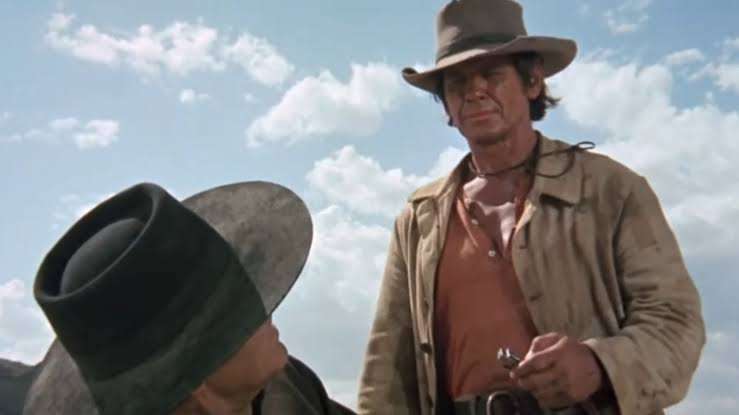
Charles Bronson’s weathered facial features, rugged skin, and razor-sharp grey eyes captured in this iconic close-up embody the purest essence of Sergio Leone’s artistic vision<!–>–>: <!–>
- The Art of the Extreme Close-Up: Leone famously brought the camera lens right up to his characters’ faces, capturing every furrowed brow, bead of sweat, and unspoken tension held within their eyes–><!–>–><!–>. Without uttering a single word, Harmonica’s intense, unblinking stare conveys cold determination, stoic resilience, and the crushing weight of a tragic past–><!–>–><!–>. –>
- The Power of Silence: Harmonica speaks very few lines throughout the film<!–>–>. His true language is his eyes, his lightning-fast draw, and the mournful, ominous notes he blows on his iron harmonica<!–>–>. <!–>
2. THE HAUNTING MELODY AND INEVITABLE RETRIBUTION
The caption featured in the clip—“The Punishment Cannot Be Avoided – Once Upon A Time In The West”—distills Harmonica’s sole driving purpose in life–><!–>–><!–>: –>
- A Spectral Presence: Harmonica wanders across the desolate desert plains like an emissary of fate<!–>–>. Wherever he appears, the wail of his instrument serves as a chilling reminder that retribution awaits those who have committed heinous acts<!–>–>. <!–>
- The Childhood Trauma: Throughout the narrative, Harmonica’s true identity and motive remain a complete mystery to the ruthless assassin Frank (Henry Fonda)–><!–>–><!–>. Only during their final showdown is the tragic backstory revealed: as a boy, Harmonica was forced by Frank to hold a harmonica in his mouth while supporting his own brother on his shoulders beneath a hanging gallows until his legs gave out–><!–>–><!–>. –>
- Impartial Justice: The climactic shootout is not merely a duel between two skilled gunfighters, but the ultimate moment where justice and inescapable punishment crash down upon the wicked after decades of patient waiting<!–>–>. <!–>
3. A CINEMATIC SYMPHONY: LEONE AND ENNIO MORRICONE
The enduring magic of Once Upon a Time in the West stems from the seamless synergy between Sergio Leone’s visual mastery and Ennio Morricone’s legendary score–><!–>–><!–>: –>
- Character Motifs (Leitmotif): Morricone composed a unique, rasping harmonica theme specifically for Bronson’s character<!–>–>. This melancholy motif contrasts sharply with Frank’s harsh electric guitar riffs, escalating the dramatic tension to a fever pitch<!–>–>. <!–>
- Elevating the Narrative: Morricone’s music infuses every close-up of Bronson’s face with epic weight, making every subtle twitch of his eye feel like a moment of historic destiny–><!–>–><!–>. –>
4. THEMATIC DEPTH AND CINEMATIC LEGACY
Unlike standard commercial Westerns, Once Upon a Time in the West delves deeply into the philosophical death of an era<!–>–>: <!–>
- A Requiem for the Frontier: The arrival of the transcontinental railroad signifies the demise of the classic Western gunslinger–><!–>–><!–>. Both Harmonica and Frank represent the final relics of an old world—a world where disputes were settled by personal grit and the pull of a trigger–><!–>–><!–>. –>
- Inspiration for Modern Filmmakers: Leone’s iconic facial close-ups and sound editing techniques became a foundational blueprint for modern directors, including Quentin Tarantino, Martin Scorsese, and Christopher Nolan<!–>–>. <!–>
- Cross-Generational Appeal: Highlights featuring Harmonica continue to draw millions of views across digital platforms, proving that genuine artistic brilliance remains timeless (#OnceUponATimeInTheWest, #CharlesBronson, #WesternStars)–><!–>–><!–>. –>
SUMMARY
Charles Bronson’s weathered visage and haunting gaze in Once Upon a Time in the West (1968) remain an immortal pillar of cinema history<!–>–>. By combining masterful close-up cinematography, legendary musical themes, and a deeply resonant story of vengeance, the film captures the wild beauty, tragic pain, and inescapable retribution of the mythical American West<!–>–>.