More than three decades after Lonesome Dove first appeared on television, something remarkable has happened.
The horses have aged into memory. The endless frontier it portrayed belongs to another century. Many of the faces associated with that era of television have grown older or disappeared altogether.
Yet Gus McCrae and Woodrow Call still feel strangely alive.

For millions of Western fans, returning to Lonesome Dove does not feel like simply rewatching an old television miniseries.
It feels like visiting old friends.
And perhaps that is the real reason this 1989 epic continues to matter.
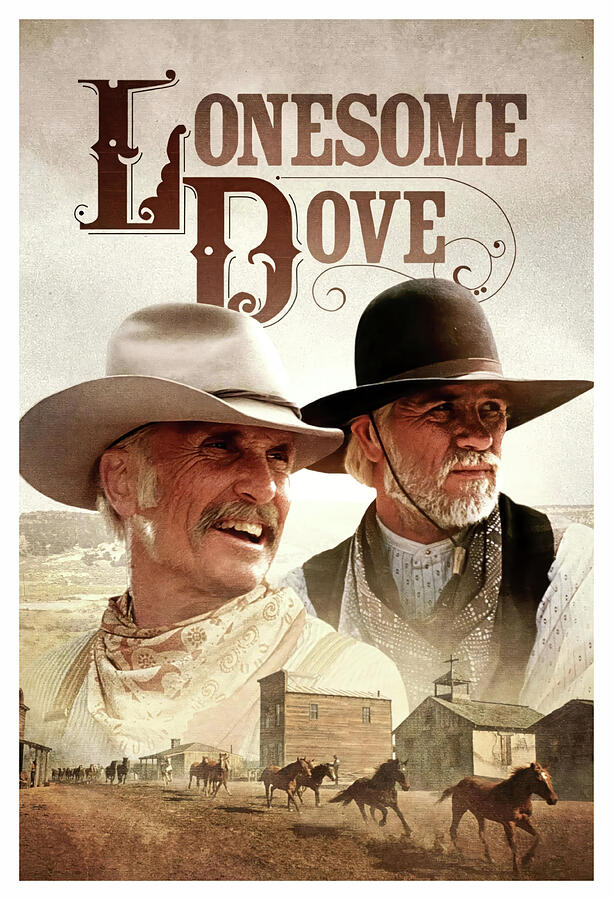
Based on Larry McMurtry’s celebrated novel, Lonesome Dove follows former Texas Rangers Augustus “Gus” McCrae and Woodrow F. Call as they undertake an enormous cattle drive from Texas toward Montana. Robert Duvall played Gus, while Tommy Lee Jones portrayed Call, with a cast that also included Danny Glover and Diane Lane.
On paper, it sounds like the foundation of a traditional Western adventure.
But Lonesome Dove became something much more human.
Two Cowboys Who Couldn’t Have Been More Different
Gus McCrae talks.
Woodrow Call endures.
Gus jokes, drinks, remembers old romances and seems determined to squeeze whatever pleasure remains from life.
Call is almost his opposite: disciplined, stubborn, emotionally guarded and constantly driven toward the next responsibility.
Put them together, however, and something extraordinary happens.
They feel real.
Not like two flawless Western heroes created to ride into the sunset, but like two men who have spent so many years beside one another that their friendship no longer requires explanation.
Robert Duvall’s performance gives Gus enormous warmth. A smile, a casual remark or a knowing glance can make him seem larger than the landscape surrounding him.
Tommy Lee Jones gives Call another kind of power. Much of what Call feels remains buried beneath his hardened exterior.
That contrast becomes the emotional engine of the story.
The Trail Was Really About Time
There are cattle drives, dangerous encounters and enormous stretches of unforgiving country throughout Lonesome Dove.
But underneath the adventure is a quieter story.
These are aging men riding through a world that cannot remain unchanged forever.
Every mile carries another memory.
Every death makes the group smaller.
Every goodbye reminds Gus and Call that courage cannot defeat time.
That is where Lonesome Dove separates itself from many Westerns.
The frontier isn’t simply romanticized.
It is beautiful, certainly—but it is also exhausting, lonely and sometimes brutally indifferent to the people crossing it.
People fall in love.
People make mistakes.
Some dreams survive.
Others end somewhere along the trail.
And the journey continues anyway.
That combination of grandeur and sadness makes the series feel surprisingly intimate.

Gus McCrae Became the Soul of the Story
For many viewers, Gus became the character impossible to forget.
Duvall could make him funny without turning him into comic relief and vulnerable without diminishing his toughness.
Behind all the jokes is a man who understands something Call struggles to acknowledge:
Surviving isn’t necessarily the same thing as living.
That tension becomes increasingly powerful as their journey continues.
Call keeps looking toward duty.
Gus keeps looking toward people.
One is determined to complete the mission.
The other seems increasingly aware that someday there will be no more missions left.
Their differences could have separated them.
Instead, they explain why their friendship works.

A Television Western That Became Something Bigger
The response to Lonesome Dove confirmed that audiences saw something special in it.
The production received major awards recognition, including the Golden Globe for Best Miniseries or Motion Picture Made for Television, while Duvall won the Golden Globe for his performance. The production also earned major Emmy recognition across directing, casting, music and other categories.
Even Basil Poledouris’ sweeping score became part of its identity, earning an Emmy for dramatic underscore.
But awards alone don’t explain longevity.
Plenty of acclaimed television disappears from cultural memory.
Lonesome Dove didn’t.
It generated later stories and adaptations connected to its world, including Return to Lonesome Dove, Streets of Laredo, Dead Man’s Walk and Comanche Moon.
Yet audiences continually return to Gus and Call.

Because their story contains something no sequel can reproduce exactly.
The feeling of two old friends taking one enormous journey while neither fully realizes how much it will cost them.
Why It Hits Harder As We Get Older
Perhaps Lonesome Dove changes depending on when you watch it.
When you’re young, you notice the adventure.
The horses.
The danger.
The enormous American landscape.
Watch it years later and different things begin to stand out.
The conversations between old friends.

The things people should have said but didn’t.
The roads not taken.
The realization that even the strongest people eventually run out of time.
And suddenly Lonesome Dove isn’t merely a story about the Old West anymore.
It becomes a story about growing older.
About friendship.
About regret.
About keeping promises long after keeping them becomes difficult.
And about discovering that sometimes the people riding beside us matter more than wherever we thought we were going.
That may be why Gus McCrae and Woodrow Call still haven’t really left.
Their trail ended long ago.
But for anyone who loved Lonesome Dove, part of them is still somewhere beneath that enormous Western sky—two old Rangers riding forward, arguing like always, while a world they once understood slowly disappears behind them.
And maybe that’s the secret of Lonesome Dove: the greatest journey wasn’t from Texas to Montana.
It was the distance two old friends were willing to travel for each other.