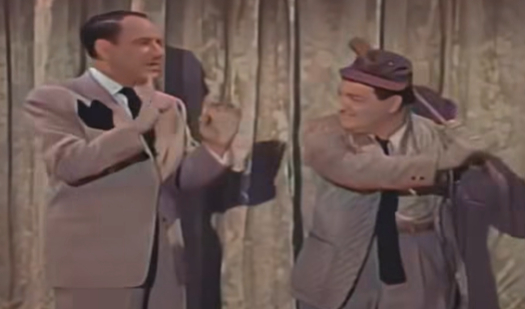
The Abbott and Costello routine known as Who’s on First remains the most iconic piece of wordplay in American comedy history. It is a masterclass in linguistic confusion and comedic timing. Bud Abbott plays the straight man who is trying to explain the names of the baseball players on the St. Louis team. Lou Costello plays the increasingly bewildered partner who cannot grasp the simple reality that the players have names li,ke Who, What, and I Don’t Know. The brilliance of the sketch lies in the absolute commitment of both performers to their respective roles. Abbott remains stoic and authoritative while delivering information that sounds li,ke a riddle.

Costello represents the audience’s growing frustration as he attempts to parse the logic of a team roster. Every time Costello asks a question, Abbott provides an answer that serves as the subject of the next confusion. The rhythm of the dialogue is musical in its precision. It is impossible to watch this without feeling the escalating tension that leads to inevitable laughter. This routine has been parodied and referenced in countless films and television shows over the decades. It transcends generations because the humor is built on the fundamental structure of language. Modern audiences might find the pace different from contemporary slapstick, but the core mechanics of the joke are timeless.
 The genius is that the audience knows exactly what is happening while the characters remain trapped in their loop. This creates a unique form of dramatic irony that is rare in sketch comedy. As the routine progresses, the misunderstandings become more complex and absurd. By the time they reach the positions of the players, the logic has completely disintegrated into chaos. It is a rare example of a performance that requires no special effects or elaborate setups to be effective. The success of the routine is entirely dependent on the chemistry between the two leads.
 They spent years refining the timing until it became a well-oiled machine of comedic frustration. Even today, the sketch is used in acting classes to teach the importance of pacing and reaction. It reminds us that sometimes the simplest ideas are the most durable. We continue to return to this performance because it captures the joy of being utterly lost in conversation. It is a testament to the power of classic comedy to bridge the gap between decades of viewers. The legacy of Abbott and Costello is cemented by this singular, hilarious, and maddeningly perfect interaction.