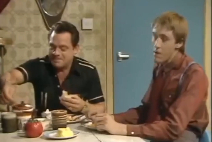
Their endless pursuit of wealth creates a steady stream of hilarious misunderstandings, unexpected disasters, and unforgettable moments that have helped establish Only Fools and Horses as one of the greatest classic British sitcoms ever produced. No matter how promising a new business venture appears, Del Boy and Rodney frequently discover that success is much harder to achieve than they initially imagined. Their determination to make money often blinds them to obvious problems, turning simple transactions into complicated adventures that leave audiences laughing at every unexpected twist.
At the center of these entertaining situations is Derek Trotter, better known as Del Boy, whose confidence and entrepreneurial ambition seem almost impossible to defeat. Del Boy has an extraordinary talent for presenting questionable products as valuable opportunities, convincing potential customers that his latest merchandise is exactly what they need. His persuasive language, quick thinking, and ability to improvise allow him to maintain an optimistic attitude even when his plans begin to collapse. For Del Boy, every setback is simply another reason to search for a better opportunity, and every failed business venture becomes a lesson he rarely seems to learn.
His younger brother, Rodney Trotter, provides the perfect contrast to Del Boy’s ambitious personality. More cautious and practical, Rodney frequently recognizes the risks hidden behind his brother’s confident promises. He often attempts to explain why a particular scheme is unlikely to succeed, but his warnings usually disappear beneath Del Boy’s enthusiastic sales pitches. Before long, Rodney finds himself participating in another questionable venture, wondering how a supposedly simple business opportunity has become another complicated mess. Their contrasting personalities generate brilliant comedy while making their relationship feel authentic and familiar.
One of the most enjoyable aspects of Only Fools and Horses is the way ordinary business activities become increasingly ridiculous. A straightforward attempt to sell merchandise can develop into a series of embarrassing encounters, while an apparently profitable deal may lead to unexpected complications. The writers carefully build these situations through clever dialogue, believable character motivations, and excellent comic timing. Rather than depending entirely on exaggerated jokes, the show allows the humor to emerge naturally from the brothers’ decisions and their reactions to the consequences.
Set in Peckham, South London, the series also provides a humorous portrait of working-class life and the universal desire for financial security. Del Boy dreams of becoming a millionaire because he believes wealth will transform his circumstances and provide a better future for his family. Rodney, meanwhile, hopes to escape the uncertainty created by his brother’s schemes and establish a more stable life. Although their approaches differ, both brothers are searching for opportunities that might improve their lives. Their struggles make the comedy relatable, even when their adventures become completely absurd.
The supporting characters add further depth to the world of Only Fools and Horses. Uncle Albert, Trigger, Boycie, and other familiar personalities bring distinctive attitudes and comic styles to the series. Their conversations with the Trotter brothers often create additional misunderstandings, unexpected disagreements, and amusing complications. Trigger’s deadpan delivery, Uncle Albert’s familiar wartime stories, and Boycie’s self-important behavior help establish the show’s distinctive atmosphere. These recurring characters ensure that the comedy remains varied while maintaining the familiar relationships audiences have come to love.
The outstanding performances of David Jason and Nicholas Lyndhurst are essential to the show’s success. David Jason portrays Del Boy as a charming, ambitious trader whose confidence rarely matches the reality of his business achievements. His expressive gestures and impeccable timing make every failed scheme entertaining. Nicholas Lyndhurst complements him as Rodney, using subtle reactions, frustrated expressions, and sarcastic remarks to highlight the absurdity of their circumstances. Their natural chemistry creates a believable sibling relationship in which arguments and affection exist side by side.
Although the Trotter brothers regularly find themselves in ridiculous situations, their adventures also reveal important qualities that extend beyond comedy. Del Boy’s optimism demonstrates the determination to keep trying after repeated disappointments, while Rodney’s loyalty shows the strength of family connections. They may disagree about money, business decisions, and the best way to approach life, but they continue to support one another when difficulties arise. This emotional foundation gives Only Fools and Horses a warmth that distinguishes it from sitcoms focused solely on jokes and physical humor.
The show’s enduring popularity also reflects the universal nature of its themes. Many people understand the excitement of pursuing a promising opportunity, the disappointment of a failed plan, and the frustration of realizing that success requires more effort than expected. Del Boy exaggerates these experiences through his ambitious schemes, while Rodney represents the more cautious voice that tries to keep everything under control. Their interactions turn familiar human experiences into entertaining stories that continue to resonate with audiences across generations.
Another reason the series remains memorable is its ability to create iconic comic moments from simple situations. A confident promise, an awkward pause, or a sudden realization can transform an ordinary conversation into an unforgettable scene. The carefully constructed dialogue and the actors’ exceptional performances allow the humor to develop naturally, giving viewers time to anticipate the consequences while still enjoying the surprise. This combination of intelligent writing and physical comedy has helped Only Fools and Horses maintain its reputation as a landmark of British television entertainment.
Ultimately, the ridiculous situations faced by Del Boy and Rodney are central to the timeless charm of Only Fools and Horses. Their questionable business ventures, ambitious dreams, and repeated misfortunes create endless opportunities for laughter, while their family bond provides genuine emotional depth. Even when their plans fail spectacularly, they rarely lose the desire to try again. This endless cycle of optimism, confusion, and unexpected consequences makes their adventures consistently entertaining. For anyone who appreciates classic British sitcoms, the Trotter brothers remain unforgettable examples of how ordinary people, extraordinary ambition, and perfectly timed comedy can create television that continues to delight audiences for decades.