Open Range (2003): The Two Cowboys Who Declared War on a Town Ruled by Fear
In the American West of 1882, freedom belongs to the men willing to defend it. Across the vast Montana plains, cattlemen still move their herds wherever the grass is good, living by their own code of honor and answering to no powerful landowner. But when two seasoned cowboys enter a town controlled by a ruthless rancher, they discover that independence can be a dangerous crime. What begins as a simple cattle drive soon becomes a fight for justice, loyalty, and survival—a battle that will force one haunted gunfighter to face the violent past he has spent years trying to escape.
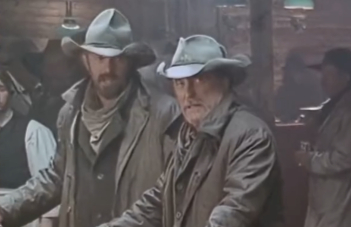
Open Range (2003), directed by and starring Kevin Costner, is a classic Western drama about friendship, revenge, and the courage required to stand against tyranny. With Robert Duvall delivering a commanding performance as an experienced cattleman, the film follows two men who refuse to surrender their dignity to a corrupt system, even when the odds are overwhelmingly against them.
The story follows Boss Spearman, an independent cattleman who spends his days moving herds across the open country. He is an experienced leader, a man who values honesty, discipline, and personal freedom. He has little interest in wealth or political power. His life is built around the land, his cattle, and the small group of men who travel with him.
Among them is Charley Waite, a quiet and capable cowboy whose past is far darker than his reserved manner suggests. Charley is a former Union soldier who served in a special military unit during the Civil War. He witnessed and committed acts of violence that continue to haunt him. Although he has tried to leave that world behind, the memories have never completely disappeared.
Their small crew also includes Mose, a dependable and good-natured cowboy, and Button, a young, inexperienced hand eager to prove himself. Together, the four men form an unusual family, connected not by blood but by the hardships of the trail and a shared commitment to looking after one another.
They live without permanent roots, moving cattle from one stretch of open grassland to another. Their freedom, however, is becoming increasingly difficult to maintain. Powerful ranchers are claiming land, building fences, and attempting to control the movement of cattle. For men like Boss and Charley, who depend on open grazing, these changes threaten the very existence of their way of life.
When their herd approaches the small town of Harmonville, Boss sends Mose into town to purchase supplies. What should be an ordinary errand quickly turns into a nightmare.
Harmonville is effectively controlled by Denton Baxter, a wealthy and ruthless rancher who has built his power through intimidation. Baxter owns much of the local property and exercises enormous influence over the town’s officials. The local marshal, Poole, serves his interests rather than the law.
Baxter despises independent cattlemen. Their practice of moving herds across open grazing land threatens his ambitions to dominate the region. He wants outsiders to leave, and he is accustomed to making that happen through violence.
When Mose becomes involved in a confrontation with Baxter’s men, he is brutally beaten and imprisoned by the corrupt authorities. Instead of protecting an innocent traveler, the town’s lawmen help the powerful rancher punish anyone who refuses to submit.
When Mose fails to return, Boss and Charley realize something is wrong. They ride into town and discover their friend injured and held in jail. Their arrival brings them face-to-face with Baxter, who makes his intentions unmistakably clear: the cattlemen must leave the area immediately.
Boss is not a man who looks for unnecessary trouble, but neither is he willing to abandon a friend. He and Charley recover Mose and take him to a local physician for treatment. There, Charley meets Sue Barlow, a warm and intelligent woman who assists in caring for the injured cowboy.
Charley is immediately drawn to Sue, although he initially mistakes her for the doctor’s wife. For a man who has spent years avoiding emotional attachments, the encounter awakens feelings he thought he had buried. Sue sees something worthwhile beneath Charley’s quiet exterior, and their brief conversations hint at the possibility of a life beyond the endless road.
But peace does not last.
Mose’s injuries are severe, and the threat from Baxter continues to grow. That night, masked riders approach the cattlemen’s camp. Boss and Charley confront some of the men and manage to disarm them, making it clear that they will not be intimidated into abandoning their herd.
Yet Baxter has more men at his disposal, and his next attack is devastating. The camp is raided, their belongings are destroyed, and gunfire tears through the darkness. Mose is killed, and Charley’s loyal dog is shot. Button is seriously wounded and left fighting for his life.
The attack changes everything.
For Boss and Charley, this is no longer simply a dispute over grazing rights. Baxter has murdered their friend and nearly killed a young man who trusted them to protect him. Their peaceful way of life has been attacked by men who believe money and influence give them the right to do whatever they please.
Grief turns into determination. Boss and Charley know that retreating would allow Baxter to continue terrorizing others. If they leave without confronting him, his control over Harmonville will remain unchallenged.
Before seeking revenge, however, they take Button to the Barlow home, where he can receive medical attention. Sue helps care for the wounded young cowboy, and Charley begins to understand that the life he wants may be closer than he ever imagined.
He also learns that Sue is the doctor’s sister, not his wife. For the first time in years, Charley allows himself to consider a future built around something other than survival. Sue gives him a small locket for luck, a gesture that becomes a quiet source of hope as he prepares for the confrontation ahead.
Nevertheless, Charley cannot ignore his past. The memories of the Civil War remain buried beneath his controlled exterior, but violence has a way of bringing them back. His time with Boss has helped him live as a better man, yet he knows that the skills required to defeat Baxter may force him to become the gunfighter he once was.
Boss understands his companion better than almost anyone. He recognizes Charley’s ability, but he also knows that returning to violence carries a personal cost. Their friendship is built on mutual respect, and neither man needs grand speeches to understand what the other is prepared to risk.
The two cowboys return to Harmonville, determined to confront Baxter and the corrupt marshal. With help from Percy, a local stable owner who refuses to bow completely to the rancher’s authority, they turn the lawman’s own jail against him and remove the immediate threat posed by his deputies.
But the final confrontation cannot be avoided.
Baxter gathers his armed men, confident that superior numbers will finally destroy the two cattlemen who have resisted him. He has spent years convincing the town that opposing him is dangerous, and he expects the same strategy to work against Boss and Charley.
This time, however, the cowboys refuse to back down.
What follows is one of the film’s most memorable gunfights. When Baxter’s hired gunman, Butler, boasts of his role in the attack, Charley confronts him and opens fire. The quiet streets erupt into violence as the two sides exchange gunshots, using storefronts, buildings, and whatever cover they can find.
Boss and Charley are badly outnumbered. Baxter’s men have the advantage in numbers, and every second of the battle threatens to overwhelm them. Yet the cowboys’ experience, coordination, and determination allow them to fight back against the men who have terrorized the town.
Gradually, the balance begins to change. Some townspeople finally find the courage to resist Baxter, recognizing that the moment has come to stop allowing one man to control their lives through fear. The confrontation becomes more than a personal act of revenge. It becomes a fight to restore the community’s independence.