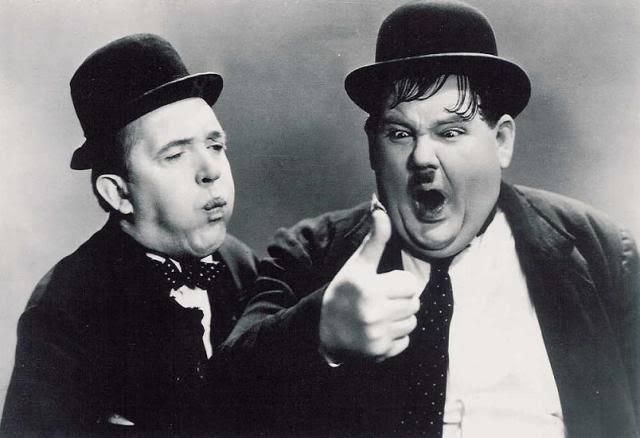
The More Lou Costello “Proved” That 7 × 13 = 28, the More Bud Abbott Lost His Mind — and the Audience Couldn’t Stop Laughing
Some comedy bits are funny because of clever wordplay.
Others work because of perfect timing.
This one works because it slowly drives a logical man completely insane.
In one of Abbott and Costello’s most legendary routines, Lou Costello sets out to prove that seven times thirteen equals twenty-eight. What starts as a simple disagreement over a number turns into a masterclass in escalating frustration. The longer Costello talks, the more Abbott’s patience evaporates — and the harder the audience laughs.
By the end, even people who know the correct answer start questioning their own math skills.
It Began as a Simple Dispute
The setup is classic Abbott and Costello. There is money involved — rent, a bet, or a debt, depending on the version. Abbott insists the math is straightforward. Seven times thirteen is ninety-one. Costello disagrees. He claims the answer is twenty-eight.
Abbott reacts the way any reasonable person would. He is annoyed, dismissive, and ready to shut the conversation down. Costello, however, is calm, polite, and completely convinced he is right. That contrast is the engine of the entire sketch.
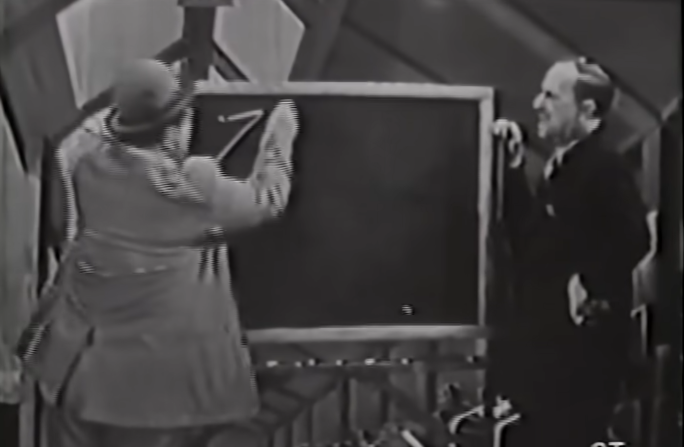
Instead of arguing emotionally, Costello offers to prove it. He walks to a blackboard (or chalkboard) and begins writing.
That is when the real trouble starts.
The First “Proof” Sounds Almost Reasonable
Costello starts by writing the numbers in a column and adding them in a completely wrong but strangely confident way. He multiplies seven by three and gets twenty-one, then somehow carries digits and lands on twenty-eight. Abbott interrupts. He corrects him. Costello listens patiently… and then continues as if the correction never happened.
Abbott’s voice rises slightly.
Costello stays calm.
The audience starts to chuckle. They can see where this is going.
Then Came the Second Method
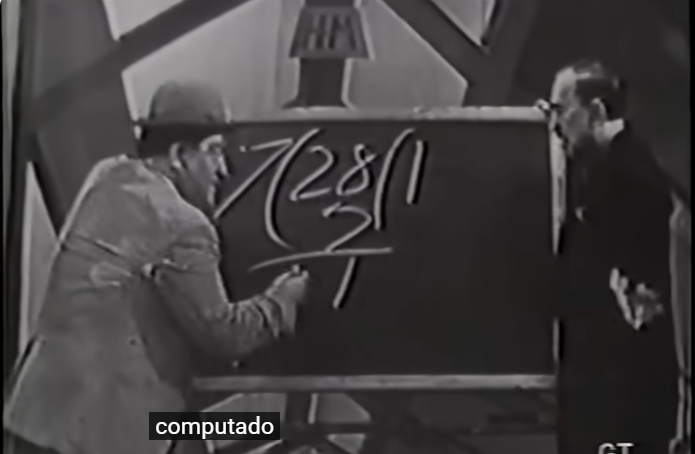
Not satisfied with one demonstration, Costello offers another. This time he divides. He shows that twenty-eight divided by seven is four, and somehow connects that back to thirteen. The logic is nonsense, but he delivers it with the confidence of a professor explaining a basic principle.
Abbott tries to stop him.
Costello keeps talking.
You can watch Abbott’s posture change. His shoulders tense. His gestures become sharper. He is no longer just correcting a mistake — he is fighting to keep reality intact.
The more controlled Costello remains, the funnier Abbott’s growing irritation becomes.
The Tension Keeps Climbing
What makes the routine brilliant is the slow build. Costello does not rush. He methodically presents one flawed calculation after another. Each new “proof” is more absurd than the last, yet he treats every one with complete seriousness.
Abbott’s reactions escalate in perfect rhythm:
- First he is mildly annoyed
- Then openly frustrated
- Then genuinely angry
- Finally, almost desperate
Every time Abbott thinks he has shut the argument down, Costello finds another angle. The blackboard fills with numbers. The explanations get longer. The gap between what is true and what Costello insists is true grows wider.
The audience is no longer just laughing at the bad math. They are laughing at the spectacle of a logical man being driven to the edge by pure, unshakable nonsense.
Why the Sketch Still Works Decades Later
Modern viewers often say the same thing after watching: “I actually started to doubt myself for a second.”
That is the secret. Costello’s delivery is so sincere and so consistent that the flawed logic begins to feel strangely persuasive. For a brief moment, the brain hesitates. And in that hesitation, the comedy lands even harder.
Abbott represents every person who has ever tried to explain something obvious to someone who refuses to accept it. Costello represents the person who will never, under any circumstances, admit they are wrong. Their clash feels timeless.
The Blackboard Becomes a Battlefield
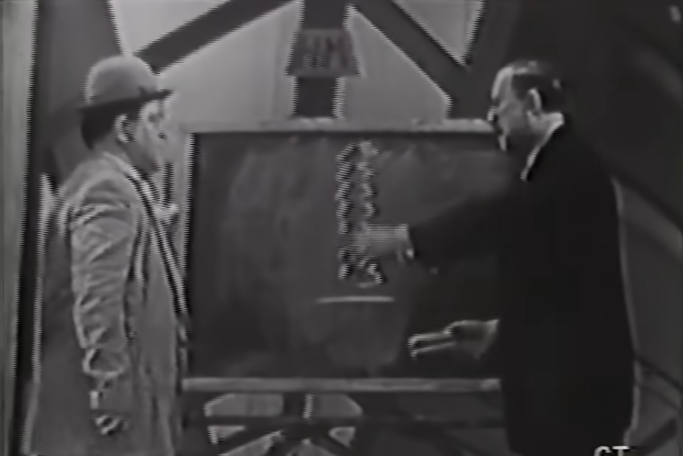
As the sketch continues, the blackboard itself becomes part of the joke. Numbers appear, get crossed out, get rewritten. Costello points, circles, and explains with the patience of a teacher helping a slow student. Abbott’s interruptions grow more frantic.
By the time Costello finishes his final demonstration, Abbott is practically vibrating with frustration. The audience is howling. The original dispute over money has been completely forgotten. The only thing that matters is whether Abbott will finally explode.
He never quite does — and that restraint makes it even funnier.
Clean Comedy That Still Hits Hard
There is no swearing. No mean-spirited insults. No modern edge. Just two master comedians working a simple premise with perfect timing and escalating energy. That purity is part of why the routine continues to find new fans.
People share the clip with captions like “This is how insurance companies do math” or “The birth of Common Core.” The jokes write themselves because the core idea is so strong.
A Masterclass in Comic Escalation
Great comedy often depends on raising the stakes without changing the fundamental situation. Abbott and Costello understood that perfectly. The math never becomes correct. Costello never backs down. Abbott never fully accepts the nonsense. The only thing that changes is the intensity of the conflict.
That steady climb in tension is what keeps the sketch feeling alive even after multiple viewings. You know the answer is wrong. You know Abbott is right. And yet you still lean forward, waiting to see how much further Costello can push him.
Watch the Full Meltdown
Reading about the routine only captures part of the experience. The real pleasure is watching Abbott’s face as each new “proof” lands. Watch his hands. Watch his posture. Watch the exact moment his patience starts to crack.
Then watch Costello remain completely unfazed, as if he is the only rational person in the room.
Would you have lasted longer than Bud Abbott?
Or would Lou Costello’s mathematical masterpiece have taken you down too?
Drop your honest answer in the comments after you watch the full sketch. And be honest — did you, even for one second, start to wonder if maybe 7 × 13 really does equal 28?