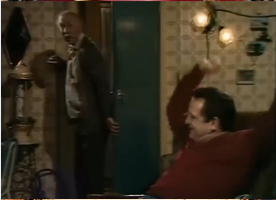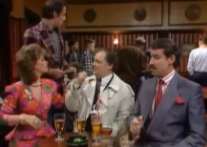
These repeated failures are a fundamental part of what makes Only Fools and Horses such an entertaining and enduring British sitcom. Just when Del Boy believes that he has finally discovered a profitable opportunity, an unexpected problem appears and threatens to destroy his carefully constructed plans. Sometimes, the merchandise he purchases turns out to be practically worthless, while on other occasions, a misunderstanding or an unfortunate coincidence transforms a promising deal into a complete disaster. No matter how confidently he presents his ideas, Del Boy cannot always control the circumstances surrounding his business ventures.
What makes these situations particularly funny is the contrast between Del Boy’s expectations and the reality that awaits him. Before a deal begins, he often imagines the enormous profits he will make and the comfortable lifestyle those profits will supposedly provide. He speaks with the enthusiasm of a successful entrepreneur who has already calculated every detail. However, his calculations are frequently based on assumptions rather than reliable information, leaving him vulnerable when something goes wrong. The audience can often recognise the danger long before Del Boy does, creating anticipation that makes the eventual punchline even more satisfying.
Del Boy’s overconfidence is especially important to the show’s comedy. He rarely approaches a new business opportunity with genuine doubt, even when the risks should be obvious. Instead, he relies on his persuasive personality and quick thinking, believing that he can talk his way through almost any difficulty. This attitude sometimes helps him escape awkward situations, but it can also prevent him from recognising mistakes before they become serious problems. His confidence is both his greatest strength and one of the main reasons his schemes repeatedly fail.
Nevertheless, Del Boy’s mistakes rarely discourage him for long. He possesses an extraordinary ability to recover from disappointment, convincing himself that the next opportunity will finally deliver the success he has always wanted. His optimism allows him to begin again after financial setbacks that might leave another person feeling defeated. This determination is an essential part of his character, showing that his ambition is not easily destroyed by failure. Even when the audience knows that another scheme is likely to collapse, his enthusiasm makes the prospect of watching it unfold irresistibly entertaining.
Rodney Trotter often recognises the weaknesses in his brother’s plans before anyone else. His more cautious personality encourages him to question unrealistic promises and consider the possible consequences of risky decisions. Unfortunately, his warnings frequently go unheeded because Del Boy is convinced that he knows better. Rodney then finds himself involved in another complicated situation, forced to deal with the consequences of a decision he never fully supported. These exchanges create some of the sitcom’s most memorable moments, combining sharp dialogue with the familiar frustrations of family life.
The relationship between the brothers adds emotional depth to the comedy. Rodney may complain constantly about Del Boy’s questionable judgement, but he remains closely connected to his older brother. Del Boy, in turn, often teases Rodney and pressures him into participating in his schemes, yet he also demonstrates genuine concern for his younger sibling. Their arguments reveal how family relationships can involve both affection and irritation, particularly when two people have very different ideas about responsibility and success.
The show’s portrayal of financial struggle makes Del Boy’s repeated failures even more relatable. Set primarily in Peckham, South London, Only Fools and Horses follows a family attempting to improve its circumstances through small-scale trading and ambitious business ventures. The Trotters do not have substantial resources or reliable access to conventional paths towards wealth, so Del Boy continually searches for opportunities that might provide a breakthrough. His methods are often questionable, but the motivation behind them is easy to understand: he wants a better life and believes that determination can eventually overcome his disadvantages.
Unfortunately, determination alone cannot guarantee success. Del Boy’s adventures frequently demonstrate the importance of preparation, accurate information, and realistic expectations. A business opportunity may appear attractive at first, but hidden costs, unreliable suppliers, or a lack of customer demand can quickly turn it into a financial burden. By overlooking these practical considerations, Del Boy repeatedly exposes himself to risks that could have been avoided. The humour emerges from watching him learn these lessons the hard way, often without fully recognising what went wrong.
His talent for salesmanship provides another source of comic conflict. Del Boy understands how to present a product in the most appealing way possible, and his confidence can make even an ordinary object sound extraordinary. However, a convincing sales pitch cannot always compensate for poor quality or a flawed business idea. When the truth eventually emerges, he must improvise another explanation, hoping to preserve his reputation and prevent the situation from becoming even more embarrassing. These moments highlight the difference between appearing successful and actually achieving success.
David Jason’s performance is crucial to the effectiveness of these scenes. His portrayal of Del Boy captures the character’s enthusiasm, charm, and tendency to exaggerate with exceptional comic timing. He can make a ridiculous business proposal sound completely reasonable for a few moments, encouraging viewers to understand why the other characters sometimes believe him. When his confidence begins to unravel, Jason’s facial expressions and physical reactions reveal the panic beneath the polished exterior. This combination of verbal and physical comedy makes Del Boy’s failures memorable without making him an unsympathetic character.
Nicholas Lyndhurst complements this performance through Rodney’s increasingly frustrated reactions. Rodney often serves as the audience’s representative, expressing disbelief when Del Boy introduces another unlikely opportunity. His pauses, sarcastic remarks, and exasperated expressions communicate the absurdity of the situation even before the dialogue reaches its punchline. Together, the actors create a dynamic in which Del Boy’s optimism and Rodney’s scepticism continually challenge one another, producing comedy that feels natural and character-driven.
The supporting cast also contributes to the unpredictable nature of the Trotters’ adventures. Uncle Albert, Trigger, Boycie, and other familiar characters often become involved in situations that Del Boy believes he can control. Their different personalities create additional complications, allowing small misunderstandings to develop into elaborate comic disasters. These interactions give Only Fools and Horses a strong sense of community, where every character has the potential to influence the outcome of a scheme.
Despite the repeated disappointments, Del Boy’s ambition remains central to the series. His desire to become a millionaire provides a clear motivation for his actions and connects many of the show’s episodes. Every failed venture creates an opportunity for a new plan, while every unexpected complication tests his ability to remain optimistic. This recurring structure gives the sitcom continuity without preventing the writers from exploring a wide variety of comic situations.
The programme also suggests that failure can reveal important aspects of a person’s character. Del Boy’s mistakes expose his weaknesses, but they also demonstrate his resilience and resourcefulness. He may struggle to learn from experience, yet he rarely allows embarrassment to stop him from trying again. His determination reflects a familiar human response to disappointment: the belief that circumstances might improve if one more opportunity can be found. Although his optimism is often exaggerated for comic effect, it remains one of his most appealing qualities.
At the same time, Rodney’s reactions highlight the importance of recognising limitations. His frustration often comes from seeing the same mistakes repeated, particularly when a more careful approach could have prevented unnecessary trouble. The contrast between the brothers creates a humorous reminder that ambition works best when supported by sound judgement. Confidence can encourage people to pursue opportunities, but careful evaluation helps them distinguish realistic possibilities from attractive illusions.
This balance between optimism and practical reality gives Only Fools and Horses a timeless appeal. Its stories are funny because Del Boy’s plans are frequently ridiculous, but they are also recognisable because everyone has experienced disappointment, misjudgement, or an unexpected obstacle. The sitcom turns these everyday frustrations into entertainment while preserving the emotional connections that make the characters believable.
Ultimately, Del Boy’s repeated business failures are not simply obstacles to the story; they are an essential part of his identity and the show’s lasting legacy. His bad luck, poor judgement, and exaggerated confidence create the conditions for countless comic moments, while his determination ensures that the next adventure is never far away. Audiences continue to enjoy his schemes because they understand both the foolishness of his decisions and the hope that motivates them.
Through Del Boy and Rodney, Only Fools and Horses demonstrates that life rarely follows a perfect plan. Success can be delayed by circumstances beyond our control, while personal mistakes can make an already difficult situation even more complicated. Yet the ability to laugh, recover, and continue moving forward can make disappointment easier to endure. Del Boy may repeatedly fall short of his dream of becoming a millionaire, but his unshakeable optimism keeps his adventures alive and ensures that his failures remain among the most entertaining moments in classic British television comedy.