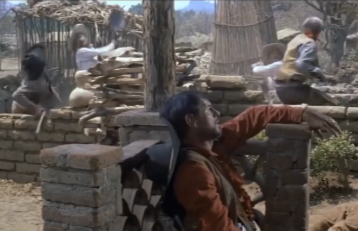
Few Western films capture the spirit of courage, sacrifice, and frontier justice as powerfully as The Magnificent Seven (1960). Directed by John Sturges and featuring an unforgettable ensemble cast led by Yul Brynner, Steve McQueen, Charles Bronson, and Eli Wallach, this classic film tells the story of seven gunfighters who risk everything to defend a poor Mexican village against a ruthless bandit leader named Calvera. In the climactic scene, “Killing Calvera,” the struggle between oppression and freedom reaches its decisive moment.
For the villagers, Calvera represents years of fear, stolen resources, and the destruction of their peaceful lives. His repeated raids have left them feeling powerless, forcing them to surrender their crops and possessions simply to survive. But the arrival of seven determined gunfighters changes the balance of power. What begins as a mission driven by practical motives gradually becomes a fight for dignity, courage, and the right to live without fear.
The final confrontation is more than an action sequence. It represents the culmination of the villagers’ struggle, the gunfighters’ commitment, and the central question of the film: can a small group of determined people finally stand against a powerful enemy who believes nobody can challenge him?
CALVERA’S REIGN OF FEAR COMES TO AN END
Calvera, portrayed by Eli Wallach, is one of the most memorable antagonists in classic Western cinema. Unlike a villain who relies only on violence, he combines intimidation with a practical understanding of power. He believes that controlling the village is simply a matter of making the people understand that resistance will cost them more than obedience.
His confidence comes from years of successful raids. The villagers have learned to expect him to return, and their fear has become part of their daily existence. Every time Calvera and his men arrive, the community faces the same terrible choice: surrender what they have or risk suffering the consequences.
This arrangement allows Calvera to maintain control without needing to destroy the village completely. He wants its resources, and he knows that fear can make people cooperate even when they despise the person giving the orders.
However, the arrival of Chris Adams and the other gunfighters introduces something Calvera cannot easily control: the possibility that the villagers might finally resist.
The seven men bring experience, confidence, and a willingness to confront danger. Their presence challenges the assumption that Calvera’s power is absolute. Even before the final showdown, the balance of power begins to change because the villagers have witnessed people who are willing to stand up to the bandits.
The climax brings that conflict to its conclusion. Calvera must confront the reality that his reputation and previous victories cannot guarantee that he will always remain in control.
CHRIS ADAMS AND THE MAGNIFICENT SEVEN
At the center of the story is Chris Adams, played by Yul Brynner. Chris is a calm and disciplined gunfighter whose leadership helps transform seven individuals into a coordinated fighting force.
He does not approach every problem with reckless aggression. Instead, he observes the situation, considers the risks, and makes decisions based on the needs of the mission. His leadership is built on experience and the ability to inspire confidence in others.
The other six gunfighters bring different personalities and motivations to the group. Vin Tanner, played by Steve McQueen, is confident and resourceful. Bernardo O’Reilly, portrayed by Charles Bronson, combines toughness with a compassionate understanding of the villagers. Chico, played by Horst Buchholz, brings youthful energy and an evolving sense of responsibility.
Together, they form a group whose strength comes from cooperation rather than individual reputation alone.
The final confrontation tests that cooperation. Each man must face the consequences of the dangerous mission he accepted. The group cannot rely on one hero to solve every problem, and no individual skill can guarantee that everyone will survive.
This is one of the film’s enduring themes: courage becomes most meaningful when it is placed in the service of something greater than personal ambition.
Chris and his companions are skilled gunfighters, but their defining achievement is not simply their ability to use weapons. It is their decision to defend people who have been denied the freedom to protect themselves.
THE VILLAGERS FINALLY FIND THE COURAGE TO RESIST
Although the seven gunfighters dominate much of the action, the villagers are at the emotional center of the story. Their suffering gives the conflict its purpose, and their transformation helps explain why the final showdown matters.
At the beginning, the villagers are frightened and uncertain. Calvera’s repeated raids have taught them that resistance can bring terrible consequences. They are not trained soldiers, and they understand that challenging the bandits could cost them their homes, their livelihoods, and their lives.
The gunfighters offer protection, but their arrival alone cannot solve the village’s deepest problem. The people must also find the courage to believe that their lives belong to them rather than to the bandits who control them.
As the story develops, the villagers begin to understand that freedom requires more than waiting for someone else to save them. Their willingness to resist becomes an essential part of the struggle.
This gives the final confrontation a meaning beyond the outcome of a gunfight. The villagers are not simply waiting for Calvera to disappear. They are fighting for the possibility of rebuilding their lives without constantly looking over their shoulders.
The battle becomes a turning point in the community’s identity. Fear has shaped their decisions for too long, and the confrontation offers them an opportunity to challenge the system that has kept them powerless.
THE FINAL SHOWDOWN: WHEN THE ODDS CHANGE
The “Killing Calvera” scene delivers the dramatic confrontation that the entire film has been building toward. By this point, the conflict between the villagers and the bandits can no longer be resolved through threats or temporary compromises.
The tension comes from the fact that both sides understand what is at stake. Calvera wants to preserve the authority he has exercised for years. The gunfighters and villagers want to end the cycle of intimidation and reclaim control over their future.
The Western setting heightens the suspense. Open streets, exposed positions, and the threat of gunfire make every movement important. The characters must remain alert, and their decisions carry immediate consequences.
The scene also draws upon the classic Western tradition of the final confrontation, in which a long-running conflict is brought into focus through a decisive clash between opposing forces.
Yet the emotional stakes make the sequence more than a familiar contest between heroes and villains. The audience understands that the village’s future depends on what happens next. The people have already endured years of exploitation, and the gunfighters have accepted the risk of helping them escape it.
Calvera’s confidence has been built on the belief that fear will always work in his favor. The final showdown challenges that belief directly.
The climax therefore represents the collapse of an arrangement that once seemed impossible to change. The bandits may possess weapons and numbers, but the villagers and their defenders possess something Calvera has consistently underestimated: the determination to stop surrendering.
ELI WALLACH’S UNFORGETTABLE CALVERA
Eli Wallach’s performance gives Calvera a distinctive personality. He is dangerous, but he is not portrayed as a mindless force of evil. His confidence, humor, and ability to speak persuasively make him a more complicated opponent.
Calvera believes he understands the world. He knows how to exploit weakness, how to intimidate frightened people, and how to convince himself that his actions are simply the natural order of things.
That self-assurance makes him compelling because he does not always recognize the moral consequences of his behavior. He views the village through the lens of power and possession, treating its people as resources rather than individuals with their own rights and hopes.
Wallach’s performance gives the character a presence that extends beyond his moments of violence. His manner can be relaxed and conversational, yet the threat beneath his words remains clear.
This contrast makes the final confrontation especially significant. Calvera has spent the story behaving as though his position cannot be seriously challenged. When that certainty begins to collapse, the conflict reveals the weakness hidden behind his reputation.
A powerful antagonist does more than create obstacles for the hero. He represents the ideas and behavior the hero must oppose. Calvera embodies the use of fear as a tool of control, making his defeat central to the film’s larger message about freedom and resistance.
COURAGE, SACRIFICE, AND THE PRICE OF FREEDOM
One reason The Magnificent Seven remains memorable is that its heroes do not receive an uncomplicated reward for their actions. They accept a dangerous mission knowing that the outcome is uncertain, and their choices carry consequences.
The film challenges the idea that doing the right thing always leads to personal happiness or a triumphant ending. Sometimes courage requires accepting losses that cannot be avoided.
The seven gunfighters are not united by identical backgrounds or motivations. They are individuals with different ideas about money, reputation, responsibility, and the future. Their cooperation develops because they share a purpose that eventually becomes more important than their differences.
The final showdown brings these ideas together. Defeating Calvera may offer the village a chance at freedom, but the cost of that freedom cannot be ignored.
The villagers have suffered for years, and the gunfighters have placed themselves in danger to help them. The outcome is therefore measured not only by who survives but also by whether the community can begin to live without the constant threat of exploitation.
This is what gives the film its emotional depth. It celebrates courage without pretending that courage makes people invulnerable.
THE END OF CALVERA’S POWER
The final confrontation represents the end of Calvera’s ability to dominate the village through fear. His authority depended on the belief that nobody would dare challenge him. Once that belief is broken, the foundation of his control begins to disappear.
The gunfighters’ actions demonstrate that power is not always as permanent as it appears. A person may control a community for years, but that control can weaken when others stop accepting it as inevitable.
The villagers’ struggle is particularly important because it changes the meaning of victory. Freedom is not simply a gift delivered by seven outsiders. It becomes a possibility that the community must carry forward after the gunfighters have completed their mission.
The final showdown therefore brings the film’s main conflict to its conclusion while leaving the audience with a more complicated understanding of heroism.
The seven men have helped the villagers confront their oppressors, but the story also recognizes the personal cost of their commitment. Their courage matters because they chose to act when walking away would have been easier.
WHY THE MAGNIFICENT SEVEN REMAINS A WESTERN CLASSIC
Released in 1960, The Magnificent Seven became one of the defining Western films of its era. Its memorable characters, dramatic action, and themes of courage and solidarity have continued to influence filmmakers and audiences.
The “Killing Calvera” scene represents the culmination of everything that makes the film memorable. It brings together the threat of violence, the determination of the seven gunfighters, and the villagers’ desire to escape a life ruled by fear.
The sequence also demonstrates the strength of John Sturges’s storytelling. The action has meaning because the audience understands the people involved and the consequences of failure. The gunfight is not simply a spectacle; it is the final expression of a struggle that has shaped the entire story.
Ultimately, the defeat of Calvera symbolizes the possibility of challenging oppression, even when the odds appear overwhelming. The film does not suggest that courage eliminates suffering or that every sacrifice guarantees a perfect outcome. Instead, it argues that standing up for others can be meaningful even when the price is high.
The legacy of The Magnificent Seven rests on this combination of excitement and humanity. Its heroes are remembered not only for their skill with weapons but also for their willingness to risk their lives on behalf of people they barely knew.
The final showdown with Calvera brings that spirit to its most dramatic expression. It is the moment when fear is challenged, the villagers’ struggle reaches its decisive point, and the seven gunfighters confront the consequences of the mission they chose to accept.
More than six decades after its release, The Magnificent Seven continues to remind audiences that courage is not simply the ability to win a fight. It is the willingness to stand beside others when they need help most. That message, combined with unforgettable performances and classic Western storytelling, ensures that the battle against Calvera remains one of the film’s defining moments.