One cold-blooded confession. One unforgettable gunshot. And a quiet cowboy who finally decides that some men have pushed him too far.
A Single Confession That Changes Everything

In the world of classic Western cinema, some of the most unforgettable moments are not defined by spectacular action sequences or endless gunfire. Sometimes, all it takes is one sentence to transform a quiet confrontation into an explosion of violence.
That is exactly what happens in Open Range, Kevin Costner’s powerful 2003 Western starring Robert Duvall, Annette Bening, and Michael Gambon.
At the heart of the film lies a confrontation so chilling that it has become one of the most memorable moments in modern Western cinema.
When the ruthless gunman Butler is confronted about the violence committed against Boss Spearman’s men, the exchange exposes just how little remorse he feels.
The chilling boast associated with the encounter—“I shot the boy too, and I enjoyed it”—captures the cruelty that makes the confrontation so explosive.
For Charley Waite, played by Kevin Costner, the moment becomes the breaking point.
He has spent much of his life trying to leave violence behind. But standing before a man who treats the suffering of innocent people as something to celebrate, Charley realizes that restraint alone will not stop the brutality.
What follows is one of the most sudden and unforgettable acts of retaliation in modern Western filmmaking.
Two Cowboys Who Only Wanted to Live Free
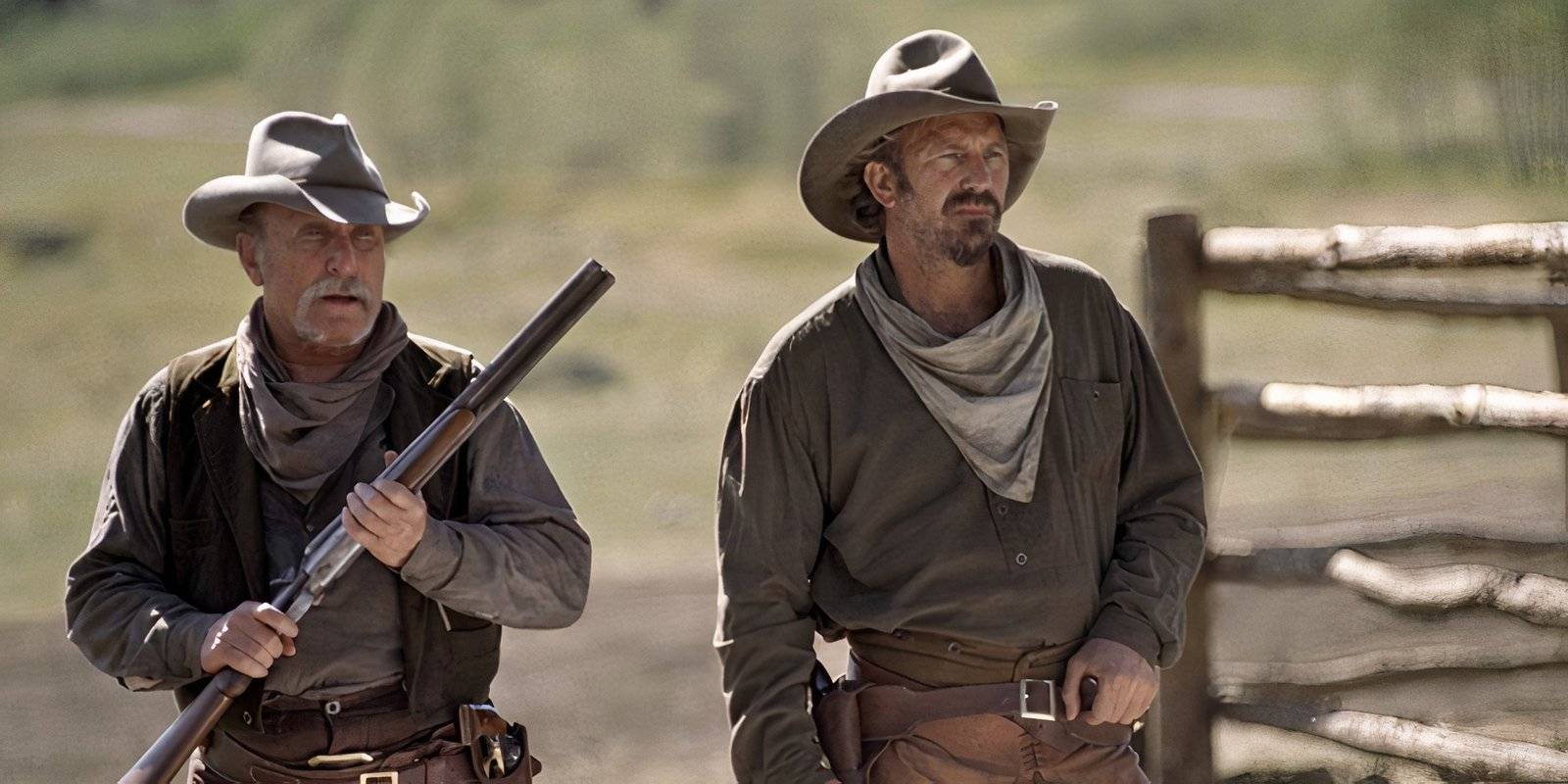
Before the bloodshed, Open Range introduces audiences to a simpler world built around independence, loyalty, and the traditions of the open frontier.
Boss Spearman, portrayed brilliantly by Robert Duvall, leads a small group of free-grazing cattlemen across the American West.
Among them is Charley Waite, a quiet and deeply troubled man whose mysterious past hints at an extraordinary capacity for violence.
The group also includes Mose Harrison and a young cowboy known as Button.
Their lives are difficult but peaceful. They travel across the open country, moving their cattle and respecting a code of loyalty that means more to them than wealth or power.
But their freedom threatens the interests of Denton Baxter, a wealthy and ruthless rancher who believes the surrounding land should exist under his control.
Baxter despises free-grazers and refuses to tolerate their presence.
What begins as a territorial dispute quickly becomes something far darker.
His men attack Boss’s group, killing Mose and severely injuring Button.
For Boss and Charley, the violence represents more than a personal insult.
It is an assault on their way of life, their friendships, and the unwritten moral code that has guided them through years of hardship.
And they have no intention of allowing it to go unanswered.
Charley Waite: A Dangerous Man Trying to Escape His Past
One of the most fascinating elements of Open Range is Kevin Costner’s portrayal of Charley Waite.
Unlike the fearless, swaggering gunslingers found in many traditional Westerns, Charley appears reserved, uncomfortable, and haunted by memories he would rather forget.
He rarely speaks more than necessary.
He avoids unnecessary conflict.
And he understands the devastating consequences of killing better than almost anyone around him.
As the story unfolds, audiences discover that Charley has a violent past, including experience as a gunfighter.
He knows exactly what happens when bullets begin flying.
That knowledge makes his reluctance to fight especially meaningful.
Charley does not hesitate because he is afraid of the men threatening him.
He hesitates because he knows what he is capable of becoming.
But the murder of Mose and the attack on Button awaken something Charley has spent years attempting to bury.
His loyalty to Boss and his fallen companions gradually overwhelms his desire to live peacefully.
By the time the final confrontation arrives, Charley has already made a terrible decision.
He is prepared to become the man he once was if that is what justice requires.
The Chilling Moment When Butler Reveals His Cruelty
The final confrontation brings Charley and Boss face-to-face with Baxter’s hired gunmen.
Standing among them is Butler, a dangerous enforcer who embodies the corruption and brutality dominating the town.
Butler assumes that intimidation and superior numbers will keep the cowboys under control.
He is wrong.
As Charley questions him about what happened to their companions, the tension becomes almost unbearable.
The gunman’s willingness to acknowledge the violence, without displaying any meaningful remorse, reveals the moral emptiness of the men Baxter employs.
For Charley, this is no longer simply a disagreement over land.
It is a confrontation with someone who believes he can harm innocent people and walk away without consequences.
Then, without delivering an elaborate speech or waiting for a traditional quick-draw challenge, Charley acts.
He draws his revolver and shoots Butler at close range.
The suddenness is shocking.
There is no romanticized duel.
No heroic announcement.
No dramatic countdown.
Just a gunshot that changes the entire confrontation.
And within seconds, the street erupts into chaos.
Why the First Gunshot Is So Unforgettable
What makes this scene extraordinary is how deliberately it rejects the familiar conventions of Hollywood Westerns.
In a traditional gunfight, two opponents might exchange threats, position themselves carefully, and wait for someone to reach for a weapon.
But Charley understands that Butler is dangerous.
He also knows that allowing the situation to develop into a theatrical contest could get him and Boss killed.
Instead, Charley chooses immediate action.
His decision is brutal, efficient, and completely consistent with the violent experience he has tried to escape.
Kevin Costner’s performance gives the moment extraordinary weight.
Charley does not celebrate what he has done.
He does not smile or deliver a triumphant one-liner.
He simply acts, and the consequences arrive instantly.
That restraint makes the violence feel even more powerful.
The audience witnesses the exact moment when an otherwise quiet man stops negotiating with people he believes have abandoned every principle of decency.
One of the Most Realistic Gunfights in Modern Western Cinema
The gunfight that follows is among the defining achievements of Open Range.
Rather than presenting an elegant exchange of perfectly aimed shots, Costner stages the battle as a chaotic, terrifying struggle for survival.
Gunfire echoes through the town.
Combatants scramble for cover.
Bullets strike buildings, shatter wood, and send people desperately searching for safety.
The sound design is especially effective.
Each revolver blast feels heavy and dangerous, emphasizing the destructive power of firearms rather than turning the violence into a glamorous spectacle.
Boss and Charley fight with determination, but they are not invincible superheroes.
They make decisions under pressure, move through dangerous spaces, and rely on experience to survive.
The scene also emphasizes the enormous difference between men who use violence to terrorize others and men who reluctantly employ it to defend themselves.
Yet Open Range never suggests that killing is without consequence.
Even when violence appears necessary, its emotional and physical costs remain painfully real.
Robert Duvall Gives the Story Its Emotional Heart
Although Charley delivers the film’s most explosive moments, Robert Duvall’s performance as Boss Spearman provides its emotional foundation.
Boss is more than a rugged cattleman.
He is a man who believes that friendship, fairness, and personal honor are worth defending.
His relationship with Charley develops through mutual respect rather than sentimental speeches.
They have traveled together, survived difficult seasons, and built a bond that resembles family.
When Mose is murdered and Button is injured, Boss feels the loss deeply.
But unlike Baxter, who uses power to dominate others, Boss seeks justice for people who have been wronged.
That distinction becomes central to the film’s meaning.
Through Boss and Charley, Open Range explores the question of what honorable men should do when confronted by people who refuse to recognize any moral boundaries.
Their eventual decision to fight is not presented as an easy solution.
It is a desperate response to a system in which intimidation has replaced law and justice.
Kevin Costner Revives the Spirit of the Classic Western
Released in 2003, Open Range arrived at a time when large-scale traditional Westerns were less common in Hollywood.
Kevin Costner, who also directed the film, embraced many of the genre’s most enduring themes: wide-open landscapes, frontier independence, corrupt authority, personal honor, and the devastating consequences of violence.
Yet the film also offers a more reflective perspective.
Charley is not a young hero eager to establish his reputation.
He is an aging man who understands that the life of a gunfighter carries permanent emotional scars.
His developing relationship with Sue Barlow, played by Annette Bening, creates the possibility of a future beyond bloodshed.
That possibility gives his decision to confront Baxter’s men even greater significance.
Every bullet fired threatens not only his life but also his chance of finally finding peace.
The beautiful landscapes, measured pacing, and restrained performances allow the final confrontation to emerge naturally from the story.
By the time the shooting begins, audiences understand exactly why it matters.
A Brutal Reminder That Justice Sometimes Comes at a Terrible Price
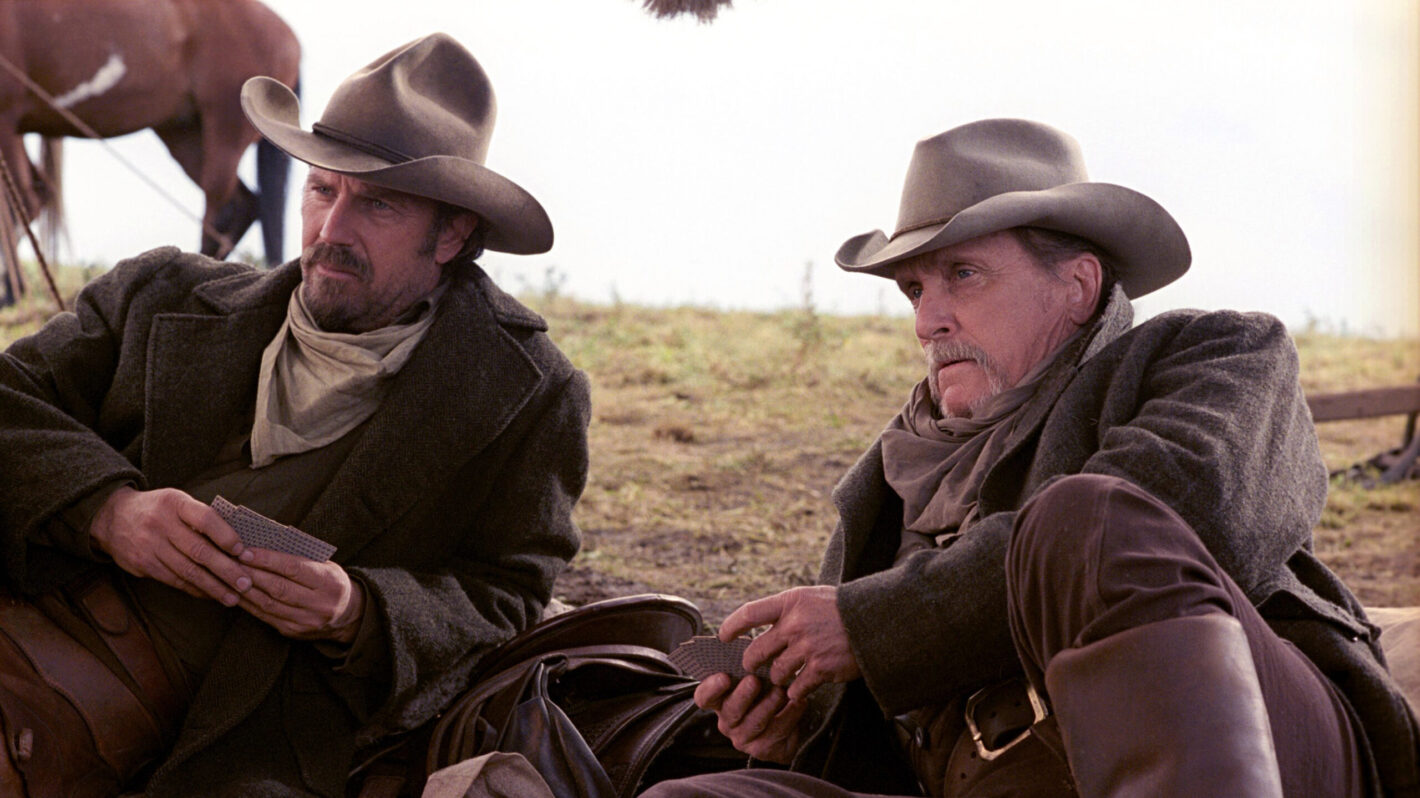
More than two decades after its release, Open Range remains one of the most respected modern Westerns because it understands that a great gunfight requires more than exciting choreography.
It requires emotional stakes.
Mose’s death matters because he is part of a family of cowboys.
Button’s suffering matters because his companions care about him.
Boss’s anger matters because it comes from loyalty.
And Charley’s violence matters because it represents the return of a part of himself he desperately hoped to leave behind.
The confrontation with Butler brings all those emotions together in a single, explosive moment.
The gunman’s cruelty exposes the injustice that has poisoned the town, while Charley’s sudden response signals that Baxter’s reign of intimidation is finally being challenged.
That is what makes Open Range so powerful: its most unforgettable gunshot is not simply the beginning of a battle, but the culmination of grief, loyalty, moral outrage, and a man’s struggle against his own violent past.
For fans of classic Western cinema, the scene remains a reminder that sometimes the quietest cowboy in the room is also the most dangerous.
And when Charley Waite finally decides to draw his gun, the entire town discovers why.