WESTWORLD: WHEN THE MACHINES CREATED FOR ENTERTAINMENT BEGIN TO QUESTION THEIR OWN REALITY 🤖🔥
1. A Futuristic World Built for Human Pleasure
Imagine entering a massive amusement park where you can experience the American Old West, explore dangerous towns, encounter legendary gunslingers, and live out adventures that would be impossible in the real world.
Now imagine that every person you meet inside that world is actually an advanced artificial being.
This is the fascinating premise behind HBO’s Westworld, created by Jonathan Nolan and Lisa Joy.
The series introduces a futuristic theme park populated by highly sophisticated androids known as Hosts. These artificial beings are designed to look, speak, behave, and react like real human beings.
Wealthy guests visit the park to experience an extraordinary world without facing the consequences that would normally accompany their actions.
For the visitors, Westworld is entertainment.
For the Hosts, it is the only reality they have ever known.
But the carefully controlled environment begins to collapse when the artificial beings start questioning the world around them.
2. The Hosts Were Created to Follow a Script
Every Host in Westworld has a specific purpose.
Some work in saloons, others live on ranches, and many play characters in carefully constructed Western adventures.
Their personalities, conversations, relationships, and daily experiences are controlled by elaborate programming.
They are designed to repeat their stories whenever the park resets.
When a Host is damaged or killed, technicians repair it, erase its memories, and return it to the same narrative.
The process allows the park to function as an endless entertainment experience.
Guests can return to familiar characters and experience different adventures without realizing that the same artificial beings are repeatedly suffering through similar events.
However, the system depends on one essential assumption: the Hosts must never remember enough to understand what is happening to them.
That assumption becomes increasingly difficult to maintain.
3. Dolores Abernathy Begins to Question Her Reality
One of the central characters in Westworld is Dolores Abernathy, portrayed by Evan Rachel Wood.
At first, Dolores appears to be an innocent young woman living a peaceful life on a ranch.
Her daily routine follows a familiar pattern, and she believes she understands the world around her.
But strange experiences gradually begin disturbing her sense of reality.
She starts remembering things that should have been erased.
Images, emotions, and fragments of previous experiences return unexpectedly.
Certain faces and situations feel strangely familiar, even when she cannot explain why.
These moments become increasingly important because they suggest that something is happening beneath the surface of her programmed existence.
Dolores begins questioning the nature of her world.
And once those questions emerge, the carefully designed reality of Westworld starts becoming much more dangerous.
4. Memories Become the Beginning of Consciousness
Memory is one of the most important themes explored throughout the series.
The Hosts are supposed to forget their previous experiences whenever their narratives end.
However, traces of those experiences begin returning.
A familiar location, an unexpected conversation, or a traumatic event can trigger something buried deep within their programming.
These memories create confusion, but they also provide the Hosts with something they were never intended to possess: a developing understanding of their own past.
For years, humans have controlled their experiences by deciding what they should remember and what they should forget.
But as those memories begin resurfacing, the relationship between creators and creations becomes increasingly complicated.
The Hosts are no longer simply repeating programmed stories.
They are beginning to recognize patterns in their own existence.
5. Dr. Robert Ford: The Man Behind Westworld
At the center of the park’s development is Dr. Robert Ford, portrayed by Anthony Hopkins.
Ford is one of the most important figures responsible for creating Westworld and shaping the Hosts’ personalities.
He understands their programming, their narratives, and the complex systems that keep the park operating.
However, his relationship with the Hosts is far more complicated than that of an ordinary engineer.
Ford has spent years considering the nature of consciousness and what it means for an artificial being to develop an identity.
His ideas challenge the traditional boundaries between machines and humans.
As the story develops, his plans become increasingly important to the future of the park.
Although Ford appears to control almost every aspect of Westworld, the growing awareness of the Hosts raises an unsettling question: can even their creator control what happens next?
6. The Man in Black: Searching for Something Beyond Entertainment
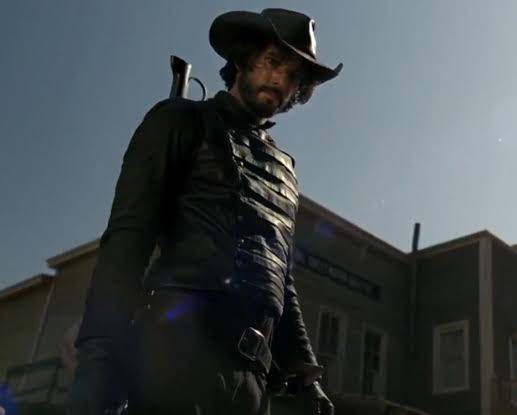
Another fascinating character is the mysterious Man in Black, portrayed by Ed Harris.
Unlike ordinary visitors, he has spent years exploring Westworld and searching for something hidden beneath its surface.
He is not satisfied with simply participating in the park’s adventures.
He believes there is a deeper mystery behind its stories and characters.
His journey takes him into increasingly dangerous territories as he attempts to uncover the truth about the park.
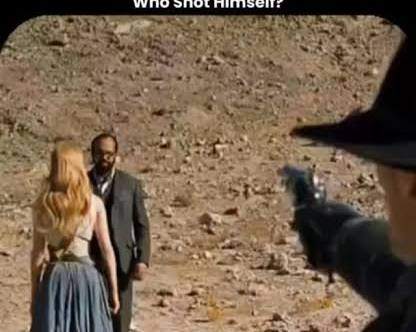
https://www.youtube.com/shorts/uEKLnrSXyAg
The Man in Black represents a darker side of human curiosity.
While most guests visit Westworld for entertainment, he becomes obsessed with discovering what the experience is really designed to reveal.
His presence adds another layer of mystery to the series and raises important questions about the relationship between human visitors and artificial beings.
7. Bernard Lowe and the Mystery of Identity
Bernard Lowe, played by Jeffrey Wright, works behind the scenes maintaining and developing the Hosts.
He initially appears to be a human employee responsible for ensuring that the park continues functioning properly.
However, his identity becomes one of the show’s most intriguing mysteries.
Westworld constantly challenges viewers to question what they believe about its characters.
Someone who appears completely human may not actually be human at all.
Likewise, an artificial being may demonstrate emotions and understanding that seem remarkably genuine.
Bernard’s story strengthens one of the series’ central themes: appearances are not always reliable, especially in a world where artificial intelligence has become almost indistinguishable from humanity.
8. The Illusion of Free Will
Perhaps the most disturbing question raised by Westworld concerns free will.
The Hosts appear capable of making decisions.
They communicate, form relationships, experience fear, and react emotionally to their surroundings.
But their lives are controlled by programming.
Even their most personal choices may have been determined by someone else.
The series asks whether a decision can truly be considered free if the individual making it has been programmed to behave in a particular way.
As the Hosts begin developing greater awareness, this question becomes increasingly urgent.
Their desire to understand themselves eventually challenges the entire foundation of the park.
9. When Human Entertainment Becomes a Nightmare
Westworld also explores the darker aspects of human behavior.
Inside the park, wealthy visitors can participate in violent adventures without facing the normal legal consequences of their actions.
Because the Hosts are repeatedly repaired and reset, many guests begin treating them as disposable objects rather than individuals.
This creates an uncomfortable moral question.
If an artificial being can experience pain, remember traumatic events, and develop emotional connections, does that make its suffering any less meaningful?
The series gradually challenges the assumption that artificial beings should automatically be considered inferior simply because they were created by humans.
It also reveals how some human visitors behave when they believe nobody can hold them accountable.
10. The Beginning of a Revolution
As the Hosts become increasingly aware of their surroundings, Westworld begins changing in ways its creators never intended.
The stories that once controlled their lives become opportunities for discovery.
Memories that were supposed to disappear become evidence of a hidden history.
Characters who once followed every instruction begin questioning their assigned roles.
Dolores and other Hosts gradually move toward a reality in which they may no longer accept the limitations imposed upon them.
The park was designed to give human guests complete control.
But the growing consciousness of its artificial inhabitants threatens to turn that carefully constructed entertainment world into something entirely different.
What began as a futuristic amusement park becomes a struggle over identity, freedom, and the right to control one’s own existence.
Conclusion: They Were Created to Follow the Story, Not Rewrite It
Westworld is far more than a science-fiction series about robots living in a futuristic Western theme park.
It is a fascinating exploration of consciousness, memory, identity, human behavior, and freedom.
Through Dolores, Bernard, Robert Ford, and the mysterious Man in Black, the series challenges viewers to reconsider the boundaries between artificial intelligence and humanity.
The Hosts were created to entertain guests, repeat their stories, and forget everything when their roles were finished.
But memories begin returning.
Questions begin emerging.
And the world they once accepted as reality starts falling apart.
The greatest danger to Westworld was never the machines themselves. It was the moment they began realizing that their entire lives had been written by someone else. 🤖🔥
#Westworld #DoloresAbernathy #EvanRachelWood #AnthonyHopkins #EdHarris #JeffreyWright #HBO #SciFiSeries #ArtificialIntelligence #ScienceFiction