
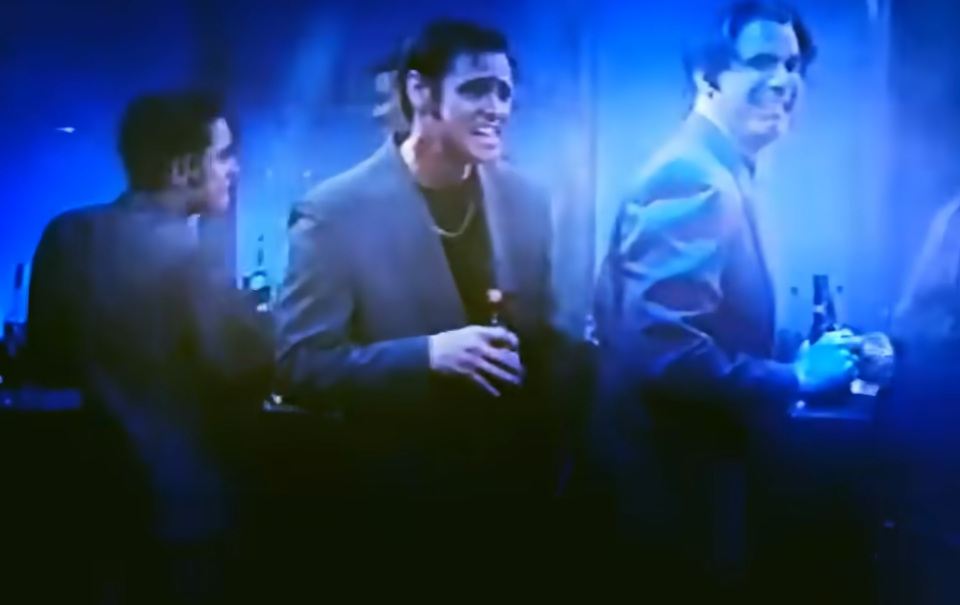
Three men. One unforgettable dance song. And a ridiculous head-bobbing routine that somehow became one of the most recognizable images in American sketch comedy.
When Jim Carrey joined Will Ferrell and Chris Kattan for The Roxbury Guys on Saturday Night Live in 1996, audiences witnessed a wonderfully absurd combination of physical comedy, musical timing, and outrageous confidence.
There was no complicated mystery to solve, no elaborate dialogue to remember, and no emotional storyline to follow.
Just three men wearing dark suits, moving their heads from side to side to Haddaway’s dance hit “What Is Love,” and behaving as though they were the most irresistible dancers in New York City.
But what begins as a simple nightclub joke quickly becomes something much more ridiculous.
The trio moves from one location to another, repeatedly attempting to impress women while demonstrating an almost complete inability to understand social boundaries.
Their adventures take them through crowded clubs, an awkward high-school prom, a wedding reception, and even a retirement home.
And no matter how many times their approach fails, their confidence never seems to disappear.
The Night Begins With an Unforgettable Car Ride
The sketch opens on the busy streets of New York City.
Traffic moves through the city at night while the familiar rhythm of “What Is Love” establishes the musical atmosphere.
Inside a car sit three men who appear completely absorbed in the same song.
Will Ferrell plays Steve Butabi, Chris Kattan portrays Doug Butabi, and Jim Carrey joins them as another enthusiastic member of their nightclub-loving group.
Their heads move together with almost mechanical precision.
Left. Right. Left. Right.
The movement is simple, but the effect is immediately funny.
The three men look intensely serious about something that is objectively ridiculous.
They are not performing elaborate choreography or demonstrating exceptional dancing ability.
They are simply moving their heads in perfect synchronization while maintaining the confidence of nightclub superstars.
And that contrast establishes the entire personality of the sketch.
These men genuinely seem to believe that they are irresistible.
Unfortunately, almost nobody around them agrees.
Jim Carrey Becomes the Perfect Third Roxbury Guy
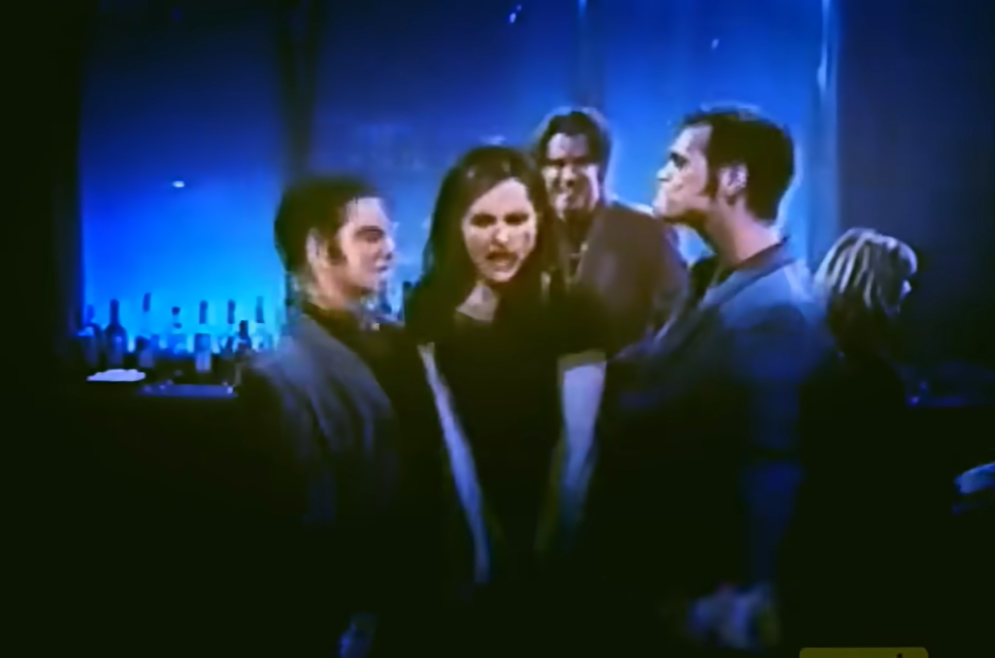
Jim Carrey was already one of Hollywood’s most recognizable comedy stars when he appeared on SNL in May 1996.
His work in Ace Ventura: Pet Detective, The Mask, and Dumb and Dumber had established his reputation for extraordinary facial expressions and outrageous physical performances.
Adding him to the Roxbury Guys routine was an inspired choice.
Will Ferrell and Chris Kattan had already developed the characters’ exaggerated mannerisms and awkward attempts at romance.
Carrey brought his own recognizable energy to the formula.
He could make the smallest movement appear enormous.
A sideways glance became a complete performance.
An exaggerated smile suggested an absurd level of confidence.
And when he began moving his head in time with the other two performers, the familiar routine became even more entertaining.
What makes the partnership particularly funny is that all three characters seem equally convinced of their own charm.
Nobody questions the approach.
Nobody suggests that they should stop dancing.
They simply continue moving through the city, certain that their next destination will finally bring romantic success.
The Nightclub Scene Turns Into Pure Absurdity
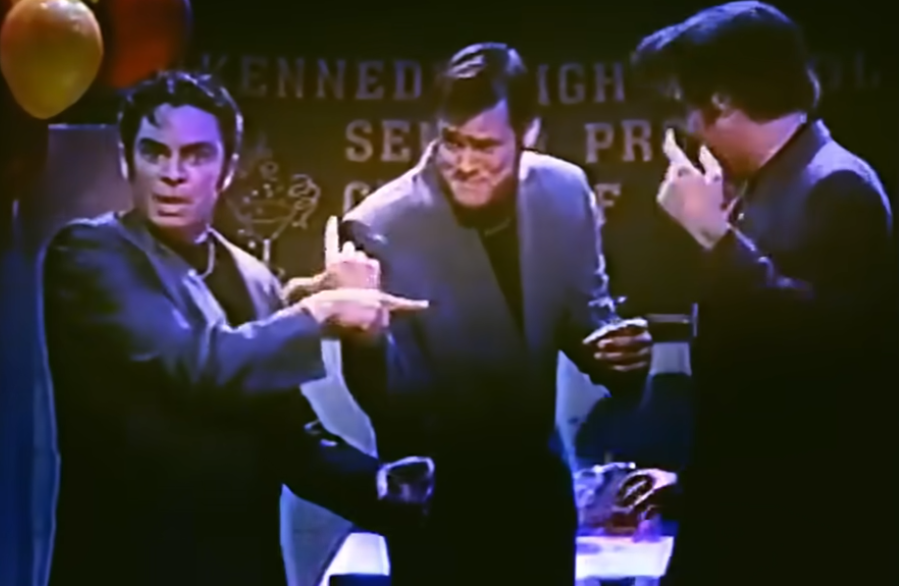
The trio eventually arrives at a nightclub, where flashing lights and a crowded dance floor create what should be the perfect environment for their evening.
Instead, it becomes another opportunity for embarrassment.
The three men stand together, bobbing their heads in unison while watching the women around them.
Their expressions suggest that they believe everyone is impressed.
But their attempts at flirting are painfully awkward.
One man steps forward.
Another tries his luck.
Their confidence remains extraordinary even when their efforts clearly fail.
Then Jim Carrey’s character becomes involved in the action, adding another layer of exaggerated movement.
When a woman joins the dancing, the men transform an ordinary nightclub interaction into an increasingly ridiculous routine.
They begin bouncing her between their chests, treating the situation as though it were a perfectly reasonable dance move.
The comedy comes from their complete lack of awareness.
The audience recognizes immediately that their behavior is absurd.
The characters do not.
And that misunderstanding is what makes every second of the scene entertaining.
Why the Head-Bobbing Dance Is So Funny
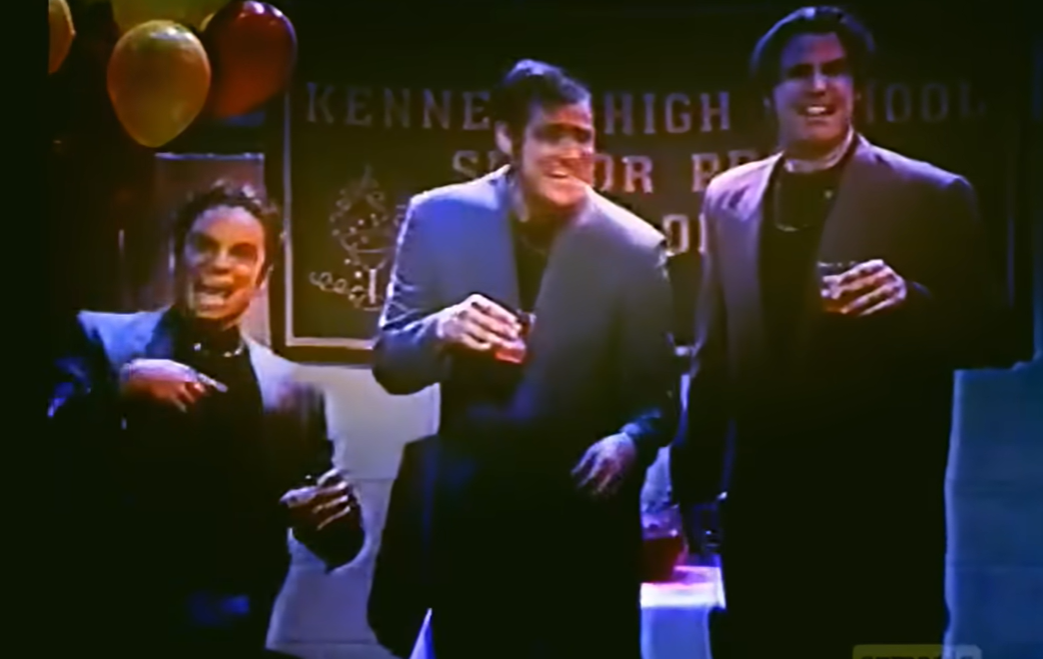
The brilliance of the Roxbury Guys routine lies in its simplicity.
Most memorable comedy performances depend on clever dialogue, elaborate physical stunts, or complicated situations.
This one begins with a movement almost anyone can imitate.
A small sideways motion of the head.
Repeated again and again.
But when three confident men perform that movement together with exaggerated seriousness, it becomes a complete comic identity.
Their synchronized movements make them seem less like individual people and more like a single ridiculous machine.
The music strengthens the joke.
Haddaway’s “What Is Love” provides a dramatic, emotional dance rhythm that contrasts perfectly with the characters’ complete social awkwardness.
The song sounds passionate.
The men look determined.
But their actual attempts at romance are hopeless.
That contradiction creates comedy before anyone says a word.
It also explains why the routine remains recognizable through short video clips and animated references.
Viewers do not need to understand the entire sketch.
The visual joke works almost immediately.
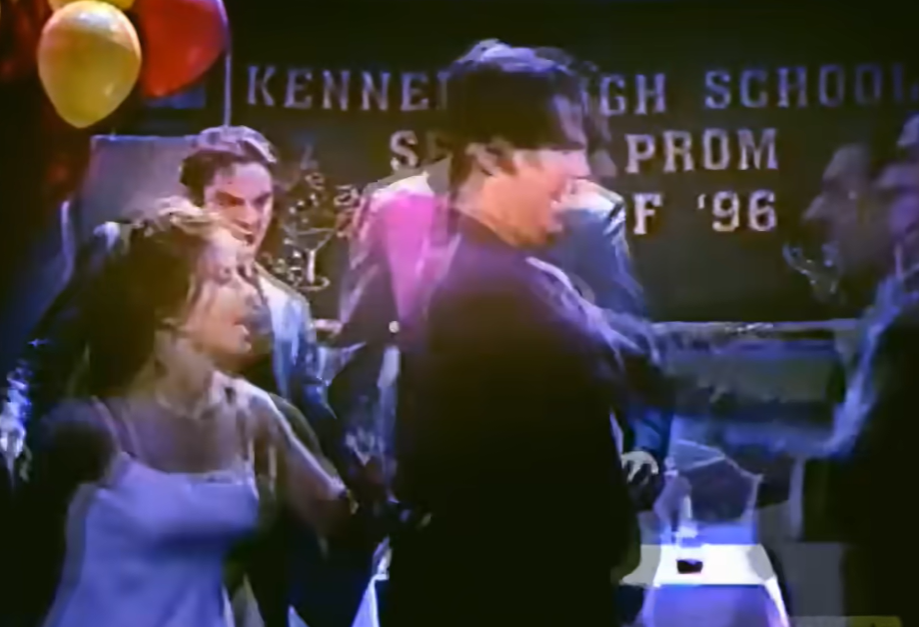
The High-School Prom Becomes Their Next Disaster
After their nightclub adventure, the Roxbury Guys decide to continue their evening.
Their next destination is a high-school prom.
The setting changes, but the characters’ behavior does not.
They arrive at the event with the same confidence, the same exaggerated expressions, and exactly the same synchronized head movements.
Young couples are enjoying their evening when the three men begin attempting to attract attention.
The situation is uncomfortable by design.
These adult nightclub enthusiasts clearly do not belong at a school dance, and their exaggerated confidence makes the intrusion even more ridiculous.
They approach the dancing students as though they are the main attraction.
At one point, the performers begin comically debating which of them should dance with a particular girl.
Their confusion develops into a chaotic exchange of gestures and repeated attempts to direct attention toward one another.
Eventually, the encounter escalates into another absurd dancing routine.
Rather than recognizing the awkwardness, the characters remain completely committed to their approach.
The result is another spectacular social failure.
Even Rejection Cannot Stop Them
One of the funniest recurring elements in the sketch is the trio’s refusal to learn from experience.
Every destination follows a familiar pattern.
They arrive confidently.
They begin their synchronized dance.
They attempt to interact with women.
The situation becomes uncomfortable or chaotic.
Then they leave and start again somewhere else.
For most people, repeated rejection would eventually encourage some self-reflection.
Not for the Roxbury Guys.
Their enthusiasm appears indestructible.
Every unsuccessful encounter becomes merely another stop in their evening.
They never abandon their signature movement.
They never question whether their approach is working.
And they never seem particularly embarrassed by what happens.
That complete lack of self-awareness gives the characters their unique appeal.
They are ridiculous, but they are also strangely optimistic.
Their determination turns every failure into another opportunity for comedy.
The Car Scenes Are Comedy Gold
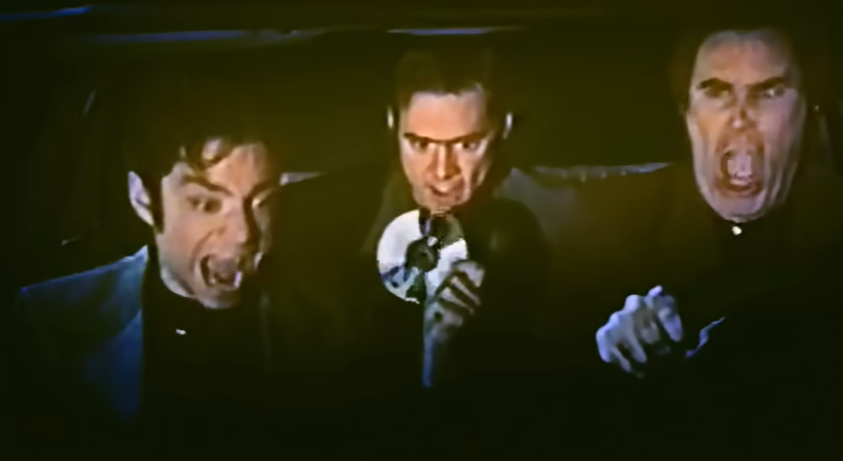
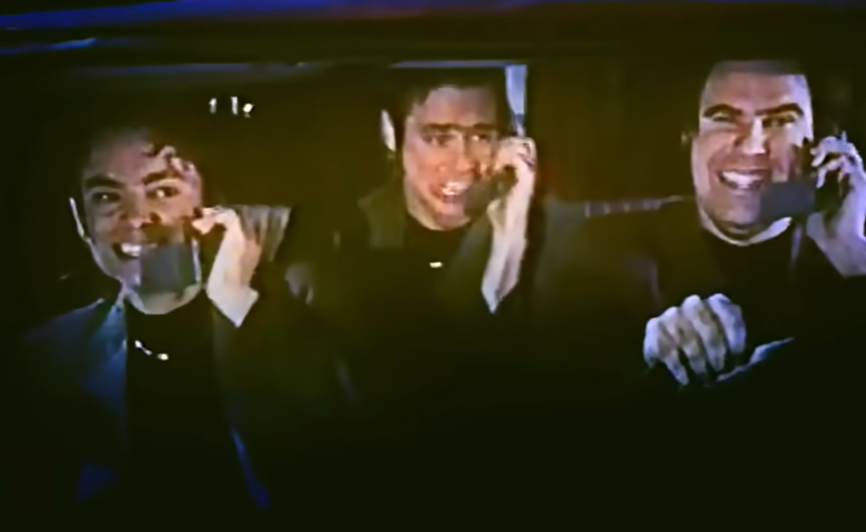
Between their increasingly unsuccessful social adventures, the sketch repeatedly returns to the trio traveling together in their car.
These scenes provide some of the most memorable visual moments.
The characters continue behaving as though they belong in the center of an extravagant nightlife fantasy.
Even simple activities become unnecessarily dramatic.
At one point, their attempts to smoke cigarettes create another unexpected problem.
Later, the group talks on mobile phones despite sitting inside the same vehicle.
That detail perfectly captures their absurd understanding of sophistication.
They seem to believe that using phones makes them appear important.
The audience sees three men pointlessly complicating an ordinary conversation.
Their behavior becomes even funnier because they maintain the same complete seriousness throughout.
They are not trying to look ridiculous.
They genuinely believe they look cool.
And that is precisely why the joke works.
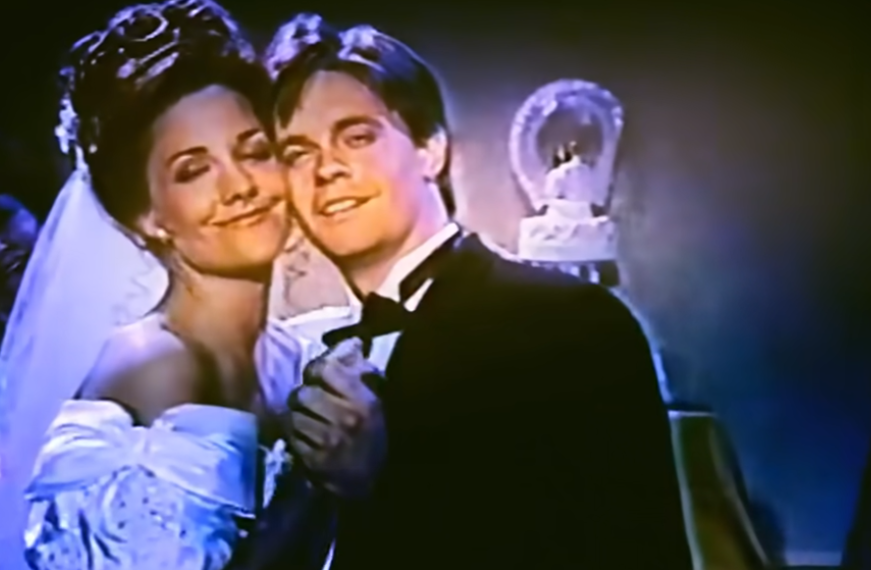
Then the Trio Crashes a Wedding
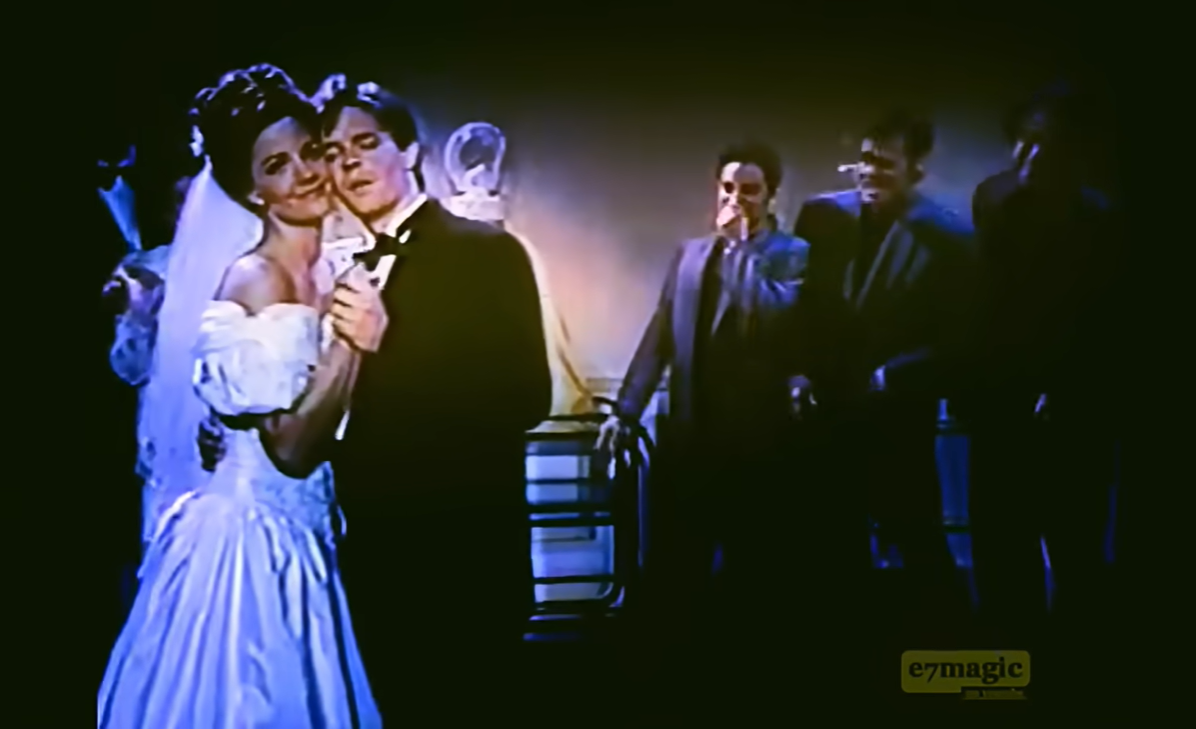
As the evening continues, the men arrive at a wedding reception.
This location introduces another level of absurdity.
A wedding is supposed to celebrate a couple’s romantic commitment.
For the Roxbury Guys, however, it becomes another opportunity to demonstrate their questionable dancing technique.
The newlyweds are enjoying their celebration when the three men appear nearby.
Once again, the audience recognizes the familiar movement.
The heads begin bobbing.
The confidence returns.
And the situation quickly becomes uncomfortable.
The men interfere with the celebration and draw the bride into their ridiculous chest-bouncing routine.
The contrast is hilarious.
A formal, meaningful occasion suddenly becomes the setting for the same unsuccessful nightclub behavior seen earlier.
The groom’s frustration only adds to the comedy.
The trio appears almost genuinely confused that anyone might object.
To them, their dance routine is clearly a gift to the celebration.
To everyone else, it is an outrageous interruption.
Jim Carrey’s Expressions Take Everything Further
Throughout the sketch, Jim Carrey’s facial expressions provide an additional source of entertainment.
His performance is especially enjoyable because he understands how to exaggerate a character without losing the central rhythm of the scene.
Sometimes he widens his eyes with absurd confidence.
Other times, his expression becomes intensely focused on the music.
His smile can shift into an exaggerated grimace, and even brief reactions become visually entertaining.
Ferrell and Kattan match his physical commitment.
Together, the performers create an ensemble in which no single person needs to dominate the entire sketch.
The comedy comes from their collective behavior.
Their matching movements establish the joke, while their individual personalities create variety.
Carrey adds a particularly explosive style of physical expression.
Ferrell brings an oddly serious confidence.
Kattan supplies quick movements and a wonderfully exaggerated sense of desperation.
The result is a trio whose contrasting energies fit together remarkably well.
The Retirement Home Takes the Joke Even Further
Just when the audience might expect the evening to end, the sketch introduces another unexpected destination.
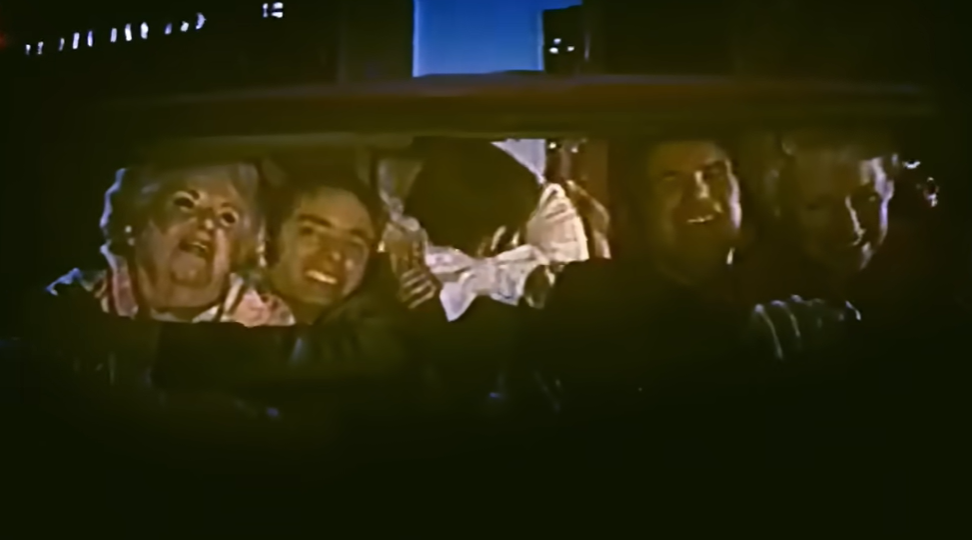
The three men arrive at a retirement home.
By this point, viewers understand their routine completely.
They have already experienced rejection, confusion, and embarrassment in multiple locations.
Yet the performers continue demonstrating their enthusiasm with absolutely no sign of slowing down.
The retirement-home sequence becomes another variation on the central joke.
The characters apply the same nightclub confidence to an environment where their behavior seems even more out of place.
That escalation is important.
The sketch does not simply repeat the same scene without changing anything.
Each new location creates a different context for the men’s ridiculous behavior.
The audience begins anticipating how badly the next interaction might go.
And the performers repeatedly reward that anticipation with another outrageous situation.
How This Sketch Became Part of Comedy History
The Roxbury Guys became one of the recognizable recurring concepts associated with SNL in the 1990s.
Will Ferrell and Chris Kattan continued developing the characters beyond this particular appearance.
The concept eventually inspired the 1998 comedy film A Night at the Roxbury, which expanded the adventures of Steve and Doug Butabi.
But Jim Carrey’s 1996 appearance remains especially memorable because of the extraordinary physical-comedy talent he brought to the group.
His participation created a special version of the familiar routine.
The combination of three exaggerated personalities, a recognizable dance song, and increasingly ridiculous locations made the sketch easy to remember.
The head-bobbing movement eventually became inseparable from the characters themselves.
It remains the kind of visual joke that can be understood without extensive explanation.
For many viewers, simply hearing “What Is Love” immediately recalls the image of three men moving their heads together inside a car.
That association is a remarkable achievement for such a simple comedic idea.
Why People Still Enjoy the Sketch Today
Comedy styles change.
Television production evolves.
Audiences develop new expectations about pacing, dialogue, and humor.
Yet physical comedy has an unusual ability to remain recognizable across generations.
The Roxbury Guys sketch demonstrates that quality.
Its central premise is immediately understandable.
Three men believe they are irresistible dancers despite overwhelming evidence to the contrary.
Their exaggerated confidence drives every situation.
And their synchronized movements make their personalities recognizable within seconds.
For longtime SNL fans, the sketch offers nostalgia for a particular era of American television.
For younger viewers, it introduces an unusual combination of familiar Hollywood comedians and a dance routine that feels almost designed for repetition.
There is also something appealing about the performers’ complete commitment.
They never behave as though they are embarrassed by the material.
They give every movement the intensity of a serious performance.
That confidence transforms a ridiculous idea into something memorable.
The Comedy Moment That Refuses to Disappear
Nearly three decades after Jim Carrey joined Will Ferrell and Chris Kattan for their unforgettable night out, the Roxbury Guys remain an amusing reminder of how powerful simple physical comedy can be.
There are no elaborate special effects.
No complicated storyline.
No extraordinary stunt sequences.
Just three performers, a recognizable song, and an exaggerated belief that their dancing can impress anyone.
Their misadventures through nightclubs, a school prom, a wedding, and a retirement home create a continuous series of comic disasters.
But the funniest detail is that none of those failures seems to affect their confidence.
They simply keep dancing.
And perhaps that is the secret behind the sketch’s lasting appeal.
The Roxbury Guys never become better dancers.
They never develop greater social awareness.
They never abandon their ridiculous routine.
But they remain completely convinced that the next encounter will be different.
For Jim Carrey, Will Ferrell, and Chris Kattan, that unwavering confidence became the foundation of an unforgettable SNL performance.
And whenever Haddaway’s familiar dance anthem begins playing, fans can still picture the same hilarious scene:
Three men.
Three serious expressions.
And three heads moving perfectly from side to side.