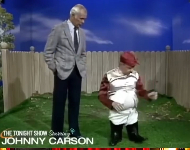
Tim Conway was the kind of comedian who could make a simple walk look like a full comedy show. His unique talent came from the way he transformed ordinary movements into hilarious moments that seemed completely unexpected. A small step, a slow turn, a nervous glance, or an exaggerated pause could suddenly become the center of attention. Conway understood that comedy did not always need a complicated story or a clever punchline. Sometimes, the funniest moment could come from watching a character simply struggle to move from one side of a room to the other.
His physical comedy was especially memorable because it never felt forced. Conway often moved with a strange combination of innocence, confusion, and deliberate awkwardness. He could make his body appear to have its own personality, creating laughter through timing rather than speed. A simple gesture could last several seconds longer than expected, allowing the audience to anticipate what might happen next. That anticipation made the eventual movement even funnier.
One of Conway’s greatest strengths was his ability to control the rhythm of a scene. He knew when to move quickly, when to stop completely, and when to hold a facial expression just long enough to make the audience laugh. His comedy often depended on tiny changes in timing. A character might begin walking normally, then suddenly slow down, hesitate, look around, and continue with an exaggerated sense of uncertainty. Each small action added another layer to the joke.
His performances also showed how powerful visual comedy could be. Even when Conway said very little, audiences could understand exactly what his character was thinking. His posture, facial expressions, eye movements, and unusual body language communicated confusion and mischief without requiring a long explanation. This made his performances accessible to viewers who simply enjoyed watching a character get into ridiculous situations.
Another important part of Conway’s style was his ability to make awkwardness entertaining. Instead of trying to appear perfectly confident, his characters often seemed completely lost in the situation. They could struggle with simple tasks, misunderstand what was happening, or react to ordinary events as though they were complicated disasters. Conway turned these moments of confusion into carefully controlled comedy.
His walking style became particularly effective because it could instantly change the mood of a scene. A normal entrance could become a theatrical performance simply because of the way he crossed the room. He could exaggerate every step without making the joke obvious. The audience might initially wonder why he was moving so strangely, only to realize that the unusual movement itself was the punchline.
Tim Conway also had an extraordinary ability to make his fellow performers laugh. His comic timing was so precise that even experienced comedians sometimes struggled to maintain a straight face around him. When a performer unexpectedly broke character because of Conway’s actions, the moment could become even funnier. His ability to create genuine reactions added a spontaneous quality to his performances.
This talent became one of the reasons his work remained so memorable. Conway did not simply deliver jokes; he created situations in which almost anything could become funny. A pause could become a punchline. A facial expression could become a complete reaction. A slow walk could become an extended comedy routine. A confused character could turn a simple conversation into an unforgettable performance.
His physical comedy also demonstrated the importance of patience. Many comedians rely on rapid dialogue and quick punchlines, but Conway often allowed a joke to develop slowly. He could stretch a simple action far beyond what the audience expected. The longer he maintained the strange behavior, the more anticipation built in the room. When the moment finally reached its comic peak, the laughter felt earned.
Conway’s style was never dependent entirely on words. His comedy could work even when the audience was watching from a distance because his physical movements were so expressive. He could communicate nervousness, confusion, arrogance, surprise, or innocence with his body alone. This quality made his performances visually distinctive and helped separate him from comedians who relied primarily on verbal humor.
The beauty of Tim Conway’s comedy was that he could take something completely ordinary and make it unforgettable. Walking, sitting, turning around, looking at another person, or attempting a simple task could all become opportunities for laughter. He proved that comedy could exist in the smallest details when a performer understood timing, character, and physical expression.
That is why describing Tim Conway simply as a comedian does not fully capture his talent. He was a master of comic movement, a performer who understood that the human body could tell a joke without saying a single word. His strange walks, exaggerated reactions, carefully timed pauses, and playful expressions became part of a comic language that audiences could immediately recognize.
Even decades after many of his classic performances, the basic principle behind his humor remains effective. A comedian does not always need a complicated setup to make people laugh. Sometimes all that is required is a character, a simple action, perfect timing, and the confidence to let the moment develop. Tim Conway had all of those qualities in abundance.
His ability to make a simple walk look like a full comedy show perfectly represents what made him special. He could find humor where other performers might see nothing unusual. He could stretch an ordinary moment into a memorable routine. Most importantly, he understood that laughter often comes from surprise, rhythm, and personality. With Tim Conway, even the simplest movement could become a performance, and even a short walk across a stage could feel like an entire comedy story.