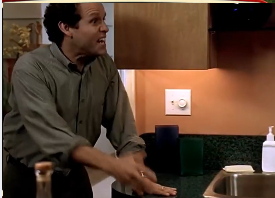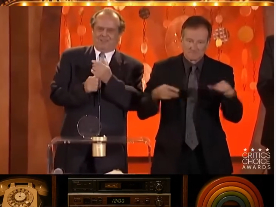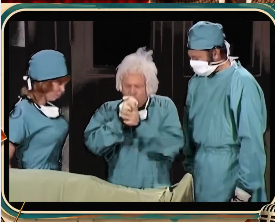
Sometimes Tim Conway looked completely serious, which somehow made everything ten times funnier. His ability to maintain a straight face while surrounded by ridiculous situations was one of the strongest weapons in his comedic style. He rarely needed to tell the audience that something was funny. Instead, he behaved as though every absurd situation was completely normal, allowing the audience to discover the humor for themselves. The more seriously Conway treated the moment, the more ridiculous the scene became.
This contrast was especially powerful because audiences could immediately recognize the difference between what was happening and how Conway reacted to it. A simple problem could suddenly become an enormous crisis in his character’s mind. A strange object could receive a level of attention normally reserved for something extremely important. A harmless conversation could turn into an uncomfortable investigation. Conway’s serious expression made every tiny detail feel strangely significant.
His straight-faced delivery also prevented the comedy from becoming predictable. If Conway had smiled before every joke, audiences would immediately know when to laugh. Instead, he often remained calm and focused. His face suggested that he genuinely believed everything he was doing made perfect sense. That commitment made the absurdity much stronger because the character never appeared to understand how funny he looked.
This technique is closely connected to deadpan comedy, a style in which a performer presents humorous material with an unusually serious or emotionless expression. Conway had a natural gift for this approach. He could create enormous laughter without changing his facial expression very much. Sometimes, the absence of a reaction was itself the reaction.
His serious expression became particularly effective when another performer was losing control. Conway might continue behaving normally while his scene partner struggled not to laugh. The contrast created an entertaining battle between composure and chaos. The audience could see that something was happening beneath the surface, even though Conway’s character appeared completely unaffected.
His work with Harvey Korman became famous for this kind of comic contrast. Conway could introduce an unexpected gesture, pause, or line while maintaining a calm expression. Korman’s increasingly desperate attempts to remain serious often became part of the joke. The scene could feel like it was falling apart while Conway remained completely committed to his character.
That commitment was important because Conway never seemed to be laughing at his own joke. He allowed the audience to laugh for him. This gave his performances a sense of confidence and control. He did not need to wink at the camera or announce that a moment was supposed to be funny. His character simply continued behaving as though everything was perfectly reasonable.
The effect became even stronger when his actions were obviously ridiculous. Imagine someone carefully examining a completely ordinary object with the seriousness of a detective solving a major mystery. The object itself is not funny. The exaggerated seriousness is what creates the humor. Conway understood this principle instinctively and used it repeatedly in his performances.
His body language often reinforced the same contrast. He could stand with perfect posture while making an absurd facial expression. He could move slowly and carefully while performing an action that made absolutely no sense. Every part of his performance suggested that he was taking the situation seriously, even when the audience knew the situation was completely ridiculous.
This made his characters feel strangely believable. Even though the circumstances were exaggerated, the character’s emotional commitment remained authentic. Audiences could accept the absurdity because Conway behaved as though it were real. That commitment created a strong foundation for physical comedy.
Another reason his seriousness was so effective was his control over small reactions. Conway did not always need an exaggerated facial expression. Sometimes, a tiny movement of the eyes was enough. He might glance toward another character, slowly look away, or briefly raise his eyebrows. These small reactions carried enormous comic weight because he used them so precisely.
His eyes often seemed to tell a separate story from his words. A character could say something confidently while Conway’s expression suggested uncertainty. He could look at another person as though he had just heard the strangest statement imaginable. Without changing his voice dramatically, he could create an entirely different layer of humor through his expression.
Conway also understood the value of delayed reactions. Instead of immediately responding to something surprising, he might wait several seconds. The delay itself became funny because the audience could see that his character was processing the situation at an unusually slow pace. When the reaction finally arrived, it often felt much bigger because of the anticipation.
This slow reaction style worked beautifully with his physical comedy. A character might hear something strange, stare forward, slowly turn his head, and then perform a tiny gesture. Each stage of the reaction added another beat to the joke. What could have been a one-second response became a complete comic routine.
His serious attitude also allowed him to create humor from silence. He could stand quietly while everyone else became increasingly confused. The silence gave the audience time to notice his expression and body language. In some scenes, his lack of response was more entertaining than a long speech could have been.
This demonstrates why Conway’s comedy was more sophisticated than simple slapstick. Slapstick often depends on obvious physical accidents, but Conway could create laughter through subtle character behavior. A pause, a glance, or a serious expression could be enough. His comedy had a physical foundation, but it was supported by strong character work and precise timing.
He was particularly skilled at making ordinary situations feel strangely complicated. A character might be trying to sit down, explain something, pick up an object, or walk across a room. Instead of completing the task normally, Conway could turn it into an extended struggle. The serious expression made the struggle even funnier because he appeared determined to solve the problem.
The audience often became invested in these tiny problems because Conway treated them like important missions. Viewers wanted to see whether he would finally accomplish the simple task. When he eventually failed in an unexpected way, the payoff became much stronger. The seriousness of the setup made the failure feel dramatically important, even though the situation was completely harmless.
His comedy also benefited from his ability to avoid overacting. He knew that sometimes the funniest choice was to do less. While another performer might react with a huge expression, Conway could simply stare. While another comedian might shout, Conway could speak quietly. This restraint created a powerful contrast that made his smallest actions stand out.
The audience could therefore become excited about the slightest movement. A small head turn could signal that something was about to happen. A brief pause could suggest that Conway’s character had just discovered a problem. A serious look could make everyone wonder what was going through his mind.
That anticipation became a recurring part of his comic identity. Once audiences understood his style, they knew that a completely serious expression could be a warning sign. The calmer Conway looked, the more suspicious the situation became. His seriousness almost became a form of comic suspense.
What made this especially impressive was that Conway could maintain the same technique across different characters and situations without making it feel repetitive. The details changed, the settings changed, and the supporting performers changed, but his fundamental understanding of comic timing remained consistent. He knew how to create tension and release through expression, movement, and silence.
His straight face also helped protect the illusion of the character. Even when the scene became chaotic, Conway remained inside the world of the performance. He did not step outside the character to show the audience that he knew the joke was funny. Instead, he stayed committed to the situation, which allowed the humor to become more believable.
This commitment is one reason his performances continue to feel distinctive. Many comedians can make an audience laugh by being obviously funny, but Conway often made audiences laugh by refusing to acknowledge the humor himself. His seriousness became the foundation upon which the absurdity was built.
In the end, Tim Conway demonstrated that comedy does not always require exaggerated laughter or constant movement. Sometimes, the funniest person in the room is the one who looks as though nothing unusual is happening. His completely serious expression created a perfect contrast with the ridiculous situations surrounding him.
That contrast became one of his greatest comic strengths. The more seriously Tim Conway treated an absurd situation, the harder it became for the audience to remain serious themselves. His calm expression, precise timing, subtle reactions, and unwavering commitment transformed ordinary moments into unforgettable comedy. He proved that sometimes the straightest face can produce the biggest laugh.