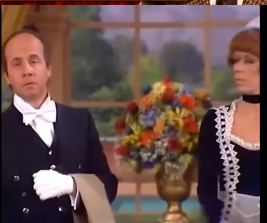
A single look from Tim Conway could say more than an entire paragraph. His facial expressions were so precise that he could communicate confusion, suspicion, surprise, embarrassment, or disbelief without saying a single word. This ability became one of the most powerful elements of his comedic style. Instead of explaining what his character was thinking, Conway allowed his face to reveal the thought process naturally.
His eyes often became the center of the performance. A quick glance could suggest that something was wrong, while a long stare could make an ordinary situation suddenly feel completely ridiculous. He knew exactly how much emotion to put into a look without making it appear exaggerated. Sometimes, the smallest movement of his eyes was enough to make an entire audience laugh.
This subtle approach made his comedy feel intelligent as well as physical. Conway did not always need a large gesture or an obvious punchline. He could remain almost completely still while communicating an enormous amount of information through his expression. The audience could watch his face and immediately understand that his character had discovered something strange, even if nothing else in the scene had changed.
One of the reasons this worked so well was Conway’s ability to create a contrast between his expression and the situation around him. His face might remain completely serious while everything else became increasingly chaotic. That contrast made the situation seem even more absurd. The calmer he looked, the more ridiculous the circumstances appeared.
His expressions also helped establish the personality of his characters. A nervous character might constantly glance around the room. A confused character might stare blankly before slowly reacting. A suspicious character might narrow his eyes and carefully study another person. These small differences allowed Conway to create distinct personalities without relying on lengthy explanations.
He understood that comedy often begins with a reaction. Before an audience laughs at what happens next, they want to see how the character responds to what has already happened. Conway was exceptionally good at this. He could take someone else’s line and turn his reaction into the real punchline.
A scene partner could say something completely ordinary, yet Conway might respond with a look that suggested he had just heard the strangest statement imaginable. The dialogue remained simple, but his reaction transformed it. The audience began paying attention not only to what was being said but also to what Conway’s character appeared to be thinking.
This made his performances especially effective in ensemble comedy. He could listen to another performer without interrupting, yet his face would quietly create a second layer of humor. While one person was delivering dialogue, Conway could create an entirely separate joke through his reaction. His expression became a silent commentary on everything happening in the scene.
His ability to listen was therefore an important part of his comic talent. Great comedy is not always about speaking. Sometimes, the funniest performer is the one reacting at exactly the right moment. Conway knew how to watch, wait, and respond with a carefully chosen expression. His face could become a complete comic conversation.
He was particularly effective at delayed reactions. Instead of immediately showing surprise, he might first stare blankly, pause for a moment, and then slowly allow realization to appear on his face. That gradual change created a much stronger laugh than an instant reaction would have produced.
The audience could almost watch the thought travel across his face. First came confusion. Then came suspicion. Then perhaps a moment of realization. Finally, the character reacted as though the discovery were completely unbelievable. Each stage became part of the joke.
This technique also allowed Conway to stretch very small moments into longer comic sequences. A single facial expression could change gradually over several seconds. The audience would notice the transformation and begin anticipating where it was going. The final expression often became the payoff.
His eyebrows were another important part of his visual vocabulary. A slight lift could communicate surprise. A slow movement could suggest doubt. Combined with his eyes and mouth, these tiny changes created a wide range of comic reactions. Conway did not need exaggerated makeup or elaborate gestures to make his expressions visible.
His mouth could also contribute to the humor through subtle changes. A small tightening of the lips could suggest discomfort. A slight opening could indicate confusion. A restrained smile could reveal that his character was beginning to understand the absurdity of the situation. Each detail contributed to the larger performance.
What made these expressions remarkable was their connection to character. Conway was not simply making random funny faces. His expressions came from the situation and the personality of the character. This gave them meaning and prevented the comedy from feeling artificial.
His characters often appeared to think very seriously about very simple problems. That seriousness was reflected in their expressions. A minor inconvenience could produce the face of someone facing a major crisis. The audience understood that the problem was not actually serious, which made the character’s intense reaction even funnier.
Conway could also create humor through complete emotional restraint. Sometimes the funniest expression was no expression at all. He might stare straight ahead while something completely ridiculous happened nearby. His refusal to react became the reaction. The audience could sense that the silence was intentional, which made the moment even more entertaining.
This deadpan quality was one of the foundations of his comic identity. He often allowed the surrounding chaos to become louder while he became quieter. Instead of competing with the energy of the scene, he created contrast. His stillness gave the other performers something to react against.
His expressions could also influence the rhythm of an entire scene. A quick glance could speed up the comedy, while a long stare could slow everything down. A sudden change in expression could signal that the scene was about to move in a new direction. Conway understood these visual signals instinctively.
This is especially important in physical comedy because movement alone is not always enough. The audience needs to understand why the movement matters. Conway’s face provided that explanation. A simple gesture became funny because his expression told the audience how seriously his character viewed it.
His eyes could also create suspense. When Conway slowly looked toward an object or another performer, the audience immediately wondered what he had noticed. The look itself created anticipation. Even before he moved, viewers were already prepared for something unusual to happen.
That ability to create anticipation from almost nothing demonstrated his extraordinary control over timing. He did not need elaborate setups. A glance could be the setup. A pause could be the buildup. A tiny movement could be the punchline.
His reaction shots were also memorable because they often seemed completely natural. Conway never appeared to be forcing the audience to laugh. His characters seemed genuinely surprised by what was happening. That sincerity allowed the comedy to feel spontaneous even when the timing was carefully constructed.
This natural quality helped him connect with audiences across different types of comedy. Whether he was involved in a fast-paced sketch or a slower character scene, his expressions remained an effective source of humor. He could adapt his reactions to the rhythm of the performance without losing his distinctive personality.
The relationship between his facial expressions and physical movements was particularly important. His face could begin a joke while his body finished it. He might first look at something suspiciously, then slowly approach it, hesitate, and finally interact with it in an unexpected way. The entire sequence could be built around one initial look.
In this way, Conway’s face often acted as the doorway into his physical comedy. The expression told the audience that his character had noticed something. The audience then waited to see what he would do about it. That simple structure could produce an extended comedy routine.
His ability to communicate silently also made his performances highly memorable. Viewers could remember a particular look long after forgetting the exact dialogue of a scene. A facial reaction can become an image that stays in the mind because it captures the emotional essence of a comic moment.
This is one reason Tim Conway’s performances continue to demonstrate the power of visual comedy. In an age when audiences are surrounded by fast dialogue and constant visual stimulation, his approach shows that a single carefully timed expression can still be powerful. Comedy does not always require more words. Sometimes, fewer words create more room for imagination.
Conway understood that the audience should participate in the joke. Instead of explaining every thought, he gave viewers enough information to interpret his expressions themselves. When he looked confused, the audience imagined what might be confusing him. When he looked suspicious, they wondered what he had discovered. When he stared in disbelief, they immediately understood that something had gone terribly wrong.
That interaction between performer and audience was central to his appeal. His face provided clues, but the audience completed the joke. The laughter came from recognizing the situation and understanding the character’s silent reaction.
Ultimately, Tim Conway proved that comedy could be communicated without a long speech. A carefully timed look could reveal an entire personality, create anticipation, establish a joke, and deliver a punchline. His eyes, eyebrows, mouth, posture, and pauses formed a visual language that audiences could understand instantly.
A single look from Tim Conway could indeed say more than an entire paragraph. It could tell the audience that his character was confused, worried, suspicious, surprised, or completely lost. More importantly, it could tell them that something funny was about to happen. His extraordinary control of facial expression turned silent reactions into memorable comedy and helped make him one of the most distinctive performers in classic television comedy.