Some movie moments become unforgettable because of spectacular action, emotional performances, or powerful dialogue. Others achieve legendary status through something much simpler. In Pulp Fiction (1994), John Travolta and Uma Thurman turned an ordinary dance contest into one of the most recognizable scenes in modern cinema.
Decades later, the famous sequence continues to entertain audiences. But what makes it even more fascinating is that Travolta once returned to television to demonstrate the movements and explain how the dance actually worked.
The appearance gave fans a chance to see the actor revisit one of his most celebrated performances while revealing that the secret behind the routine was not complicated choreography. It was personality, rhythm, and the ability to play off another performer.
A Dance Scene That Became Bigger Than The Movie
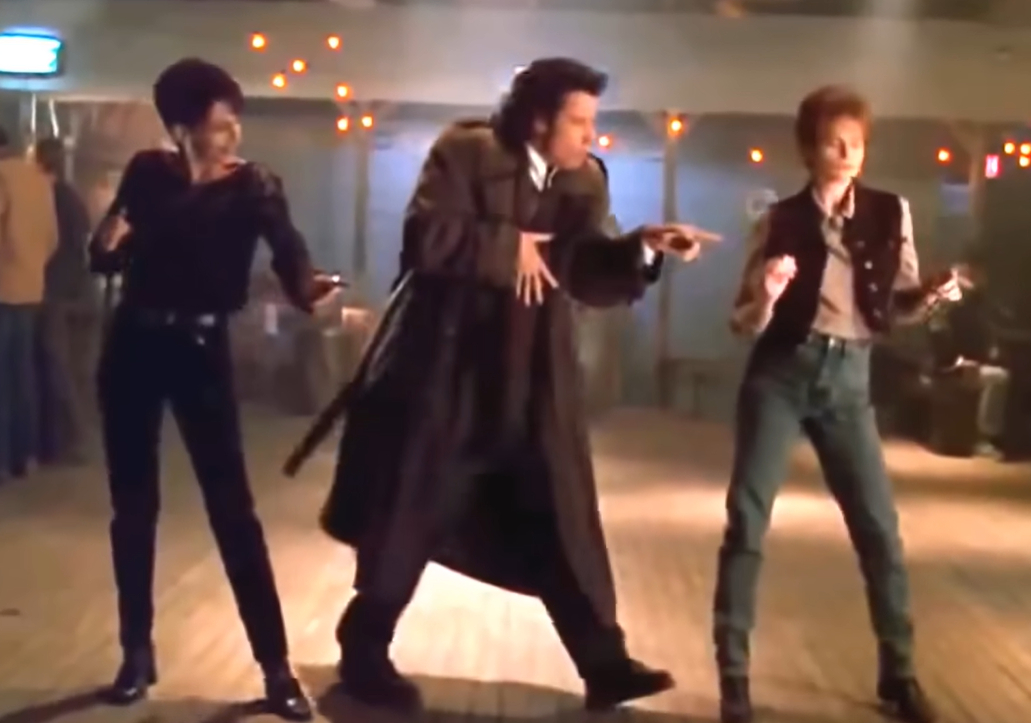
When Vincent Vega and Mia Wallace step onto the dance floor at Jack Rabbit Slim’s, audiences are treated to something completely unexpected.
The restaurant is filled with retro decorations, unusual characters, and an atmosphere inspired by the golden age of American pop culture. Vincent and Mia are participating in a dance contest, but what follows is far more memorable than an ordinary competition.
Rather than performing a polished musical routine, the two characters begin moving to the music with a mixture of confidence, humor, and playful attitude.
Travolta brings back the spirit of the Twist, while Thurman adds her own distinctive personality to the performance.
Their movements are sometimes exaggerated, sometimes deliberately awkward, and always entertaining.
What makes the sequence special is that neither character appears particularly concerned about impressing anyone. They simply enjoy the moment.
That relaxed attitude is precisely what helped transform the scene into a cultural phenomenon.
The Choreography Behind The Unexpected Performance
Although the dance looks spontaneous, there was considerable thought behind the movements.
Professional choreographers Lauren Yalango-Grant and Christopher Grant later examined the sequence for Vanity Fair, explaining how different novelty dances influenced the performers.
Among the movements they identified were the Monkey, the Swim, and the Batman.
These dances helped establish the playful vocabulary of the scene.
Instead of following a traditional choreographed routine from beginning to end, the performers respond to one another.
Vincent makes a movement.
Mia answers with her own.
Vincent reacts again, creating another opportunity for a playful gesture.
The result feels less like a formal dance performance and more like a conversation conducted through body language.
This back-and-forth interaction gives the scene its distinctive personality.
It also explains why the sequence remains entertaining even after countless viewings. The audience is not simply watching two actors follow choreography. They are watching two fictional characters communicate without saying a word.
John Travolta Became The Dance Instructor
Years after the film’s release, Travolta revisited the famous routine during an appearance on The Late Late Show with James Corden.
The conversation eventually turned toward Pulp Fiction, giving the actor an opportunity to discuss the memorable dance sequence.
But instead of simply talking about his experience, Travolta decided to demonstrate the moves.
He began explaining the basic Twist before introducing other familiar novelty dance steps.
Corden and the other participants followed along, turning the television appearance into an entertaining impromptu dance lesson.
For longtime fans, it was a particularly enjoyable moment.
They had watched Vincent Vega move across the floor at Jack Rabbit Slim’s for years. Now they could see the actor himself explaining the movements in a completely different environment.
Travolta’s enthusiasm made the demonstration even more enjoyable.
He was not treating the dance as a complicated piece of movie choreography. He approached it as something anyone could try with a little confidence and a willingness to have fun.
Why Simple Movements Created Such A Memorable Scene
One of the biggest misconceptions about iconic movie dances is that they must involve technically demanding choreography.
The Pulp Fiction sequence proves otherwise.
There are no elaborate ballet combinations, spectacular lifts, or complicated acrobatic movements.
Most of the steps are relatively easy to recognize and imitate.
However, performing them convincingly requires something that cannot be taught through choreography alone: attitude.
Travolta and Thurman maintain remarkably serious expressions while performing movements that are intentionally playful.
That contrast creates much of the humor.
Vincent and Mia behave as though they are participating in the most important dance competition imaginable. Their complete commitment to the moment makes the scene even funnier.
The performances never feel like the actors are simply trying to entertain the audience.
Instead, they remain completely immersed in their characters.
That is what makes the dance feel authentic.
Quentin Tarantino’s Unusual Inspiration
The sequence also reflects Quentin Tarantino’s unconventional approach to filmmaking.
Pulp Fiction moves between crime, dark comedy, unexpected conversations, violence, and moments of surprising humanity.
The dance scene fits naturally into this unusual structure.
Rather than building toward a traditional musical performance, the film suddenly gives its characters a chance to dance.
The moment does not advance the central crime storyline in any conventional way. Yet it reveals something important about Vincent and Mia.
It allows audiences to see them outside the dangerous circumstances surrounding their lives.
Tarantino’s inspiration for the sequence included Jean-Luc Godard’s Bande à part, particularly its famous dance sequence.
Once Travolta joined the project, his experience as a dancer provided an additional dimension to the idea.
The result was a scene that felt different from almost anything audiences had seen in a crime film.
Uma Thurman Was Just As Important As Travolta
Although Travolta’s dancing ability naturally attracts attention, the scene would not have worked nearly as well without Uma Thurman.
Her portrayal of Mia Wallace gives the sequence an entirely different energy.
Mia is confident, unpredictable, and comfortable expressing herself.
She does not simply stand beside Vincent and follow his lead. She actively participates in the dance contest, creating movements and reactions that challenge him to respond.
Their chemistry is essential.
Neither performer completely controls the scene. Instead, they continually exchange movements, allowing the performance to develop naturally.
Thurman’s relaxed confidence balances Travolta’s playful enthusiasm.
Together, they create a partnership that feels spontaneous rather than rehearsed.
This is one reason the sequence continues to work so effectively. Even viewers who know every movement can still enjoy the interaction between the characters.
The Dance That Helped Revive Travolta’s Career
The importance of Pulp Fiction extended far beyond its memorable dance sequence.
Before appearing in the film, Travolta had already established himself as one of Hollywood’s most recognizable performers during the 1970s.
His success in Saturday Night Fever and Grease had made him a major star, particularly because of his extraordinary screen presence and dancing ability.
However, his career had experienced a quieter period in the years that followed.
Then came Vincent Vega.
Tarantino’s film introduced Travolta to a new generation of moviegoers and demonstrated that he still possessed the charisma that had made him famous.
His performance earned widespread recognition, including an Academy Award nomination for Best Actor.
The dance scene became one of the defining images of his career comeback.
Interestingly, it was completely different from the polished musical performances audiences remembered from his earlier films.
Vincent Vega was not Danny Zuko or Tony Manero.
He was a criminal who happened to enjoy dancing.
That difference helped make the performance feel fresh and unexpected.
Why Fans Still Recreate The Famous Moves

More than three decades after Pulp Fiction premiered, the dance remains a familiar reference in popular culture.
Movie fans recreate the Vincent and Mia costumes for Halloween, performers imitate the routine at parties, and countless viewers continue sharing clips of the scene online.
Its popularity comes partly from its accessibility.
You do not need professional training to attempt the Twist or imitate some of the exaggerated movements.
You simply need a suitable song, a willing partner, and enough confidence to enjoy yourself.
The sequence also benefits from its unmistakable visual identity.
Travolta’s dark suit, Thurman’s black outfit, the retro restaurant, and the unusual dance movements combine to create an image that audiences immediately recognize.
It is a perfect example of how a brief cinematic moment can develop a life of its own outside the original movie.
John Travolta’s Dance Legacy Lives On
Travolta’s television demonstration offered something more than a nostalgic trip back to 1994.
It reminded audiences that the actor’s relationship with dance has always been an important part of his screen identity.
From the energetic performances in Saturday Night Fever to the unforgettable musical numbers in Grease, he has repeatedly demonstrated an ability to make movement an essential part of his acting.
But the Pulp Fiction dance occupies a special place in that history.
It was not about perfect technique or elaborate choreography.
It was about character, timing, confidence, and chemistry.
When Travolta stepped onto the dance floor as Vincent Vega, he helped create a moment that would outlive the film’s original theatrical release.
And when he later demonstrated those moves on television, he showed that the magic had never really disappeared.
Sometimes, the most unforgettable performances are not the ones requiring the most complicated steps.
They are the ones that make everyone watching want to get up and dance.
If John Travolta offered to teach you the original Vincent Vega routine, would you be confident enough to join him on the dance floor?