The Highwaymen (2019): Bonnie and Clyde Terrorized America for Years — Until Two Aging Texas Rangers Came Out of Retirement to Hunt Them Down in One Final Deadly Ambush
They were America’s most notorious outlaw couple, robbing banks, stealing cars, and leaving dead police officers behind as they raced across the country. To thousands of ordinary Americans struggling through the Great Depression, Bonnie Parker and Clyde Barrow had become romantic legends. Newspapers celebrated their daring escapes, and crowds treated them like celebrities. But behind the glamorous headlines were two ruthless criminals responsible for devastating violence. When federal agents and local police repeatedly failed to capture them, Texas authorities turned to two forgotten lawmen: Frank Hamer and Maney Gault. They were older, slower, and far removed from the modern police force. Yet they understood something their younger colleagues did not. Bonnie and Clyde could outrun police cars, but they could never outrun their own habits.

Directed by John Lee Hancock, The Highwaymen (2019) stars Kevin Costner as Frank Hamer and Woody Harrelson as Maney Gault. Inspired by the real manhunt that ended the criminal careers of Bonnie and Clyde in 1934, the film tells the story from the perspective of the lawmen who pursued them.
The story begins in January 1934 at the Eastham Prison Farm in Texas.
A group of prisoners is working under armed supervision when gunfire suddenly erupts.
Bonnie Parker and Clyde Barrow have helped organize a violent escape.
Armed accomplices attack the guards, allowing several dangerous criminals to break free.
One prison guard is killed, and the escape becomes another humiliating embarrassment for Texas authorities.
For years, Bonnie and Clyde have traveled across the American Southwest, robbing businesses and killing officers who attempt to stop them.
Their photographs appear in newspapers throughout the country.
But capturing them has become extraordinarily difficult.
They constantly change vehicles, cross state borders, and disappear before police can establish roadblocks.
Worse, much of the public admires them.
During the Great Depression, some Americans see the couple as rebellious figures challenging powerful banks and government institutions.
Texas Governor Miriam “Ma” Ferguson faces growing political pressure to end the killing spree.
Lee Simmons, head of the Texas prison system, believes conventional police tactics have failed.
He suggests bringing back one of the state’s most experienced lawmen.
Frank Hamer.
Hamer is a former Texas Ranger with a legendary reputation for tracking dangerous criminals.
He has survived gunfights, confronted violent gangs, and spent decades operating across some of the country’s most unforgiving territory.
But the Texas Rangers have been reorganized, and Hamer is now retired.
He lives comfortably with his wife, Gladys, enjoying a life far removed from the violence of his past.

When Simmons approaches him, Hamer is reluctant.
He knows the job will be dangerous.
He also understands that hunting Bonnie and Clyde may require killing them.
But after considering the victims and the continuing violence, he accepts.
Hamer immediately decides that he needs a trusted partner.
He chooses Maney Gault, another former Texas Ranger.
Unlike Hamer, Gault has not enjoyed a comfortable retirement.
He lives in poverty and struggles to find meaningful work.
His health and appearance suggest that the years have been unkind to him.
When Hamer arrives with the offer, Gault recognizes an opportunity to recover some of the purpose he once had.
The two men reunite.
Their personalities are different.
Hamer is quiet, disciplined, and uncompromising.
Gault is talkative, sarcastic, and occasionally reckless.
But they share something more important than professional experience.
They trust each other.
After acquiring weapons and supplies, they begin tracking Bonnie and Clyde across Texas and neighboring states.
Almost immediately, they discover how much law enforcement has changed.
Federal investigators rely on advanced communications, scientific techniques, and coordinated intelligence.
Hamer prefers studying roads, interviewing witnesses, and understanding the behavior of the people he is hunting.
Younger officers dismiss the aging Rangers as relics of another era.
But Hamer refuses to be intimidated.
He knows that criminals reveal themselves through patterns.
They need food, fuel, money, shelter, and people they trust.
And sooner or later, those needs create opportunities for capture.
As the investigation continues, Hamer and Gault visit places associated with the Barrow gang.
They interview witnesses, study abandoned hideouts, and examine the aftermath of violent confrontations.
Every discovery reveals more about the criminals’ movements.
But the public’s admiration for Bonnie and Clyde creates unexpected obstacles.
Whenever the couple appears in a town, excited crowds gather around their vehicle.
Some people cheer them.
Others attempt to protect them from the authorities.
Hamer finds the spectacle disturbing.

The public sees a glamorous young couple challenging the establishment.
He sees the bodies of murdered police officers and families whose lives have been destroyed.
Then violence strikes again.
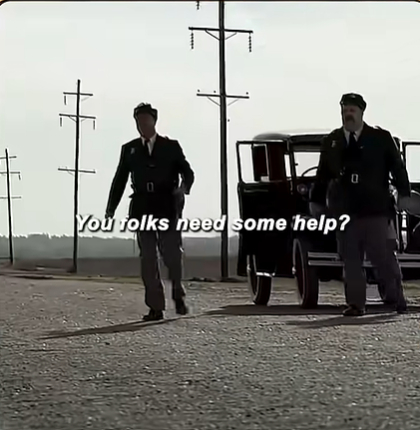
On Easter Sunday, Bonnie and Clyde’s gang encounters two young motorcycle patrolmen near Grapevine, Texas.
The officers are shot and killed.
The murders shock the public, especially as reports emerge about the brutality of the attack.
Hamer studies the crime scene.
He sees the blood, the damaged bodies, and the devastating consequences of treating violent criminals like celebrities.
His determination hardens.
These are not romantic heroes.
They are killers who must be stopped.
The investigation takes Hamer and Gault through small towns, dusty highways, and lonely rural communities.
Along the way, their friendship begins revealing the personal cost of their careers.
Gault struggles with memories of earlier gunfights.
He understands that even when killing is legally justified, the emotional consequences can remain for a lifetime.
Hamer rarely discusses his feelings.
He prefers to focus on the mission.
But his silence conceals the weight of his own violent past.
At one point, Hamer visits Clyde Barrow’s father.
The meeting is uncomfortable.
The older man understands that his son has become one of America’s most wanted criminals.
He also knows that Clyde’s life is unlikely to end peacefully.
Hamer attempts to understand the fugitive’s character.
Clyde’s father offers little hope that his son will surrender.
The conversation reinforces Hamer’s belief that the pursuit may end only when someone dies.
Meanwhile, the lawmen begin concentrating on the gang’s known associates.
They identify Wade McNabb, a former criminal connected to the fugitives.
Hamer and Gault hope he can help reveal Bonnie and Clyde’s movements.
But their interest in him has deadly consequences.
When they later return to McNabb’s home, they discover his body.
He has been brutally beaten to death.
Gault is shaken.
He believes their investigation may have exposed the man to retaliation.
For him, McNabb’s death is another reminder that innocent people and informants can suffer because of decisions made during a manhunt.
Hamer attempts to reassure his partner.
But the discovery adds urgency to their mission.
They are running out of time.

Eventually, Hamer recognizes an important pattern.
Despite their constant movement across state borders, Bonnie and Clyde repeatedly return to people they know.
Their loyalty to family and familiar places creates a weakness.
The trail begins leading toward Louisiana.
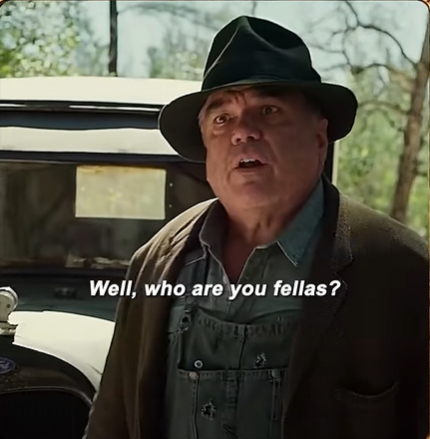
Hamer suspects that the fugitives are staying near the home of Ivy Methvin, whose son Henry is associated with the Barrow gang.
The two Rangers travel to Bienville Parish.
They examine the surrounding roads and discover evidence suggesting the outlaws have been using the area as a refuge.
The location is isolated.
The narrow country roads pass through woodland, with few alternative routes.
For the first time, Hamer sees an opportunity to control the encounter.
He approaches local law enforcement officers and begins assembling a small posse.
But capturing the fugitives will require cooperation from someone close to them.
That person is Ivy Methvin.
Hamer and the other officers confront Ivy and pressure him to help arrange an ambush.
In exchange, they offer protection for his son Henry.
Ivy reluctantly agrees.
He tells the lawmen that Bonnie and Clyde are expected to return along a particular road.
The officers now have the information they need.
They select a quiet stretch of highway surrounded by dense vegetation.
The road is narrow enough to prevent an easy escape.
They plan to position Ivy’s truck beside the roadway as though it has broken down.
If Clyde recognizes the vehicle, he may stop to help.
The officers will then emerge from concealment.
The trap is ready.
But the men must wait.
During the night before the ambush, the posse gathers in a nearby cabin.
Some officers discuss the criminals.
Others play cards.
The atmosphere is tense.
Gault remembers an earlier operation with Hamer that ended in a devastating gunfight.
Among the dead was a thirteen-year-old boy.
Gault admits that he has never forgotten the child’s death.
His story reminds the younger officers that gunfights leave consequences far beyond the moment when the shooting stops.
Outside, Hamer sits alone.
He understands the responsibility resting on his shoulders.
He has spent years pursuing violent criminals, but the final decision to take a life has never become meaningless to him.
The following morning, May 23, 1934, the officers move into position.
They conceal themselves among bushes and trees along the rural road.
Their rifles and shotguns are ready.
Ivy Methvin positions his vehicle where the fugitives will notice it.
Then the waiting begins.
Minutes pass.
The woods remain silent.
Every approaching sound causes the officers to tighten their grip on their weapons.
Finally, a car appears.
It is a Ford V8 sedan.
Inside are Bonnie Parker and Clyde Barrow.
The two criminals approach the roadside truck.
Recognizing Ivy’s vehicle, Clyde slows down.
The car stops.
The trap has worked.
Hamer steps out from his concealed position.
He identifies himself and orders the couple to raise their hands.
For one brief moment, nobody moves.
Bonnie and Clyde realize that they have been surrounded.
Instead of surrendering, they appear to reach for their weapons.
The officers open fire.
Gunshots explode through the quiet Louisiana countryside.
Bullets tear through the windshield, doors, and body of the Ford.
The officers continue firing until the vehicle is completely disabled.
Within moments, the shooting stops.
Hamer slowly approaches the car.
Inside, Bonnie and Clyde are dead.

The outlaws who escaped police forces across several states have finally been stopped.
But there is no celebration.
Hamer and Gault stand before the bullet-riddled vehicle, looking at the devastating result.
They have accomplished their mission.
Yet the scene offers little satisfaction.
Two people are dead, and years of violence have ended in another burst of gunfire.
The bodies and damaged car are transported to Arcadia, Louisiana.
News of the deaths spreads quickly.
Large crowds descend upon the town, desperate to see the notorious criminals.
People push toward the vehicle, attempting to glimpse the bodies.
Some treat the event like a public spectacle.
Others mourn the death of the young couple they had admired from newspaper stories.
Hamer watches with disgust.
Even in death, Bonnie and Clyde have become objects of fascination.
A reporter approaches him and offers one thousand dollars for an exclusive interview.
Hamer refuses.
Gault also rejects the opportunity to profit from the killings.
The two men have no interest in becoming celebrities.
Their work is finished.
As they drive away, Hamer allows Gault to take the wheel.
It is a quiet moment of friendship after a difficult journey.
They return home without the applause or public celebration surrounding the criminals they stopped.
The film concludes by revealing that thousands attended Bonnie and Clyde’s funerals.
Despite their violent history, the outlaw couple remained famous even after death.
Frank Hamer and Maney Gault, meanwhile, continued their lives with far less attention.
The Highwaymen is ultimately more than a crime drama about the pursuit of Bonnie and Clyde.
It is a story about two aging lawmen confronting a changing America, where public fascination can transform violent criminals into romantic legends.
Hamer and Gault are not portrayed as invincible heroes.
They are older men carrying painful memories, physical limitations, and the emotional consequences of decades spent confronting violence.
Their greatest strength is not superior technology or extraordinary firepower.
It is patience, experience, determination, and the ability to understand how criminals think.
The film also challenges the seductive mythology surrounding Bonnie and Clyde.
While newspapers celebrated the couple’s daring robberies, families mourned the police officers and civilians killed during their criminal career.
Hamer refuses to forget those victims.
For him, stopping the outlaws is not about winning fame or proving that he is still capable of wearing a badge.
It is about preventing more innocent people from dying.
In the end, Bonnie and Clyde become immortalized in American popular culture, remembered as rebellious lovers who defied the authorities.
But The Highwaymen reminds viewers of the men who finally brought their violent journey to an end.
Two aging Rangers, long dismissed as belonging to another era, accomplished what younger investigators and modern law enforcement agencies had failed to achieve.
They did not become legends by robbing banks or escaping the police.
They became part of history by ending the legend.
And when the final gunshots faded along that lonely Louisiana highway, the story of Bonnie and Clyde was finished forever.
https://youtu.be/Y3o3ORHnBLc