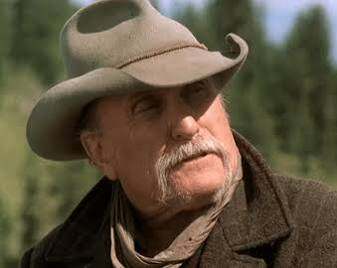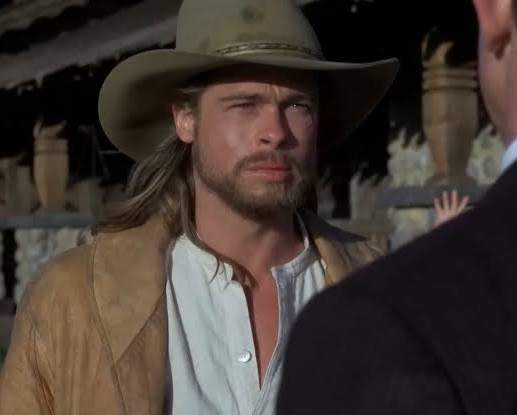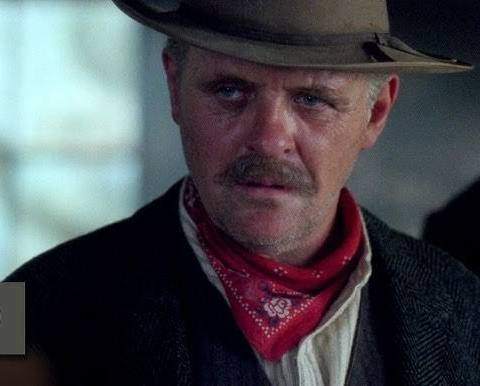
THEY WERE BROTHERS BEFORE TRAGEDY TORE THEM APART! 🥀⚔️ THE HEARTBREAKING STORY OF THE LUDLOW FAMILY!
Some men spend their entire lives fighting enemies they can see. Others discover that their greatest battles are against grief, time, and the terrible consequences of loving their families.
In Legends of the Fall (1994), Colonel William Ludlow is a man who has survived war, rejected the society he once served, and built a remote home where he hopes his sons can live in peace.
But no matter how far he travels from civilization, he cannot escape tragedy.
Portrayed by the legendary Anthony Hopkins, William Ludlow is one of the most compelling characters in Edward Zwick’s sweeping historical drama.
He is proud, stubborn, fiercely independent, and deeply devoted to his children.
He believes that distance from the modern world will protect his family from corruption, violence, and political hypocrisy.
Yet the very forces he despises eventually reach his isolated Montana ranch.
War takes one of his sons.
Jealousy divides the others.
Love becomes a source of suffering.
And the father who once commanded soldiers finds himself powerless to control the destruction unfolding inside his own home.
HE COULD FACE AN ARMY WITHOUT FEAR… BUT NOTHING PREPARED HIM FOR LOSING HIS FAMILY.
That heartbreaking contradiction makes Colonel William Ludlow one of the unforgettable figures in Legends of the Fall.
Anthony Hopkins Brings Extraordinary Power to Colonel William Ludlow
By the time Legends of the Fall reached theaters in 1994, Anthony Hopkins had already established himself as one of cinema’s most respected actors.
His performance as Hannibal Lecter in The Silence of the Lambs had earned him the Academy Award for Best Actor.
But Colonel William Ludlow required a very different kind of intensity.
Instead of portraying a calculating and terrifying villain, Hopkins plays an aging father whose fierce personality conceals profound emotional vulnerability.
William is a former United States Army officer who has become disillusioned with the government and the military establishment.
He has witnessed enough injustice and violence to reject the institutions he once served.
Seeking a different life, he establishes a ranch in the wilderness of Montana.
There, he raises his three sons according to his own principles.
Hopkins gives the character a commanding presence.
Even when William sits silently, he appears capable of dominating an entire room.
His stern expressions, deliberate movements, and powerful voice communicate the authority of a man accustomed to giving orders.
Yet beneath that intimidating exterior lies a father who loves his children more deeply than he can easily express.
This combination of strength and vulnerability gives the performance its emotional impact.
The Man in the Fur Coat: A Portrait of Frontier Defiance
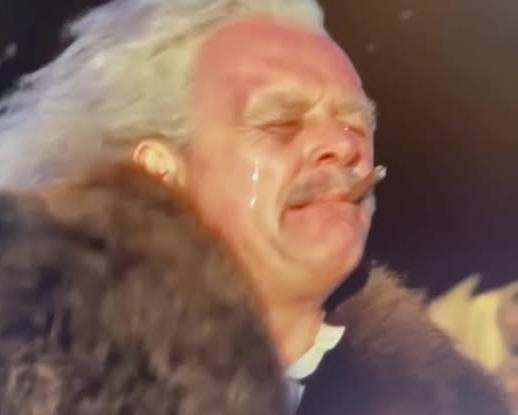
One memorable image associated with Colonel Ludlow shows him dressed in a heavy fur coat, holding a small cigar and looking outward with a sharp, uncompromising expression.
The image captures the character’s rugged personality.
William does not appear interested in elegance or fashionable society.
His clothing reflects the harsh environment he has chosen as his home.
The thick coat suggests the bitter cold of Montana.
His cigar reinforces his independent, stubborn temperament.
And his narrowed eyes convey the attitude of a man who has little patience for foolishness.
He looks like someone who has seen too much of the world to be easily impressed.
But the visual also reveals something more important.
William Ludlow is a man who has deliberately separated himself from the society he distrusts.
His appearance represents his rejection of conventional expectations.
He has abandoned military prestige and political influence in favor of personal freedom.
For him, the wilderness offers an opportunity to live according to his own values.
Unfortunately, even the most remote refuge cannot protect him from the suffering that awaits.
Why Colonel Ludlow Abandoned the Army
William Ludlow’s past is essential to understanding his character.
He once served as an officer in the United States Army.
But his experiences left him deeply disillusioned, particularly with the treatment of Native Americans and the policies pursued by the government.
Rather than continue serving institutions he no longer respected, he withdrew from military life.
His decision was not simply a desire for retirement.
It represented a rejection of the political and moral compromises he associated with civilization.
He wanted to build a different world for his sons.
A world shaped by independence, loyalty, and respect for the land.
The Montana ranch became his personal sanctuary.
Far from Washington, military commands, and social expectations, William hoped his family could live with dignity.
He believed that isolation might preserve the values he considered important.
But his sons would eventually develop their own beliefs and ambitions.
And those differences would test everything their father had tried to create.
Three Sons, Three Different Destinies
William Ludlow’s greatest source of pride is his family.
His three sons — Alfred, Tristan, and Samuel — grow up together on the ranch.
Yet each represents a different approach to life.
Alfred, portrayed by Aidan Quinn, is responsible and ambitious.
He believes in hard work, financial success, and social respectability.
Samuel, played by Henry Thomas, is idealistic and sensitive.
He is drawn to noble causes and believes that individuals have a responsibility to confront injustice.
Tristan, portrayed by Brad Pitt, is wild, impulsive, and deeply connected to nature.
He resists authority and follows his instincts rather than conventional rules.
William loves all three sons, but his relationship with Tristan is particularly complicated.
Tristan resembles his father in important ways.
Both men distrust authority.
Both value personal freedom.
And both possess a fierce emotional intensity.
Yet those similarities also create conflict.
William recognizes something of his younger self in Tristan.
He admires his son’s independence while fearing the destructive consequences of his recklessness.
Tristan Ludlow: The Son Who Inherited His Father’s Wild Spirit
Tristan is arguably the most emotionally powerful presence in the Ludlow family.
His relationship with the wilderness reflects his father’s desire to escape the constraints of civilization.
But Tristan takes that independence even further.
He is not satisfied with simply living far from society.
He seems driven by an almost uncontrollable need for freedom.
He forms a profound connection with the natural world and develops a personality that others find both fascinating and difficult to understand.
William recognizes this wildness.
He knows that Tristan cannot easily be controlled.
The father and son share a deep affection, but their relationship is often expressed through silence, frustration, and mutual understanding rather than sentimental declarations.
This dynamic gives the film much of its emotional richness.
William wants Tristan to be safe.
But he also knows that forcing his son into a conventional life would destroy something essential about him.
As tragedy unfolds, their shared stubbornness becomes both a source of strength and a source of suffering.
The War That Destroyed William Ludlow’s Dream
The outbreak of World War I shatters the peaceful existence William has tried to establish.
Samuel feels compelled to join the conflict.
His decision reflects his idealism and desire to participate in what he believes is a meaningful cause.
But William strongly opposes the war.
He understands its brutality and questions the political motivations behind it.
Having experienced military life himself, he knows that patriotic enthusiasm cannot protect young men from death.
Nevertheless, his sons make their own decisions.
Samuel goes to war, accompanied by Alfred and Tristan.
For William, their departure represents the collapse of his greatest hope.
He has spent years trying to keep his children away from the destructive forces of the outside world.
Now those forces have claimed them.
His fear becomes reality when Samuel is killed in combat.
The youngest son, whose future once seemed so full of possibility, never returns home.
William’s grief is devastating.
And the tragedy changes the family forever.
A Father’s Worst Nightmare: Losing Samuel
Samuel’s death is one of the emotional turning points of Legends of the Fall.
For William, it represents a loss that no amount of strength or authority can reverse.
He has survived battles.
He has commanded men.
He has built a home in a remote wilderness.
But none of those accomplishments can bring his youngest son back.
His grief is intensified by the circumstances surrounding Samuel’s death.
William had opposed the war from the beginning.
He understood the dangers.
He feared the consequences.
Yet he could not prevent his sons from leaving.
Now the tragedy confirms his darkest expectations.
The world he rejected has taken something irreplaceable.
Hopkins portrays this suffering with remarkable emotional restraint.
William does not need elaborate speeches to communicate his pain.
His expressions, silence, and physical presence reveal the devastation beneath his hardened exterior.
The loss of Samuel becomes a wound that never fully heals.
When Love Turns Brothers Against Each Other
War is not the only force that threatens the Ludlow family.
The arrival of Susannah Fincannon, portrayed by Julia Ormond, creates an emotional conflict that eventually divides Alfred and Tristan.
Susannah originally comes to the ranch as Samuel’s fiancée.
But after Samuel’s death, her relationships with his surviving brothers become increasingly complicated.
Alfred develops deep feelings for her.
Tristan and Susannah share a passionate attraction.
Their romantic entanglement exposes tensions that have existed between the brothers for years.
Alfred feels overshadowed by Tristan.
Tristan refuses to live according to the expectations of others.
And Susannah becomes caught between two men whose personalities could hardly be more different.
For William, the growing rivalry represents another painful fracture in the family he hoped would remain united.
He cannot force his sons to understand one another.
He cannot erase their jealousy.
And he cannot protect them from the consequences of their choices.
The father who once commanded soldiers is powerless to command the hearts of his children.
Anthony Hopkins and the Art of Silent Heartbreak
One of the most impressive aspects of Hopkins’ performance is his ability to communicate profound emotion without excessive dialogue.
Colonel Ludlow is not a man who easily discusses his feelings.
He comes from a generation in which strength is often associated with restraint.
He prefers action to confession.
He expresses affection through loyalty, protection, and shared experiences.
But as his family experiences repeated tragedies, that emotional restraint becomes increasingly painful.
The audience can see his suffering even when he refuses to articulate it.
A lingering glance can reveal disappointment.
A tense expression can communicate fear.
And a moment of silence can suggest grief too deep for words.
Hopkins gives William an emotional complexity that prevents him from becoming a simple stereotype of a stern frontier patriarch.
He is powerful but vulnerable.
Proud but wounded.
And deeply loving despite his inability to control the fate of those he loves.
The Stroke That Changes Everything
As the story progresses, William suffers a stroke that severely affects his ability to communicate.
For a man who has spent his life expressing authority through his voice and physical presence, the change is devastating.
The once-commanding colonel becomes dependent on others.
His frustration is evident.
He still possesses the same fierce personality, but his body no longer allows him to express himself as he once did.
This development creates one of the film’s most poignant transformations.
William has always valued independence.
Now he must confront the vulnerability that comes with aging and illness.
Hopkins communicates the character’s emotional struggle through limited speech, facial expressions, and physical movement.
The performance becomes even more powerful because the audience remembers the man William once was.
The contrast between his former authority and his present limitations is heartbreaking.
Yet his determination remains.
Even when he cannot communicate easily, his personality is unmistakable.
His body has changed, but his spirit has not disappeared.
The Family Ranch: A Sanctuary That Could Not Keep Tragedy Away
The Ludlow ranch is one of the most important settings in the film.
Surrounded by mountains, forests, and open landscapes, it represents the freedom William sought when he abandoned military life.
The ranch is a place of extraordinary beauty.
It offers independence and distance from the political conflicts of the outside world.
But its isolation also creates a powerful irony.
William believes that removing his family from civilization will protect them.
Yet the greatest threats to their happiness emerge from forces he cannot control.
War reaches across continents.
Romantic jealousy develops within the household.
Grief follows the family through generations.
And tragedy repeatedly disrupts their attempts to find peace.
The landscape remains beautiful even as the characters suffer.
This contrast gives the film much of its haunting atmosphere.
Nature offers freedom, but it does not guarantee happiness.
Edward Zwick’s Epic Vision of Family and Loss
Director Edward Zwick uses the Ludlow family’s story to explore the relationship between personal freedom and emotional responsibility.
The film unfolds across decades, allowing viewers to witness the changing relationships between its characters.
William’s decision to withdraw from society creates the foundation for the story.
His sons grow up in an environment shaped by independence and strong personal loyalties.
But as they become adults, their choices lead them in different directions.
Zwick emphasizes the emotional consequences of those choices.
The film’s sweeping cinematography captures the grandeur of the American West.
Its intimate dramatic scenes reveal the pain hidden within the family.
The result is a story that feels both enormous and deeply personal.
The wilderness provides the backdrop.
But the real drama takes place within the hearts of the Ludlows.
The Emotional Weight of James Horner’s Music
James Horner’s unforgettable score adds another layer of emotional intensity to Legends of the Fall.
The music captures the beauty of the Montana landscape while reflecting the characters’ grief and longing.
Its sweeping melodies suggest freedom and adventure.
Its more melancholic passages evoke loss, memory, and regret.
For William Ludlow, the music reinforces the contrast between the life he hoped to create and the tragedies he experiences.
The ranch initially seems like a place where his family can remain together.
As the years pass, the score becomes associated with memories of what has been lost.
Samuel’s innocence.
The brothers’ childhood bond.
And the peaceful future William once imagined.
Horner’s compositions help transform these experiences into an emotionally powerful cinematic journey.
The soundtrack remains one of the film’s most beloved elements.
The Final Confrontation: A Father’s Love Becomes His Greatest Weapon
One of the film’s most memorable late sequences demonstrates that William’s fierce devotion to his family has survived everything.
After years of grief, illness, and conflict, danger once again threatens Tristan.
The confrontation involves powerful enemies connected to the family’s long-running troubles.
Despite his physical limitations, William refuses to remain passive.
He acts to defend his son.
The scene is especially powerful because the audience has witnessed his transformation.
This is no longer the commanding military officer introduced at the beginning of the story.
He is an aging father whose body has been weakened.
Yet his determination remains as fierce as ever.
His willingness to protect Tristan reveals the depth of his love.
It also contributes to an important moment of reconciliation within the family.
The conflict between Alfred and Tristan has lasted for years.
But when the family faces danger, old loyalties reemerge.
The scene reminds viewers that beneath the jealousy, resentment, and separation, the Ludlows remain connected by something powerful.
THE WORLD COULD BREAK HIS BODY… BUT IT COULD NEVER BREAK HIS LOVE FOR HIS SONS.
Why Colonel William Ludlow Is One of Anthony Hopkins’ Most Memorable Roles
Anthony Hopkins has portrayed many unforgettable characters throughout his career.
But Colonel William Ludlow stands apart because of the emotional range required by the role.
He begins as a proud, authoritative patriarch.
He becomes a grieving father.
He experiences the pain of watching his sons drift apart.
He suffers a debilitating stroke.
And he ultimately demonstrates that his loyalty remains stronger than his physical limitations.
The performance combines intensity, vulnerability, anger, and tenderness.
Hopkins makes William believable as both a former soldier and a devoted father.
He never reduces the character to a simple symbol of strength.
Instead, he reveals the emotional cost of trying to protect a family from a world that cannot be controlled.
William’s tragedy is not that he fails to love his children.
It is that love alone cannot prevent them from suffering.
That realization gives the character extraordinary emotional depth.
Why Legends of the Fall Still Moves Audiences Decades Later
Released in December 1994, Legends of the Fall became known for its sweeping romantic storytelling, powerful performances, and breathtaking cinematography.
The film won the Academy Award for Best Cinematography.
Brad Pitt’s portrayal of Tristan helped establish the character as one of the defining romantic figures of 1990s cinema.
But Anthony Hopkins’ performance provides much of the story’s emotional foundation.
Without William Ludlow, the family’s tragedies would lose an important dimension.
He represents the older generation, carrying memories of war, injustice, and disillusionment.
His sons represent different responses to the world he has rejected.
Their choices create the conflicts that shape the film.
And his suffering reveals the devastating consequences of those conflicts.
The story remains compelling because it explores experiences that transcend its historical setting.
Parents cannot always protect their children.
Families cannot always remain united.
And love does not guarantee freedom from tragedy.
These truths make the Ludlow family’s story deeply moving.
Conclusion: He Built a Home to Escape the World’s Cruelty, but Tragedy Found Him Anyway
Colonel William Ludlow is one of the emotional pillars of Legends of the Fall.
Through Anthony Hopkins’ extraordinary performance, he becomes more than