One Wrong Move Could Mean Death! The Last of the Mohicans Turns the Forest Into a Fight for Survival
Deep in the wilderness, danger can strike without warning. Armed men rush between towering trees, weapons are raised, and every movement becomes a desperate attempt to survive. In The Last of the Mohicans (1992), the forest is not simply a beautiful landscape — it is a place where one wrong decision could cost everything.
Few historical adventure films have captured the raw intensity of frontier warfare as effectively as The Last of the Mohicans.
Directed by Michael Mann and starring Daniel Day-Lewis, the film combines breathtaking scenery, powerful performances, and unforgettable action.
One of its most memorable qualities is the way it transforms the wilderness into an unpredictable environment filled with danger.
This intense forest sequence demonstrates exactly why the film continues to captivate audiences decades after its release.
A Forest Where Danger Hides Everywhere
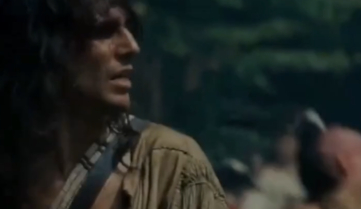
The scene unfolds in a dense woodland filled with towering trees, thick vegetation, and uneven ground.
At first glance, the surroundings appear peaceful.
But the wilderness offers countless opportunities for danger to remain hidden.
A figure can disappear behind a tree.
An attacker can approach without being noticed.
And a seemingly safe path can become a deadly trap.
As armed men move through the forest, the atmosphere becomes increasingly tense.
Their movements are quick and urgent.
There is little time to hesitate.
Every second matters.
The natural landscape creates a feeling of uncertainty that makes the confrontation even more intense.
When the Fighting Becomes Desperate
The action moves rapidly as the men struggle through the woodland.
Weapons appear among the trees, and the characters react to threats around them.
The fighting feels immediate and dangerous.
Unlike the carefully organized formations often associated with eighteenth-century European warfare, combat in this environment is unpredictable.
The terrain restricts movement.
Visibility is limited.
And the characters must respond to whatever appears directly in front of them.
This makes the sequence especially gripping.
There is no comfortable distance between the audience and the danger.
Instead, viewers are drawn into the confusion, experiencing the uncertainty alongside the characters.
Survival Demands Courage and Instinct
One of the most compelling elements of The Last of the Mohicans is its portrayal of survival in a dangerous frontier environment.
The characters cannot rely on strength alone.
They must understand their surroundings, react quickly, and recognize threats before it is too late.
The forest rewards those who know how to move through it.
But it can become deadly for anyone who underestimates its dangers.
This tension is central to the film’s story.
Hawkeye, portrayed by Daniel Day-Lewis, is a skilled frontiersman whose knowledge of the wilderness shapes his decisions.
His ability to navigate the landscape distinguishes him from soldiers accustomed to more conventional military tactics.
That contrast gives the film much of its dramatic power.
Michael Mann Makes Every Movement Feel Real
Director Michael Mann is known for creating action sequences that feel physical, urgent, and emotionally engaging.
In The Last of the Mohicans, his approach brings a remarkable sense of immediacy to the fighting.
Rather than relying entirely on distant views of large battles, the camera frequently follows individual characters as they move through dangerous environments.
The audience sees the strain of running through the forest.
The sudden appearance of armed opponents creates tension.
And the surrounding landscape makes every confrontation more unpredictable.
The result is an action sequence that feels grounded in the physical challenges of its setting.
The forest becomes part of the storytelling rather than simply a backdrop.
More Than Just Another Historical Battle
Although The Last of the Mohicans contains spectacular action, its emotional story gives those moments greater meaning.
Set during the French and Indian War, the film follows characters whose lives are shaped by conflict between European colonial powers and their Indigenous allies.
Loyalty, love, family, and survival are central themes.
Hawkeye’s relationships with Cora Munro, Chingachgook, and Uncas help establish the personal stakes behind the danger.
The characters are not simply trying to defeat their opponents.
They are fighting to protect the people who matter most to them.
This emotional foundation makes even brief moments of action feel significant.
Every confrontation carries the possibility of irreversible loss.
Why This Classic Still Captivates Audiences
Released in 1992, The Last of the Mohicans remains admired for its cinematography, memorable score, and powerful performances.
Its wilderness sequences have a distinctive atmosphere that separates the film from many conventional historical adventures.
The combination of beautiful scenery and sudden violence creates a striking contrast.
One moment, the forest seems calm.
The next, the characters are fighting for their lives.
That unpredictability keeps viewers emotionally invested.
Even a short clip can capture the film’s ability to generate suspense through movement, setting, and physical danger.
A Fight for Survival That Still Feels Intense
More than three decades later, the action in The Last of the Mohicans continues to leave an impression.
The fast movements, dangerous terrain, and constant uncertainty remind audiences that survival in the wilderness requires more than bravery.
It demands instinct, determination, and the ability to react when everything goes wrong.
ONE MOMENT THE FOREST IS QUIET… THE NEXT, EVERY MOVEMENT COULD MEAN THE DIFFERENCE BETWEEN LIFE AND DEATH!
Do you think The Last of the Mohicans is one of the greatest historical adventure films ever made? And which action scene from this classic is your favorite? Share your thoughts below!
#TheLastOfTheMohicans #DanielDayLewis #MichaelMann #HistoricalMovies #EpicAction #ClassicCinema #MovieLegends