THE TWIST TOOK AMERICA BY STORM! 💃🕺🔥 THE SIMPLE DANCE CRAZE THAT CHANGED THE 1960s FOREVER!
One Simple Dance That Made an Entire Generation Go Wild
Before viral dance challenges, before social media, and long before anyone could share a dance video with millions of people in seconds, America experienced a musical phenomenon that changed the way people moved forever.
It was called The Twist.
And in the early 1960s, almost everyone wanted to try it.
There were no complicated routines to memorize.
No elaborate choreography.
And perhaps most surprisingly, no dance partner was required.
All you needed was an irresistible rock ’n’ roll rhythm, a little confidence, and the willingness to move your hips and shoulders.
Suddenly, teenagers, parents, celebrities, and even older generations were joining the excitement.
Dance floors across America came alive with a new kind of energy.
The Twist wasn’t simply another popular dance.
It represented freedom, individuality, and a changing American culture.
ONE SONG. ONE SIMPLE MOVEMENT. AND MILLIONS OF PEOPLE WHO COULDN’T STOP DANCING!
How The Twist Became a National Sensation
The story of The Twist is closely connected to one of the most recognizable performers of the early 1960s: Chubby Checker.
Although the song “The Twist” was originally recorded by Hank Ballard and the Midnighters in 1959, Chubby Checker’s 1960 recording brought it to an enormous mainstream audience.
Checker’s energetic performance and approachable dancing style helped turn the song into a cultural sensation.
His appearance on American Bandstand, hosted by Dick Clark, played an important role in popularizing the dance.
Millions of viewers watched the young performer demonstrate movements that looked exciting but surprisingly easy to imitate.
Within a short time, The Twist became a national craze.
People began practicing the movements at home, at parties, and in dance halls.
The song reached No. 1 on the Billboard Hot 100 in September 1960.
Even more remarkably, it returned to the top position in January 1962.
This unusual achievement demonstrated the extraordinary staying power of the dance craze.
The Twist was no passing curiosity.
It had become a defining part of American popular culture.
No Partner Needed: The Dance That Broke the Rules
One reason The Twist became so popular was its simplicity.
Before the early 1960s, many popular social dances involved couples moving together through coordinated steps.
Swing dancing, the Jitterbug, and other partner dances often required communication and coordination between dancers.
The Twist offered something different.
People could dance independently while still enjoying the energy of a crowded dance floor.
The basic movement involved twisting the hips and feet while allowing the upper body to move in the opposite direction.
The arms could move naturally with the rhythm.
Dancers didn’t need to memorize a complicated sequence.
They could simply listen to the music and begin moving.
This freedom made The Twist especially appealing to young people.
It encouraged personal expression.
It allowed dancers to experiment with their own styles.
And it removed some of the pressure associated with learning formal partner-dance techniques.
NO PARTNER. NO COMPLICATED STEPS. JUST TURN UP THE MUSIC AND TWIST!
Chubby Checker: The Man Who Made America Dance
Chubby Checker became one of the most recognizable faces of the Twist phenomenon.
Born Ernest Evans in 1941, the singer developed a reputation for energetic performances and an engaging personality.
His recording of “The Twist” transformed his career.
Almost overnight, he became associated with a dance that was spreading across the country.
Television appearances helped introduce his music and movements to new audiences.
His enthusiasm made the dance feel accessible.
Rather than presenting it as something requiring professional training, Checker demonstrated that almost anyone could participate.
That message resonated with viewers.
The Twist wasn’t about perfection.
It was about having fun.
Checker continued his success with other dance-related recordings, including “Let’s Twist Again,” released in 1961.
The song became another major hit and reinforced his position as one of the defining entertainers of the era.
His influence on dance culture remains significant.
American Bandstand and the Power of Television
Television played a crucial role in spreading The Twist.
During the late 1950s and early 1960s, American Bandstand had become an important platform for popular music and teenage culture.
Hosted by Dick Clark, the program featured young dancers performing to the latest records.
For viewers across the United States, it provided an opportunity to discover new music and dance trends.
When The Twist gained attention, television helped transform it into a national phenomenon.
Teenagers watched the movements and tried them for themselves.
Friends practiced together.
School dances became filled with twisting hips and energetic rhythms.
The program demonstrated how television could influence popular culture.
A dance performed in a studio could quickly become fashionable in cities and towns across the country.
In many ways, American Bandstand played a role similar to modern social media platforms.
It helped introduce dance trends to a large audience.
But instead of watching videos on smartphones, young people gathered around television sets.
The Dance That Crossed Generations
One of the most remarkable aspects of The Twist was its appeal beyond teenage audiences.
Rock ’n’ roll had initially generated controversy among some older Americans.
Its energetic rhythms and rebellious image challenged traditional expectations.
But The Twist gradually attracted people from different generations.
Adults began joining the craze.
Celebrities embraced the dance.
And fashionable nightclubs started featuring Twist music.
The Peppermint Lounge in New York City became particularly famous during the Twist phenomenon.
The nightclub attracted attention as a fashionable destination where people could enjoy the latest dance craze.
The Twist was no longer confined to teenage parties.
It had entered mainstream entertainment.
Its popularity demonstrated that a simple dance could bring together people who might otherwise have very different musical tastes.
For a few minutes, everyone could share the same rhythm.
Why the Early 1960s Were Never the Same
The Twist emerged during a period of significant cultural change in the United States.
Young people were becoming increasingly influential in music, fashion, and entertainment.
Popular culture was moving toward greater informality and individual expression.
The Twist reflected those changes.
Unlike dances that required partners to maintain close physical contact, it allowed individuals to move independently.
That shift influenced the development of social dancing in later decades.
The dance also encouraged a more relaxed approach to movement.
People didn’t need to perform identical steps.
They could improvise.
They could laugh.
And they could express their personalities through rhythm.
The freedom associated with The Twist helped establish a style of dancing that would become increasingly familiar during the 1960s and beyond.
The Fashion That Made Twist Parties Unforgettable
The Twist craze wasn’t only about music and movement.
It was also connected to the distinctive fashion of the early 1960s.
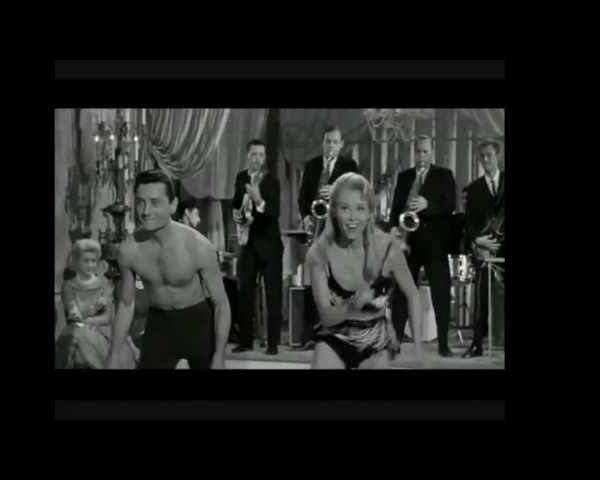
Vintage footage from the era shows young men wearing fitted trousers, button-down shirts, sweaters, and polished shoes.
Women appeared in colorful dresses, skirts, and carefully styled hairstyles.
As the dancers twisted their hips and shoulders, their clothing added movement and visual excitement to the scene.
Full skirts swayed with the rhythm.
Smartly dressed couples moved across the floor.
And the combination of music and fashion created an unmistakable early-1960s atmosphere.
Watching these scenes today feels like opening a window into another era.
The hairstyles.
The outfits.
The smiles.
And the excitement of young people discovering a new musical sensation.
Every detail contributes to the nostalgia.
The Twist Was More Than Just a Dance Craze
The Twist helped change expectations about social dancing.
It encouraged people to move without relying on complicated partner routines.
That freedom influenced later dance trends.
During the 1960s, other popular dances emerged, including the Mashed Potato, the Watusi, the Pony, and the Swim.
Each brought its own movements and musical associations.
But The Twist helped establish the idea that a simple, recognizable movement could become a nationwide sensation.
This pattern would continue for decades.
The Hustle became associated with the disco era.
Later generations embraced line dancing, hip-hop choreography, and numerous other popular styles.
Today, social media dance challenges often follow a similar formula.
A catchy song.
A recognizable movement.
And thousands or millions of people eager to participate.
The technology has changed dramatically, but the basic excitement remains familiar.
The Joy of Dancing Without Social Media
One of the most charming aspects of vintage Twist footage is the sense of spontaneity.
The dancers weren’t performing for online followers.
They weren’t checking how many views their movements received.
They were simply enjoying the music.
Some dancers moved with extraordinary confidence.
Others laughed as they tried to follow the rhythm.
And many added their own playful variations.
The atmosphere was energetic and social.
People gathered to enjoy themselves.
A favorite record could transform an ordinary evening into an unforgettable memory.
The Twist made participation easy.
Even someone who had never considered themselves a talented dancer could join the excitement.
That accessibility was central to its success.
THEY DIDN’T NEED MILLIONS OF VIEWS TO HAVE THE TIME OF THEIR LIVES — JUST A GREAT SONG AND A DANCE FLOOR!
The Twist and the Soundtrack of a Generation
The early 1960s produced an extraordinary collection of popular music.
Rock ’n’ roll continued evolving, while rhythm and blues, pop, soul, and other styles reached increasingly diverse audiences.
The Twist became part of that musical landscape.
Its energetic rhythm made it ideal for parties and social gatherings.
The song’s memorable hook encouraged participation.
And Chubby Checker’s performances gave the movement a recognizable identity.
For many listeners, hearing “The Twist” immediately brings back images of crowded dance floors and smiling teenagers.
The song became more than a hit record.
It became a symbol of an era.
And its influence extended beyond the United States as the dance gained international popularity.
Hollywood and Television Helped Preserve the Craze
As The Twist became popular, entertainment producers recognized its visual appeal.
Television programs featured dancers performing the movement.
Movies and musical productions reflected the excitement surrounding the trend.
News footage documented its spread through clubs and social gatherings.
These recordings now provide a fascinating glimpse into the early 1960s.
Modern audiences can watch the original movements, observe the clothing, and experience the enthusiasm that surrounded the craze.
The footage also reveals how quickly dance culture can evolve.
Movements that once seemed revolutionary eventually become familiar.
But when viewed in their historical context, their significance becomes clear.
The Twist helped redefine how people approached social dancing.
Why Vintage Twist Videos Still Make People Smile
More than sixty years later, footage of people performing The Twist continues to attract attention.
For older viewers, the images may bring back memories of teenage years, school dances, and family celebrations.
For younger audiences, the performances offer a fascinating look at a time before digital entertainment.
The dance itself remains surprisingly approachable.
Its movements are easy to recognize.
The rhythm is infectious.
And the atmosphere feels joyful.
Watching a room full of people twisting together reminds us that entertainment doesn’t always need to be complicated.
Sometimes, the simplest ideas create the strongest connections.
The Twist succeeded because it encouraged everyone to participate.
And that spirit remains appealing today.
Could The Twist Become Popular Again?
Dance trends frequently return.
Styles that once dominated popular culture can find new audiences decades later.
Vintage music and fashion regularly inspire modern entertainment.
The Twist has all the ingredients needed to remain enjoyable.
It is simple.
It is energetic.
And it can be performed by people of different ages and experience levels.
Unlike highly technical choreography, it doesn’t require weeks of practice.
Anyone can try the basic movement.
That accessibility helped make it famous in 1960.
And it continues to make the dance entertaining today.
Whether performed at a retro-themed party, a family celebration, or a dance event, The Twist still has the power to bring smiles.
The Lasting Legacy of a Simple Movement
The Twist occupies a special place in American music and dance history.
It helped establish Chubby Checker as an international star.
It demonstrated the growing influence of television on youth culture.
And it encouraged a more individual approach to social dancing.
Perhaps most importantly, it showed that entertainment could become a shared cultural experience without requiring complicated skills.
Millions of people participated because the dance felt accessible.
They could learn the movement quickly.
They could add their own personality.
And they could enjoy the music together.
The Twist helped create memories that remain meaningful to generations of music lovers.
Its influence can still be recognized in the dance trends that followed.
Conclusion: The Dance That Made America Twist Again and Again
The early 1960s were filled with unforgettable music, exciting fashion, and changing cultural traditions.
But few dance crazes captured the public imagination quite like The Twist.
With its simple movements and irresistible rhythm, it transformed dance floors across America.
Chubby Checker’s recording introduced the craze to millions of listeners.
Television helped spread the excitement.
And people of different generations embraced the freedom of dancing without complicated choreography.
ONE SONG. ONE SIMPLE DANCE. AND AN ENTIRE GENERATION THAT COULDN’T STOP MOVING! 💃🕺🔥
More than six decades later, the magic remains.
The music still makes people smile.
The movements still feel familiar.
And vintage footage continues to bring the unforgettable spirit of the 1960s back to life.
BEFORE VIRAL DANCE CHALLENGES, AMERICA WAS ALREADY TWISTING ITS WAY INTO HISTORY!
❤️ DO YOU REMEMBER WHEN EVERYONE WAS DOING THE TWIST? DID YOU EVER TRY IT YOURSELF?
🎬 WATCH FULL BELOW LINK 👇👇👇
#TheTwist #ChubbyChecker #1960sDance #SixtiesMusic #RetroDance #60sNostalgia #VintageDance #RockAndRoll #AmericanBandstand #ClassicMusic #DanceHistory #OldiesMusic