
Some of the most memorable scenes in Django Unchained (2012) are not defined by explosive gunfights or dramatic action sequences. Instead, they come from conversations filled with tension, sharp dialogue, and unpredictable character reactions.
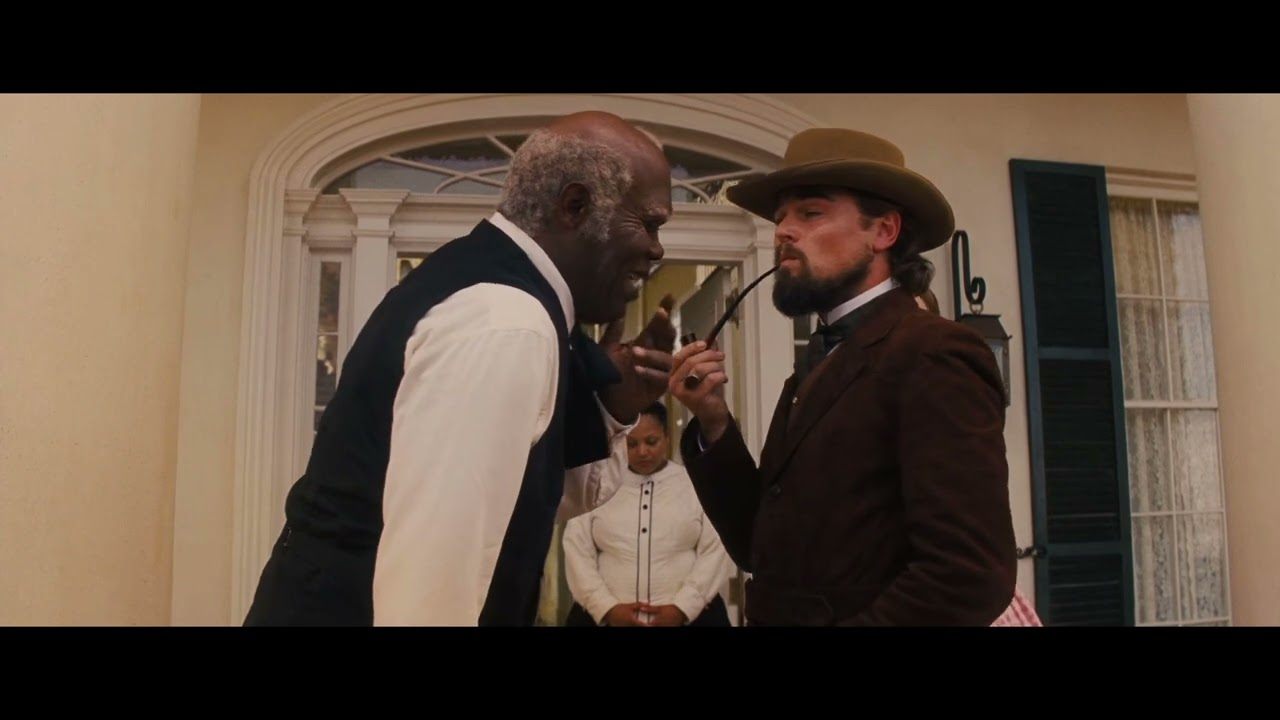
This scene featuring Leonardo DiCaprio as Calvin Candie and Samuel L. Jackson as Stephen is a perfect example.
Set around Candie’s plantation, the moment begins with Stephen questioning Calvin about something he has not yet been told.
The conversation centers on Hildi, also known as Broomhilda, whose presence becomes an important part of the unfolding story.
Stephen’s frustration is immediately apparent.
He is determined to understand what is happening, and he does not hesitate to confront Calvin with his questions.
Calvin, meanwhile, responds with the casual confidence of a man accustomed to having his authority accepted without challenge.
The contrast between their personalities creates an unusual mixture of comedy and tension.
ONE MAN DEMANDS ANSWERS… THE OTHER ACTS LIKE NOTHING IS WRONG!
Directed by Quentin Tarantino, Django Unchained combines Western action, dark comedy, and historical drama in a story centered on Django’s determination to rescue his wife from enslavement.
The film features an extraordinary cast, including Jamie Foxx, Christoph Waltz, Leonardo DiCaprio, Kerry Washington, and Samuel L. Jackson.
While Django and Dr. King Schultz drive much of the story, Calvin Candie and Stephen create some of its most disturbing and memorable conflicts.
Their relationship is particularly fascinating because it combines familiarity, dependence, manipulation, and an unequal structure of power.
Stephen has spent years within Candie’s household and possesses considerable knowledge of its daily operations.
Calvin holds the ultimate authority, but Stephen often speaks with a level of directness that surprises viewers.
This dynamic becomes especially entertaining during their exchanges.
In the scene, Stephen questions Calvin about Hildi and the circumstances surrounding her absence.
His tone is suspicious and increasingly impatient.
Calvin attempts to explain the situation, but his answers do not immediately satisfy Stephen.
As the conversation develops, Stephen’s expressions become more intense.
Samuel L. Jackson uses his voice, posture, and facial expressions to communicate frustration without needing elaborate action.
His performance gives the scene much of its energy.
Leonardo DiCaprio responds with an equally distinctive portrayal of Calvin Candie.
Calvin’s casual manner and confident expressions suggest a man who believes he can control almost any situation.
Yet Stephen’s questioning creates an unexpected challenge.
The result is an exchange that feels both uncomfortable and strangely amusing.
The humor is dark because the conversation concerns people trapped within a brutal system of slavery.
Tarantino does not present this world as harmless.
Instead, he uses the characters’ behavior to expose the disturbing attitudes and contradictions surrounding them.
WHEN STEPHEN STARTS ASKING QUESTIONS, EVEN CALVIN CANDIE HAS TO EXPLAIN HIMSELF!
One particularly memorable element is Stephen’s reaction to the explanation involving Hildi.
He clearly believes there is more to the situation than Calvin initially reveals.
His suspicion makes the audience pay closer attention.
Why is Hildi being discussed?
What does Stephen already know?
And how might this conversation affect Django and Schultz’s plans?
These questions help transform an apparently ordinary exchange into an important moment of dramatic tension.
Stephen is not simply a background character.
He is observant, calculating, and capable of recognizing inconsistencies in the behavior of others.
That intelligence makes him a dangerous obstacle for Django.
Samuel L. Jackson’s portrayal ensures that even a short conversation can reveal Stephen’s influence within the household.
Calvin Candie, meanwhile, represents a different kind of danger.
He is wealthy, powerful, arrogant, and accustomed to controlling the people around him.
Leonardo DiCaprio gives the character an unsettling combination of charm and cruelty.
At times, Calvin appears relaxed and almost playful.
But beneath that outward confidence lies a deeply threatening personality.
The contrast between his casual speech and the violence of his world makes him one of the film’s most memorable antagonists.
This scene also demonstrates Tarantino’s remarkable ability to create suspense through dialogue.
Rather than immediately introducing physical violence, he allows tension to develop through questions, pauses, and subtle changes in expression.
Every response carries potential consequences.
Every suspicious glance suggests that someone may be hiding important information.
And every moment brings the audience closer to the possibility that Django and Schultz’s plans could be discovered.
The conversation gains additional importance because Broomhilda is central to Django’s mission.
Django is not visiting Candie’s plantation for entertainment or financial gain.
His ultimate objective is to rescue his wife and secure their freedom.
Schultz helps him approach this dangerous task through a carefully constructed plan.
But their success depends on avoiding suspicion.
Stephen’s sharp observations therefore represent a serious threat.
If he begins questioning the wrong details, the entire mission could unravel.
That possibility gives the scene significance beyond its immediate humor.
ONE SUSPICIOUS QUESTION COULD DESTROY DJANGO’S ENTIRE PLAN!
Another reason the moment stands out is the chemistry between DiCaprio and Jackson.
Both actors deliver performances filled with distinctive gestures and carefully controlled expressions.
DiCaprio captures Calvin’s entitlement and impatience.
Jackson brings Stephen’s suspicion and forceful personality to life.
Their interaction creates a compelling clash between two characters who know each other well but do not always agree.
The scene also reveals the complicated nature of Stephen’s position.
Although he is enslaved, he has acquired a degree of authority within Candie’s household.
He uses that influence to enforce the plantation’s oppressive hierarchy, making him one of the story’s most troubling figures.
His behavior illustrates how power can operate through individuals who themselves remain trapped within an unjust system.
That complexity makes Stephen more than a conventional Western villain.
He is a character whose intelligence and loyalty to the plantation’s interests make him particularly dangerous.
For fans of Django Unchained, scenes like this demonstrate why the film remains so memorable.
Its action sequences are spectacular, but its conversations often carry just as much dramatic power.
The audience is entertained by the actors’ performances while remaining aware of the serious stakes beneath the dialogue.
The combination of suspense, uncomfortable humor, and character development creates a distinctive cinematic experience.
Leonardo DiCaprio and Samuel L. Jackson bring remarkable energy to this exchange.
Their performances turn a seemingly simple conversation about Hildi into a memorable demonstration of suspicion, authority, and dark comedy.
And as the larger story unfolds, the audience understands that Stephen’s questions may have consequences far beyond this brief interaction.
TWO LEGENDARY ACTORS… ONE UNFORGETTABLE CONVERSATION… AND A SCENE THAT PROVES WORDS CAN BE JUST AS DANGEROUS AS BULLETS!
WHO STOLE THIS DJANGO UNCHAINED SCENE — LEONARDO DICAPRIO AS CALVIN CANDIE OR SAMUEL L. JACKSON AS STEPHEN?
Share your favorite Django Unchained character or scene in the comments!