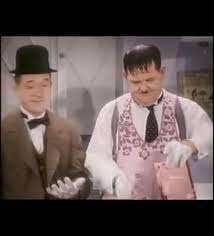
Few comedy partnerships in film history are as recognizable and enduring as Stan Laurel and Oliver Hardy. With their contrasting personalities, unforgettable expressions, and perfectly timed physical comedy, the duo created countless memorable moments during Hollywood’s golden age of comedy. Among their classic short films is Thicker Than Water, released in 1935, a hilarious story that combines misunderstandings, family complications, workplace chaos, and the unmistakable comedic chemistry of Laurel and Hardy.
Thicker Than Water is particularly interesting because it was one of the final short films the duo made before focusing increasingly on feature-length productions. Directed by James W. Horne, the film gives audiences another opportunity to see Stan and Ollie at their best: turning an ordinary situation into complete disaster through a chain of increasingly ridiculous events.
The title itself refers to the famous saying, “Blood is thicker than water,” suggesting that family relationships are stronger than other bonds. In classic Laurel and Hardy fashion, however, the meaning of this idea becomes the foundation for a series of comic misunderstandings and unfortunate circumstances.
At the center of the story are Stan Laurel and Oliver Hardy, who find themselves caught up in a complicated family situation. As usual, their intentions are not necessarily bad. The problem is that almost every decision they make creates another problem. Their attempts to help each other and deal with their circumstances gradually transform a simple situation into an escalating series of disasters.
One of the greatest strengths of Thicker Than Water is the way the film uses the personalities of the two characters. Oliver Hardy often tries to appear confident, sophisticated, and in control. Stan Laurel, on the other hand, is innocent, confused, and seemingly unaware of how much trouble his actions can cause. This contrast creates the foundation for many of their funniest scenes.
Ollie frequently believes that he has found a sensible solution, only for Stan to unintentionally make everything worse. Stan’s innocent expression becomes especially funny because he rarely understands why Oliver is becoming frustrated. From Stan’s perspective, he is often simply trying to help. From Ollie’s perspective, Stan seems to be the source of every possible problem.
This relationship is one of the defining characteristics of Laurel and Hardy’s comedy. Their friendship is constantly tested by accidents, misunderstandings, and arguments, yet they remain together. Even when Ollie becomes furious with Stan, there is usually an underlying sense that they need each other.
The physical comedy in Thicker Than Water is another major attraction. Laurel and Hardy were masters of visual humor, and the film demonstrates their ability to transform ordinary objects and situations into sources of comedy. A simple task can quickly become a complicated sequence of accidents, destruction, and confusion.
Rather than relying entirely on dialogue, the film allows the actors’ movements, facial expressions, gestures, and timing to tell much of the story. This makes the comedy accessible even without extensive dialogue. A look from Ollie or a confused reaction from Stan can communicate an entire joke.
Stan Laurel’s facial expressions are especially important. His innocent smile and wide-eyed confusion often appear at exactly the right moment. Instead of reacting dramatically, Stan frequently responds to disaster with a calm or puzzled expression, which makes the situation even funnier.
Oliver Hardy provides the perfect contrast. His famous gestures, exaggerated reactions, and increasingly frustrated expressions make him one of the most recognizable comic characters in cinema. When things begin going wrong, Ollie’s reaction often becomes almost as funny as the original accident.
Another important element of Thicker Than Water is escalation. Laurel and Hardy rarely stop at one joke. Instead, a small mistake leads to another problem, which produces another mistake, and the situation continues to grow. This technique gives their comedy a rhythm that keeps the audience anticipating what could possibly go wrong next.
The film also demonstrates their talent for creating comedy from everyday life. Family responsibilities, money, work, and domestic problems are familiar subjects. Laurel and Hardy take these ordinary experiences and push them to absurd extremes. Their world may begin realistically, but it quickly becomes a playground for slapstick.
This style of humor was particularly effective during the 1930s. Audiences could immediately understand the situations while enjoying the exaggerated consequences. Even decades later, the physical nature of the comedy allows modern audiences to appreciate the performances without needing extensive knowledge of the period.
The partnership between Stan and Ollie is ultimately what makes the film memorable. Their comedy works because neither character exists independently. Stan’s innocence needs Ollie’s frustration, while Ollie’s seriousness needs Stan’s foolishness. Each character makes the other funnier.
Their performances also demonstrate extraordinary timing. Laurel and Hardy could turn a pause, glance, movement, or reaction into a punchline. They understood that comedy is not simply about what happens, but also about when it happens. A perfectly timed reaction from Ollie after Stan makes a mistake can be more entertaining than the mistake itself.
Thicker Than Water also represents an important stage in the careers of Laurel and Hardy. By 1935, the duo had already become major comedy stars. They had developed a recognizable screen identity and an audience that understood their relationship. Their films were no longer simply collections of unrelated gags. The stories increasingly gave their characters situations that allowed the comedy to develop naturally.
The film’s family theme adds another layer to the usual Laurel and Hardy formula. The idea that family ties can influence decisions provides an opportunity for the duo to explore loyalty, responsibility, and misunderstanding through comedy. Of course, their approach is anything but serious. Instead of presenting family relationships as sentimental drama, the film turns them into another source of chaos.
One reason classic Laurel and Hardy films continue to attract audiences is their timeless simplicity. Modern comedy can depend heavily on technology, references, current events, or complicated dialogue. Laurel and Hardy often needed very little. Two characters, a simple situation, a few props, and excellent timing were enough to create memorable entertainment.
Thicker Than Water is a wonderful example of that approach. The film reminds viewers why Laurel and Hardy became such influential figures in comedy. Their humor is built around character, physical performance, timing, and the universal experience of making a small problem much bigger than it needs to be.
For longtime fans, the short offers another chance to enjoy the familiar Stan and Ollie dynamic. For newcomers, it provides an accessible introduction to the style that made the pair legendary. Their performances show how physical comedy can communicate across generations and language barriers.
Ultimately, Thicker Than Water is more than a collection of slapstick jokes. It is a showcase of one of cinema’s greatest comedy partnerships. Stan Laurel’s innocent confusion and Oliver Hardy’s exasperated confidence create a combination that remains remarkably effective nearly a century later.
The film captures everything audiences have come to love about Laurel and Hardy: friendship mixed with frustration, good intentions leading to disaster, ordinary situations becoming extraordinary chaos, and perfectly timed physical comedy. Their ability to make audiences laugh without relying on complicated storytelling is a major reason their work remains part of comedy history.
Whether you are a longtime Laurel and Hardy fan or discovering their films for the first time, Thicker Than Water offers a delightful trip back to the classic era of Hollywood slapstick. It is a reminder that great comedy does not need to be complicated. Sometimes, all it takes is Stan, Ollie, a bad situation, and just enough time for everything to go completely wrong.