Some comedy sketches need an outrageous story.
Some need elaborate costumes, celebrity impressions, or a surprise ending.
And then there is The Olympia Restaurant.

A customer walks into a small diner, looks at the menu, and tries to order lunch.
That should be simple.
Except at this restaurant, the menu apparently does not matter.
Want tuna?
No tuna.
Want grilled cheese?
No grilled cheese.
Want French fries?
No fries.
Want Coke?
Absolutely not.
What can you have?
Cheeseburger.
Chips.
Pepsi.
And if you hesitate too long, John Belushi’s Pete Dionasopolis is going to make the decision for you.
That incredibly simple idea became one of the most recognizable sketches from the early years of Saturday Night Live.
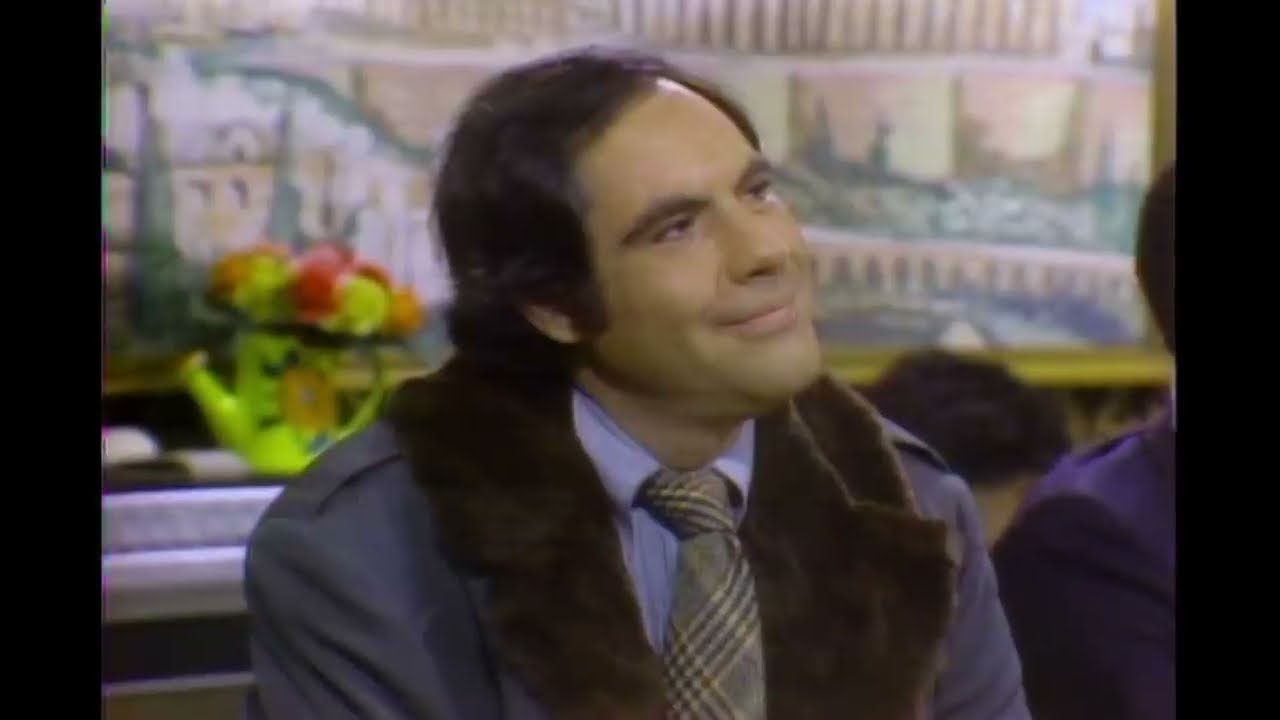
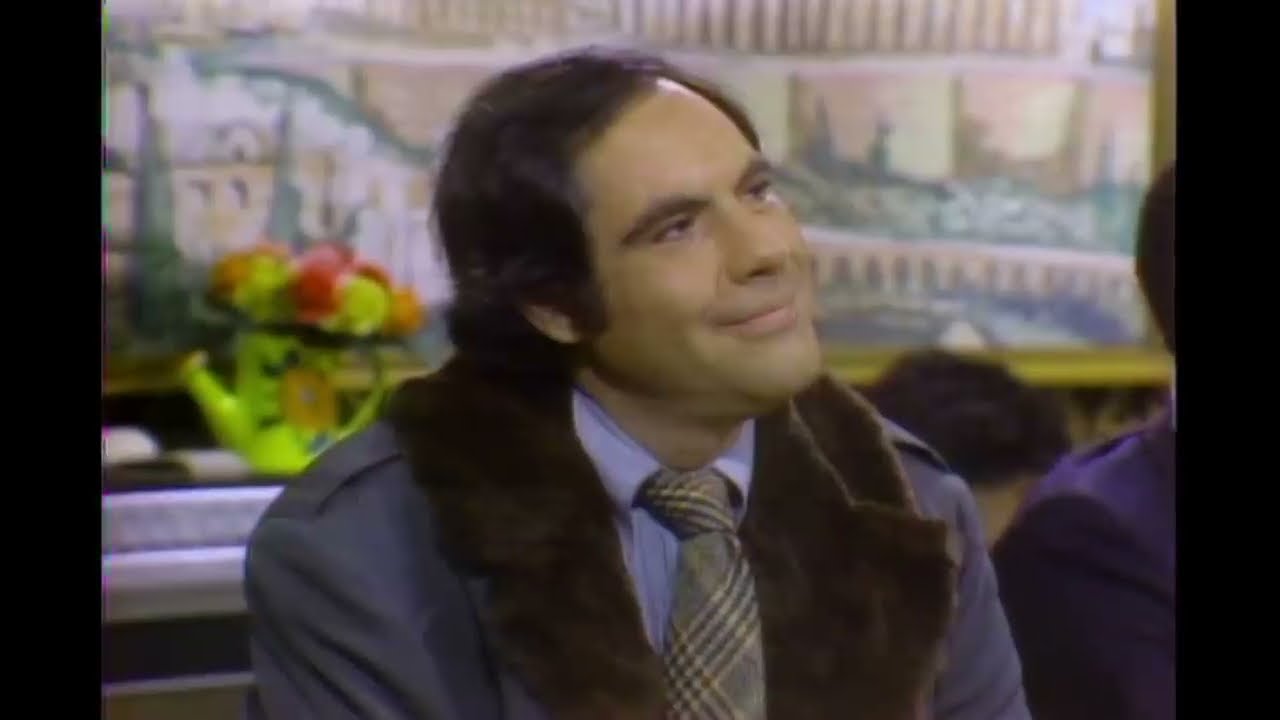
The original Olympia Restaurant sketch aired during SNL’s third season in January 1978. John Belushi played Pete, Dan Aykroyd worked the grill as George, Bill Murray appeared as Nico, and Laraine Newman played Sandy. Jane Curtin, Garrett Morris, Gilda Radner, and host Robert Klein were among the customers trying to navigate a restaurant where ordering what you actually wanted was apparently not an option.
And somehow, a sketch built almost entirely around cheeseburgers became unforgettable.
Welcome to the Restaurant Where the Customer Is Definitely Not Always Right
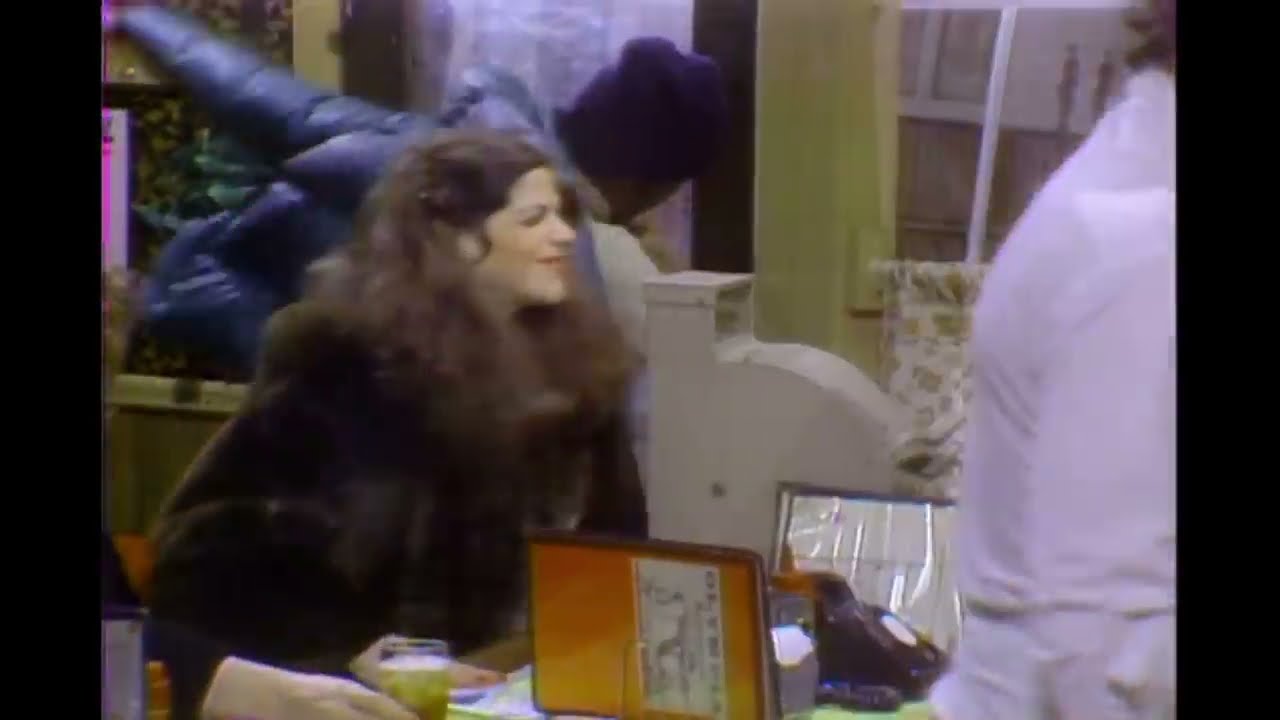
The comedy begins with something almost everyone recognizes.
You walk into a restaurant.
You sit down.
You look at the menu.
Then you order.
Normally, the person behind the counter tries to give you what you requested.
At the Olympia Restaurant, the opposite happens.
Jane Curtin’s customer starts by asking for a tuna salad sandwich and French fries.
Pete has essentially no interest in that request.
Tuna is unavailable.
The solution?
Cheeseburger.
Another customer asks for grilled cheese and a Coke.
No grilled cheese.
He eventually settles for a cheeseburger.
But the Coke creates another problem.
The restaurant does not have Coke.
It has Pepsi.
Then he wants French fries.
No fries.
Chips.
Within seconds, you understand the entire world of the sketch.
The customers technically have choices.
But all of those choices eventually lead to exactly the same meal.
Cheeseburger.
Chips.
Pepsi.
That repetition is what makes everything work.
John Belushi Doesn’t Ask — He Commands
The center of the sketch is John Belushi.
His Pete Dionasopolis does not behave like someone politely serving customers.
He behaves like a man trying to move an entire lunch crowd through his restaurant as quickly as humanly possible.
Customers barely finish speaking before Pete interrupts.
They ask questions.
Pete gives answers.
They change their minds.
Pete becomes impatient.
Someone tries to order something unusual.
Pete redirects them toward the cheeseburger.
The character’s confidence is what makes him hilarious.
There is never a moment when Pete seems embarrassed that the restaurant cannot actually provide most of the food on its menu.
Quite the opposite.
He acts as though the customers are the unreasonable ones for expecting choices.
Why would you want tuna when there is a cheeseburger?
Why would you want fries when there are chips?
And why are you wasting everyone’s time asking about Coke when Pepsi is sitting right there?
Pete does not adapt to the customer.
The customer adapts to Pete.
That reversal turns a normal restaurant interaction into comedy.
The Kitchen Becomes Its Own Comedy Machine
Behind Pete, the restaurant staff keeps the rhythm moving.
An order comes in.
Pete shouts toward the grill.
Dan Aykroyd’s George responds.
Bill Murray’s Nico joins in.
Before long, the restaurant sounds less like a diner and more like a strange musical performance built around food orders.
The word “cheeseburger” begins bouncing back and forth across the room.
Orders overlap.
People shout.
Food gets thrown onto the counter.
Customers attempt to explain themselves while the staff continues working at full speed.
The repetition becomes almost hypnotic.
That is an important part of why the sketch works.
If Belushi simply told one customer that the restaurant only had cheeseburgers, there might be enough material for a thirty-second joke.
Instead, SNL keeps repeating the idea.
Another customer arrives.
Another order fails.
Another cheeseburger appears.
Every repetition adds energy.
Soon the audience starts anticipating what will happen before the customer even finishes speaking.
Someone asks for Coke?
We already know what is coming.
Someone asks for fries?
We know that answer too.
And that anticipation becomes part of the joke.
“No Coke — Pepsi”
Perhaps nothing from the routine became more recognizable than the restaurant’s refusal to serve Coke.
The customer wants Coke.
Pete has Pepsi.
End of discussion.
It is the kind of tiny exchange that should not have become famous.
But it did.
Decades later, references to the routine still appear in discussions of classic SNL, and the sketch is frequently remembered specifically for the Coke-versus-Pepsi exchange and the restaurant’s relentless cheeseburger orders.
The reason is simple.
It is incredibly easy to remember.
You do not need to retell a complicated setup.
You do not need to explain who the characters are.
Someone says “Coke.”
The answer is Pepsi.
That is the joke.
And once you know the sketch, hearing those words can immediately bring Belushi’s performance back into your head.
Great comedy catchphrases often work that way.
They become shorthand for an entire scene.
Then Robert Klein Tries to Order Breakfast
One of the funniest escalations arrives when Robert Klein’s customer sits down and makes the mistake of thinking the restaurant might actually serve breakfast.
He starts asking about eggs.
Sausage.
Orange juice.
Coffee.
These are perfectly ordinary diner requests.
Nico does not seem particularly interested.
His suggestion?
Cheeseburger.
The customer tries again.
Eggs.
Sausage.
Coffee.
The communication goes nowhere.
Eventually Pete enters the conversation and the ordering process becomes even more chaotic.
The customer tries cheeseburger.
Then hamburger.
Then eggs.
Every choice comes with another restriction.
Even when he finally appears to make progress, he still runs into the most important rule in the Olympia Restaurant universe.
He wants Coke.
No Coke.
Pepsi.
Of course.
By that point, the audience does not need the punchline explained.
We have learned the rules.
And watching a new customer slowly discover those rules is where the fun comes from.
Bill Murray Doesn’t Need Many Words
Bill Murray’s Nico adds another layer to the comedy.
Nico communicates in short bursts and appears to understand only pieces of what customers are saying.
That means customers who are already struggling with Pete now have another obstacle.
They try to carefully explain an order.
Nico gives them almost nothing back.
Eventually everything somehow circles toward the same familiar foods.
What is especially interesting when watching the sketch today is seeing how early versions of these famous performers were already developing recognizable comedic instincts.
Murray’s ability to get a laugh with a look, a pause, or a strangely understated response would eventually become a major part of his screen persona.
Here, surrounded by Belushi’s explosive energy and Aykroyd working the grill, that restraint gives the ensemble another rhythm.
Everyone is funny in a different way.
Chaos That Feels Weirdly Real
Part of the reason the Olympia Restaurant sketch lasted in people’s memories is that underneath the exaggeration, there is something recognizable about it.
Almost everyone has experienced a restaurant where the staff seems to have its own system.
Maybe there is an item on the menu that is never actually available.
Maybe the person behind the counter already knows what the regular customers want.
Maybe ordering takes too long and everyone behind you starts becoming impatient.
Maybe you ask for a substitution and immediately realize you have made a terrible mistake.
The Olympia Restaurant takes those little experiences and pushes them just far enough into absurdity.
Pete is not merely impatient.
He practically orders for you.
The menu does not merely have limited options.
Almost everything leads to cheeseburger.
The kitchen is not simply busy.
It becomes a chorus.
That connection to everyday life keeps the sketch grounded.
The audience recognizes the situation before SNL turns it into chaos.
The Real Chicago Connection
One of the most interesting parts of the sketch’s history is that the fictional restaurant had a connection to a real Chicago institution.
The Billy Goat Tavern says the Olympia sketch was inspired by the behavior and atmosphere associated with its staff. The tavern describes the famous fast-moving style of ordering cheeseburgers and the insistence on particular sides and drinks, and credits the SNL sketch with helping turn that restaurant culture into a nationally recognized piece of comedy.
That connection makes the sketch even more interesting.
The exaggerated characters were not created entirely out of nowhere.
They reflected a recognizable style of old-school restaurant interaction.
John Belushi and Bill Murray both had Chicago comedy connections before their SNL fame, and the sketch transformed that flavor into something millions of television viewers could understand.
It is a great example of comedy taking something specific and local and making it universal.
Repetition Shouldn’t Be This Funny
On paper, the sketch almost sounds too simple.
Say “cheeseburger” repeatedly.
Tell people there are no fries.
Tell them there is Pepsi instead of Coke.
Repeat.
Yet that simplicity is exactly the point.
Each repetition changes slightly.
Different customers react differently.
Pete becomes more impatient.
The kitchen gets louder.
Orders pile up.
The audience becomes more familiar with the restaurant’s strange rules.
That creates a kind of comic momentum.
Eventually the word “cheeseburger” itself becomes funny because of the way the performers say it and because the audience knows exactly what it represents.
It is no longer simply food.
It means:
Stop asking questions.
Stop reading the menu.
This is what you’re getting.
The Original SNL Cast Had Incredible Chemistry
The sketch is also a reminder of how much talent existed inside the early SNL ensemble.
Belushi.
Aykroyd.
Murray.
Curtin.
Radner.
Newman.
Morris.
These performers did not all have to fight for the biggest punchline.
Instead, they helped create a world.
One performer makes an order.
Another rejects it.
Someone shouts toward the kitchen.
Another person reacts.
The next customer arrives.
The comedy moves continuously between them.
That ensemble rhythm is essential.
Belushi may be the explosive center of the scene, but the customers give him something to push against.
Without Jane Curtin calmly trying to order normal food, Pete’s behavior would not seem nearly as ridiculous.
Without Aykroyd answering from the grill, the repetition would lose its rhythm.
Without Murray’s Nico creating communication problems, the restaurant would feel almost functional.
Together, they create controlled disorder.
Why It Still Feels Funny Nearly Half a Century Later
A Los Angeles Times retrospective on SNL’s history singled out the Olympia Restaurant as one of those early pieces that still feels surprisingly fresh, despite being built around little more than repetition and simple human interaction.
That makes sense.
The sketch does not depend heavily on a 1978 news story.
There is no politician you need to recognize.
There is no forgotten celebrity scandal.
The central situation is timeless.
A customer wants something.
The restaurant refuses.
The employee becomes annoyed.
The customer compromises.
Anyone who has ever ordered food can understand it.
And because the comedy comes primarily from personality and timing, it can still work even when the cultural references around it have changed.
Sometimes Comedy Doesn’t Need More
Modern entertainment often feels like it has to move faster.
More jokes.
More edits.
More surprises.
More spectacle.
The Olympia Restaurant reminds us that great comedy can come from something much smaller.
A counter.
A grill.
A few customers.
An impatient restaurant owner.
And one extremely limited menu.
That is enough.
Because the real entertainment is not what happens.
It is how the characters react to what happens.
Belushi turns irritation into performance.
Aykroyd turns kitchen orders into rhythm.
Murray turns confusion into character comedy.
And every customer who walks through the door gives the machine another chance to start again.
Cheeseburger, Chips and Pepsi
By the time the sketch ends, the audience has been completely trained.
You know the menu.
You know the rules.
You know what happens if someone asks for French fries.
And you definitely know what happens when someone asks for Coke.
That may be the clearest sign that the sketch succeeded.
SNL created an imaginary restaurant so specific that decades later, viewers can hear a few words and instantly remember the entire place.
The busy counter.
The grill.
Belushi shouting.
Aykroyd answering.
Bill Murray standing nearby.
Customers slowly realizing that their order does not really matter.
And another cheeseburger hitting the grill.
It is ridiculous.
It is repetitive.
It is wonderfully simple.
And that is precisely why it became classic SNL.
Nearly fifty years later, you can still watch someone confidently ask for Coke and immediately know what Pete is going to tell them.
The customer may think they came to choose lunch.
But this is the Olympia Restaurant.
There is only one real question:
How many cheeseburgers do you want?
👇 Do you still remember the first time you heard the Olympia Restaurant routine? And be honest—if John Belushi was standing behind the counter, would you even TRY to order something besides a cheeseburger?
#JohnBelushi #SaturdayNightLive #SNL #TheOlympiaRestaurant #DanAykroyd #BillMurray #GildaRadner #ClassicComedy #ComedyLegends #ClassicSNL #VintageTV #70sComedy #ComedyGold #TVNostalgia