Released in 1966, Sergio Leone’s The Good, the Bad and the Ugly (Il buono, il brutto, il cattivo) stands not merely as the culmination of the iconic Dollars Trilogy, but as one of the most influential and celebrated cinematic masterworks in film history. Running nearly three hours, this Spaghetti Western redefines the mythology of the American frontier by stripping away traditional romanticism and substituting it with brutal pragmatism, bleak humor, and profound moral ambiguity. Set against the violent chaos of the American Civil War, the film brings together three unforgettable mercenaries whose lives intersect in a desperate race for buried Confederate gold.

1. Narrative Framework and the Intertwined Destinies
The story revolves around a fortune of $200,000 in stolen Confederate gold coins, hidden away in a remote cemetery by a fugitive soldier named Bill Carson. Rather than relying on standard heroic tropes, Leone constructs the narrative around three distinct archetypes whose moral compasses range from cold-blooded brutality to rough survivalism:
-
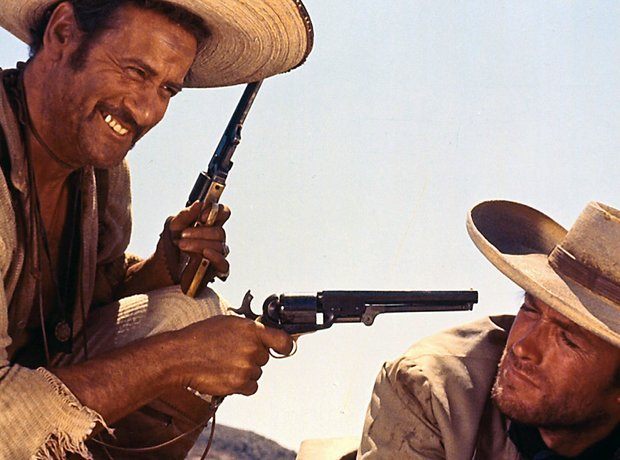
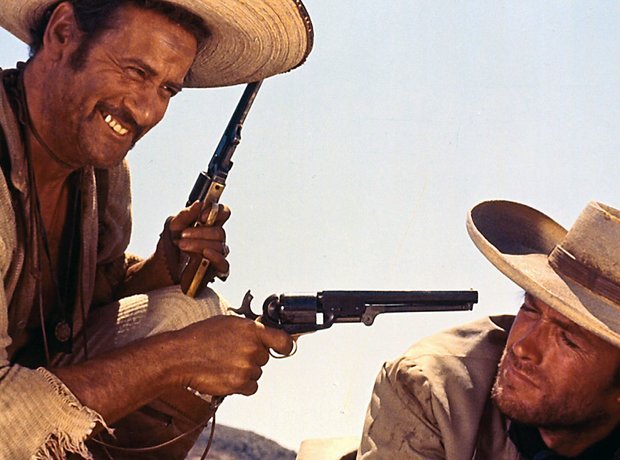
“The Good” – Blondie (Clint Eastwood): A laconic, shrewd bounty hunter who possesses deadly precision with a revolver. While termed “the good,” he is hardly a conventional hero; he exploits the legal system by continually turning in and then rescuing outlaw Tuco to split the bounty payments.
-
“The Bad” – Angel Eyes (Lee Van Cleef): A ruthless, sociopathic mercenary who carries out contracts with clinical detachment. Driven purely by greed and professional pride, he leaves a trail of casualties without showing a shred of mercy.
-
“The Ugly” – Tuco Benedicto Pacífico Juan María Ramírez (Eli Wallach): A comical, volatile, yet deeply human Mexican bandit. Driven by instinct, desperation, and revenge, Tuco provides the emotional and narrative heartbeat of the entire film.
Their paths converge when an ambush leaves a dying Bill Carson in Tuco’s and Blondie’s presence. In his dying moments, Carson reveals the location of the treasure piecemeal: he tells Tuco the name of the cemetery (Sad Hill) and secretly tells Blondie the exact name on the unmarked grave.
This delicate distribution of knowledge forces the two bitter enemies into an uneasy partnership where neither can afford to let the other die.
2. Visual Style and Leone’s Directorial Signature
Sergio Leone revolutionized film language by subverting the classical Hollywood Western style. Instead of wide, static landscapes paired with standard two-shots, Leone constructed a unique visual grammar defined by extreme stylistic contrasts:
-
Wide Panoramas to Extreme Close-Ups: Leone frequently cuts between sweeping, sun-scorched desert vistas and intense, tight close-ups that focus solely on sweaty brows, twitching fingers, and calculating eyes. This jarring shift builds an atmosphere of suffocating suspense.
-
Pacing and Temporal Suspension: Rather than accelerating action sequences, Leone deliberately stretches out the buildup to confrontation. Silence, ambient desert winds, and subtle physical movements are drawn out to heighten tension, making the eventual outburst of gunfire sudden and explosive.
-
Moral Ambivalence within Historical Turmoil: Unlike typical Hollywood Westerns of the era that glorified nation-building, Leone frames the American Civil War as an absurd meat grinder of human lives. In scenes like the battle at Branston Bridge, both Union and Confederate forces slaughter each other over a useless bridge, emphasizing the senseless waste of warfare alongside the central characters’ mercenary pursuits.
3. Ennio Morricone’s Seminal Score
It is impossible to analyze The Good, the Bad and the Ugly without acknowledging the transformative score composed by Ennio Morricone. Working closely with Leone, Morricone integrated unconventional instruments and sound effects—such as whistling, gunshots, cracking whips, electric guitars, and the famous vocal refrain imitating a coyote’s howl—into orchestral arrangements.
The music does not simply serve as background atmosphere; it functions as an active participant in the storytelling. Each of the three main characters is assigned a tailored musical motif that highlights their distinctive nature. During climactic sequences, such as the cemetery search set to “The Ecstasy of Gold,” Morricone’s crescendo mirrors Tuco’s frantic mania, elevating a pursuit of material wealth into a scene of operatic grandeur.
4. The Sad Hill Cemetery Climax: The Legendary “Mexican Standoff”
The film reaches its dramatic zenith at Sad Hill Cemetery, where circular rows of countless anonymous graves set the stage for a three-way duel. Leone structures the standoff into a masterclass of visual editing and rhythm.
Over several agonizing minutes, the camera cuts between Blondie, Tuco, and Angel Eyes with escalating speed—alternating between full-body portraits and tight shots of shifting eyes and twitching hands hovering over holsters. When gunfire finally erupts, it resolves the narrative with swift, cold finality: Angel Eyes is eliminated, Tuco discovers his gun had been surreptitiously unloaded by Blondie the night before, and Blondie divides the treasure, reinforcing his trademark balance of cynicism and frontier justice
.
5. Enduring Legacy and Cultural Impact
Decades after its premiere, The Good, the Bad and the Ugly continues to exert an immense influence across global cinema. Filmmakers such as Quentin Tarantino have frequently cited it as one of the best-directed films ever made, praising its dynamic editing, unconventional heroes, and brilliant sound design. By reimagining the Western through a gritty, operatic, and morally complex lens, Sergio Leone crafted an enduring monument to cinema that continues to captivate audiences and inspire generations of filmmakers worldwide.