The moment Doug walked onto the Black Jeopardy stage, everyone knew exactly where the joke was supposed to go.
There was Tom Hanks, dressed in a denim jacket, an eagle T-shirt, and a bright red “Make America Great Again” hat, standing beside two Black contestants on one of Saturday Night Live’s sharpest recurring game-show parodies.
Host Darnell Hayes took one look at him and immediately seemed concerned.
This was going to be awkward.
At least, that was what the audience expected.
Instead, something much funnier happened.
Question by question, Doug began proving that the people standing around him might have far more in common than any of them expected.
And for several glorious minutes, Black Jeopardy turned a setup built around cultural differences into a comedy about strangely familiar similarities.
Then came the final category.
And suddenly, everybody remembered why things had seemed so uncomfortable in the first place.
Doug Looks Like He Walked Onto the Wrong Game Show
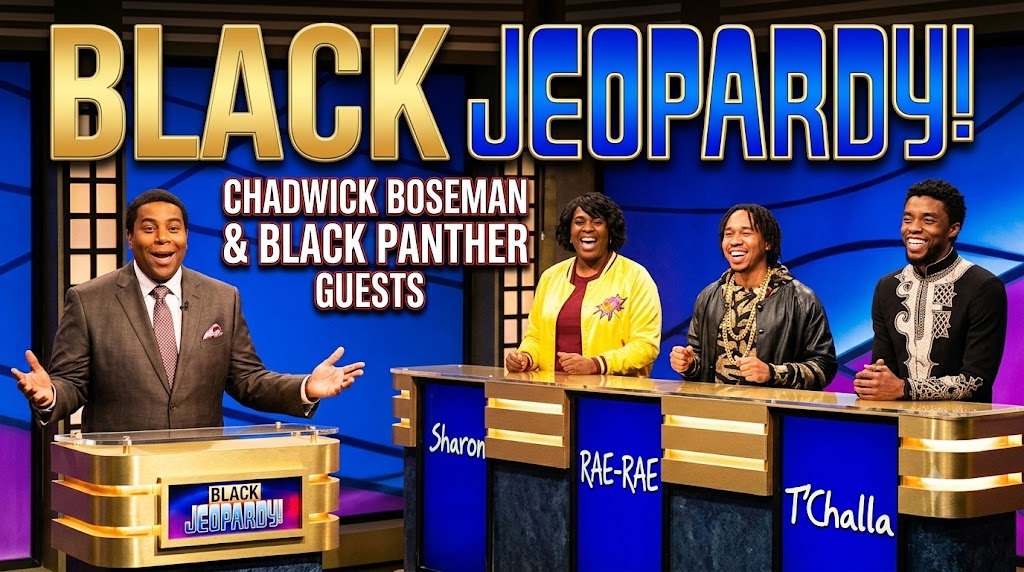
Kenan Thompson’s Darnell Hayes is already smiling when he introduces returning champion Keeley, fellow contestant Shanice, and then… Doug.
The reaction is immediate.
Doug’s appearance alone tells the audience almost everything they need to know about the premise.
He seems like the last person who should understand the logic of Black Jeopardy.
But Doug isn’t nervous.
He is there because he heard there was money to win.
That simple attitude immediately makes him funny.
Darnell doesn’t exactly share his confidence.
The categories appear, filled with the wonderfully specific phrases that make the recurring sketch work: everyday experiences, suspicions, family habits, relationships, money problems and cultural references disguised as game-show trivia.
Doug looks ready.
Nobody else believes he is.
For the first few questions, things proceed as expected.
Keeley and Shanice understand the clues immediately.
A kitchen drawer filled with leftover sauce packets and miscellaneous items?
Of course.
A questionable financial decision involving retirement savings?
They know exactly where the joke is going.
Doug mostly watches.
Then the game reaches a category about things “they” are supposedly saying.
And everything changes.
The iPhone Question Changes the Entire Sketch
Darnell presents a clue about a new phone wanting a person’s fingerprint under the promise that it is supposedly being collected for their protection.
Doug buzzes in.
Darnell looks surprised.
Doug’s basic response?
He doesn’t trust it.
That is how “they” get you.
Suddenly Darnell stops.
Keeley agrees.
Shanice agrees.
Doug adds that he has heard the information could end up in government hands.
For the first time, everyone seems to realize something unexpected:
Doug understands this game.
Not because he suddenly knows Black culture.
Not because the sketch pretends cultural differences don’t exist.
It works because Doug and the other contestants have arrived at the same suspicion from completely different places.
And that realization becomes the engine of the entire scene.
Darnell’s expression says everything.
Maybe this guy is not going to be nearly as easy to dismiss as he assumed.
Then Doug Starts Getting More Answers Right
The game continues.
There is a question involving a supposedly harmless dog.
There is another about celebrity culture.
The contestants trade jokes, and Doug remains slightly outside the rhythm of the group.
Then another clue appears.
People are saying every vote counts.
Doug buzzes in again.
And once again, his answer fits perfectly with what Black Jeopardy is looking for.
His reasoning is essentially that the outcome has probably already been decided somewhere behind the scenes.
Darnell loves it.
Now the joke has fully shifted.
The audience began the sketch waiting for Doug to say something that would expose how completely out of place he was.
Instead, he keeps discovering unexpected areas of agreement.
Distrust of institutions?
Check.
Skepticism toward technology?
Check.
Frustration with money?
Check.
The suspicion that powerful people are making decisions ordinary people never really control?
Doug fits right in.
It is ridiculous.
And somehow, within the strange logic of the game, it makes perfect sense.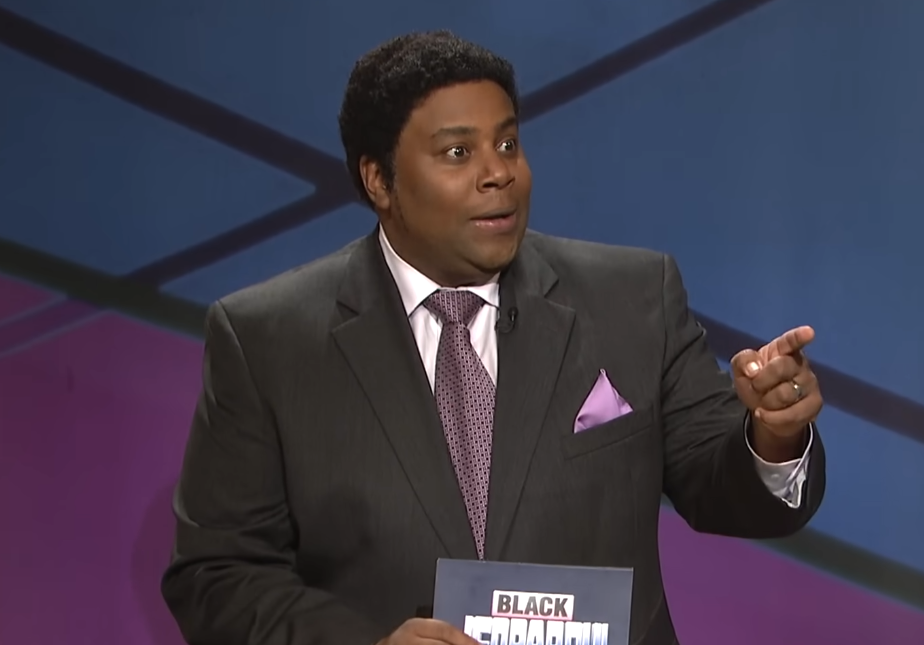
The Tyler Perry Moment Makes the Connection Even Better
Another clue brings up a movie that supposedly does not deserve an Oscar.
Keeley identifies a Tyler Perry Madea movie.
Doug could easily have become the outsider again.
Instead, he enthusiastically reveals that he actually loves those movies.
He even owns a collection.
Now Darnell is genuinely delighted.
For a moment, the barrier between host and contestant seems to disappear.
Darnell approaches Doug as if they have finally reached an understanding.
And then the sketch adds another perfectly timed visual gag.
When Darnell reaches toward him, Doug briefly reacts as though he is unsure what is about to happen.
The hesitation lasts only a moment.
Then they shake hands.
That tiny beat is important.
The sketch never allows the audience to forget that these characters still carry assumptions about one another.
But it keeps finding little places where those assumptions break down.
Every time Darnell thinks he has Doug figured out, Doug surprises him.
Every time Doug seems completely comfortable, another tiny moment reminds us there is still distance between them.
That push and pull is what keeps the scene alive.
Then They Discover They Both “Have a Guy”
The next question involves an expensive repair bill from a mechanic.
Once again, Doug has an answer.
Why pay the full price when there is some guy in the neighborhood who can fix practically anything for almost nothing?
Darnell understands immediately.
Everybody has a guy.
Doug has one too.
The names are different.
The neighborhoods are different.
But the experience is basically identical.
Doug explains that his guy has repaired an absurd assortment of things.
At this point, Darnell can barely believe what is happening.
The contestant he expected to struggle through every category has somehow become one of the strongest players on the board.
More importantly, the two men are genuinely enjoying each other.
The sketch is no longer simply asking, “How different are these people?”
It has quietly started asking another question:
“How much ordinary life do they actually share?”
That is where the comedy becomes smarter than the initial premise.
Even the Prizes Are Perfect
Then the show pauses to reveal the prizes.
And they are hilariously modest.
Forget luxury vacations.
Forget expensive cars.
One prize is essentially the special chair reserved for an older family member.
Another is tape for fixing a car.
The joke works because Black Jeopardy treats completely ordinary objects as if they were spectacular game-show rewards.
But it also fits the larger theme of the sketch.
This fictional game show is built around practical life.
Saving money.
Fixing things yourself.
Keeping things around because they may eventually become useful.
Not trusting expensive solutions when someone nearby can probably repair the problem for forty bucks.
And Doug understands that world.
Increasingly, Darnell understands Doug.
“You People Are Fun”
By now Doug is having a wonderful time.
He tells Darnell that everyone is fun—then immediately realizes that the way he phrased it may not have been ideal.
The room gives him a temporary pass.
Again, the comedy comes from tension without immediately exploding it.
Everyone knows there are lines here.
Everyone knows there are differences.
But for the moment, the contestants have found a strange little zone of mutual understanding.
Then Doug chooses the category about “big girls.”
This produces one of the sketch’s biggest laughs.
The clue asks what skinny women can do for you.
Doug’s answer is blunt:
“Not a damn thing.”
The room erupts.
Suddenly Doug is no longer merely tolerated.
He is being celebrated.
He proudly describes his wife as a “sturdy gal.”
Keeley and Shanice are completely on board.
Soon everyone is chanting for Doug.
For a few seconds, the transformation is complete.
The suspicious outsider wearing the red hat has become their guy.
Go Doug.
Go Doug.
Go Doug.
It is an absurdly joyful moment.
And that is precisely why what happens next lands so hard.
Then Final Jeopardy Appears
The celebration is interrupted.
Darnell announces that it is time to reveal the Final Jeopardy category.
The screen changes.
“Lives That Matter.”
Silence.
The entire emotional temperature of the room changes instantly.
Keeley looks toward Doug.
Shanice looks toward Doug.
Darnell looks toward Doug.
Doug looks ready to speak.
For several minutes, the sketch has been constructing a bridge between people who initially seemed incompatible.
They agree on technology.
They agree about powerful institutions.
They understand trying to save money.
They know the value of having a cheap neighborhood repairman.
They can laugh at the same movies.
They even share similar attitudes about relationships and body types.
But now they have reached something different.
Something those everyday similarities cannot easily solve.
Darnell knows it immediately.
The connection was real.
But so is the divide.
His reaction is essentially: Well, it was good while it lasted.
Doug begins to say that he has plenty to contribute.
Darnell clearly does not want to find out exactly what that contribution will be.
And then he makes the closing joke even bigger by suggesting that after the break they should play the national anthem and simply see what happens.
Cut.
Sketch over.
Perfect ending.
Why This Sketch Still Hits So Hard
A weaker version of this idea would have been easy to write.
Put a conservative white man into Black Jeopardy.
Let him misunderstand every question.
Make everyone uncomfortable.
End scene.
Instead, the writers chose the more surprising direction.
Doug keeps being right.
That choice changes everything.
He may come from a very different cultural and political environment, but he recognizes many of the same frustrations.
Money feels tight.
Corporations cannot automatically be trusted.
Government institutions may seem distant.
Repairs cost too much.
Families develop their own strange traditions.
People rely on somebody they know instead of an official professional.
And everyone believes their own neighborhood has figured out certain truths outsiders simply do not understand.
The sketch finds comedy in the overlap between groups that are usually discussed only through their differences.
That is why Tom Hanks is such an effective choice for Doug.
He does not play him like a cartoon villain.
Doug seems sincere.
He likes these people.
When he agrees with them, he is not pretending.
When he talks about his wife or his repair guy, there is a cheerful authenticity that makes Darnell’s increasing affection believable.
Kenan Thompson is equally important.
Watch his face throughout the sketch.
His reactions gradually evolve from suspicion to confusion, then surprise, approval and finally genuine enthusiasm.
Darnell becomes the audience’s guide.
Every time Doug gives another correct response, Darnell seems to be thinking:
“Wait… seriously?”
And then:
“Okay. Maybe I like this guy.”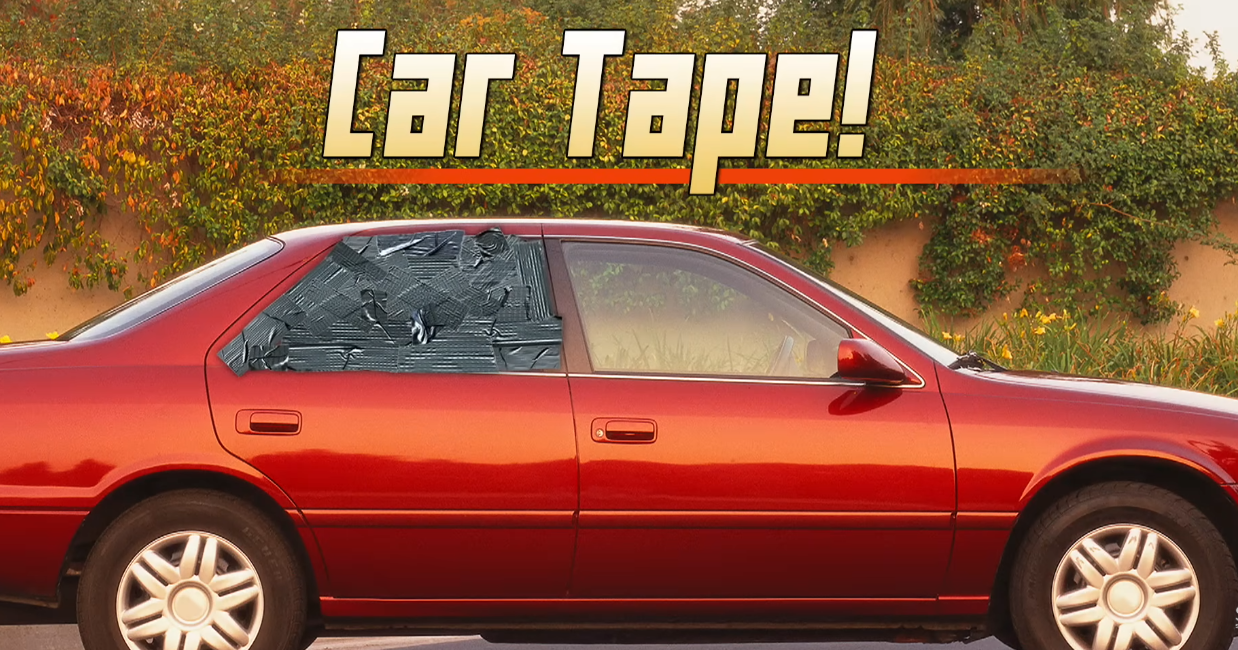
The Final Joke Prevents the Sketch From Becoming Too Easy
The brilliance of the ending is that Black Jeopardy does not suddenly claim all social divisions are meaningless because people agree about cheap mechanics and phone privacy.
That would be too simple.
Instead, Final Jeopardy reminds everyone that shared everyday experiences can coexist with profound disagreements.
The sketch allows both ideas to be true at once.
Doug and Darnell really did connect.
Their laughter was real.
Their common ground was real.
And the uncomfortable subject waiting at the end was real too.
That combination is why the final silence earns such a huge response.
You already know what everyone is thinking before Doug says anything.
In fact, the funniest decision is preventing him from fully answering at all.
The audience is left to imagine what might happen next.
Sometimes the funniest punchline is the argument that never actually begins.
And That’s Why Doug Became an Unforgettable SNL Character
By the end of the video, Doug has traveled an extraordinary distance without physically going anywhere.
He begins as the contestant everyone assumes does not belong.
Then he earns a correct answer.
Then another.
Soon he is swapping stories with the host.
Then everyone is cheering his name.
For one brief moment, Black Jeopardy looks less like a competition and more like a bizarre neighborhood gathering where everybody has discovered the same complaints about life.
And then one category destroys the illusion that everything has been resolved.
That structure is what makes the sketch so memorable.
It gives viewers something recognizable, then repeatedly reverses their expectations.
The red hat tells you one story about Doug.
His answers tell you another.
His interactions with Darnell complicate it further.
And the last category reminds you that none of those things completely erase the first impression.
It is comedy built from discomfort, surprise and recognition.
And years after seeing it for the first time, that Final Jeopardy reveal can still make an audience react before anyone even speaks.
If you have only seen a short clip, the full sketch is worth watching because Doug’s transformation happens one answer at a time.
The first correct response is funny.
The second makes you suspicious.
By the third, you realize exactly what the sketch is doing.
And when everybody starts chanting for Doug, you almost forget what brought the tension into the room in the first place.
Almost.
Then Final Jeopardy arrives.
And Saturday Night Live delivers the punchline without needing Doug to finish his answer.
Watch the full video and decide for yourself: was the funniest part Doug realizing he fit in—or the exact second everyone realized there was still one question nobody wanted him to answer?