Some comedians make audiences laugh with words.
Carol Burnett could make them laugh before she even opened her mouth.
A raised eyebrow.
A surprised stare.
An awkward smile.
A sudden change in posture.
Sometimes that was all she needed.
That extraordinary ability to communicate comedy through her face and body became one of the defining qualities of The Carol Burnett Show and one of the reasons Burnett remains such a recognizable figure in American television comedy.
Watch a short moment like this one and something becomes immediately obvious.
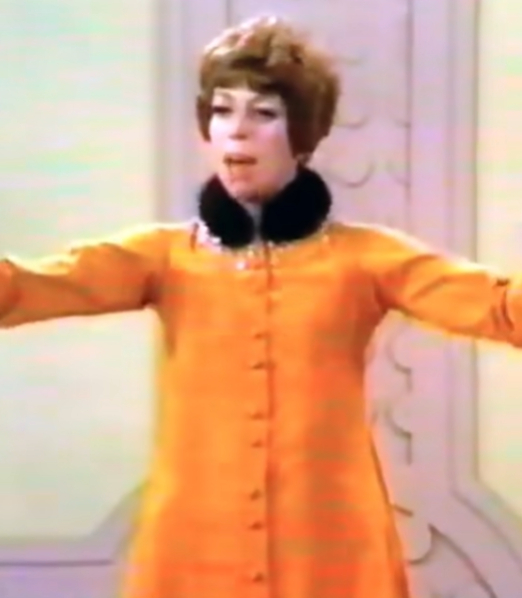
Carol is performing with her entire body.
Her face isn’t simply reacting to the joke.
Her reaction is the joke.
That distinction helps explain why so much of her comedy still works decades after it originally aired.

Television comedy has changed enormously since The Carol Burnett Show premiered in 1967.
Editing has become faster.
Comedy clips have become shorter.
Modern performers frequently work with multiple takes and sophisticated post-production.
But Carol came from a tradition where a performer had to hold the attention of a live studio audience.
There was nowhere to hide.
If the audience wasn’t laughing, everyone knew.
That environment helped produce a style of comedy built around timing, confidence and physical performance.
Carol had all three.
She could stretch a reaction just long enough for the audience to understand it.
She knew when to remain completely still.
She knew when to explode into movement.
Most importantly, she understood that comedy isn’t always about what a character says.
Sometimes the funniest moment happens after the line.
A character hears something ridiculous.
The camera cuts to Carol.
She looks back.
The audience begins laughing.
Carol waits.
The laughter grows.
Then she adds another expression.
Now the audience is laughing even harder.
That sounds simple.
It isn’t.
Reaction comedy requires extraordinary control.
React too quickly and the audience misses the moment.
Wait too long and the energy disappears.
Make the expression too small and viewers may not understand it.
Make it too exaggerated and the performance can feel forced.
Carol Burnett understood exactly where that balance existed.
It was especially valuable on a variety program like The Carol Burnett Show.
The series wasn’t built around one character or one fictional world.
Carol might appear as one person in the opening minutes and someone completely different later in the same episode.
She could play an elegant woman.
A frustrated wife.
An outrageous celebrity parody.
A working-class mother.
A melodramatic movie heroine.
Or an absurd character whose entire personality could be understood the second she walked onto the stage.
That flexibility was essential.

Unlike a sitcom star who develops one character over hundreds of episodes, Carol repeatedly had to introduce audiences to new characters within seconds.
Physical performance helped her do that.
A costume could establish part of the character.
A hairstyle could help.
But Carol’s posture, walk, voice and expressions completed the transformation.
One of the greatest examples was her work in movie parodies.
The Carol Burnett Show became famous for taking recognizable Hollywood films and turning them into elaborate comedy sketches.
Perhaps the most famous example is “Went with the Wind!,” the show’s parody of Gone with the Wind.
Carol appears as Starlett O’Hara and eventually enters wearing Bob Mackie’s legendary curtain dress — with the curtain rod still attached.
The costume is immediately hilarious.
But Carol’s performance is what sells it.
She walks into the room as though there is absolutely nothing unusual about what she is wearing.
That’s crucial.
A less confident comedian might emphasize the absurdity.
Carol doesn’t need to.
The audience can already see it.
Her character’s complete confidence makes the visual joke even stronger.
That principle appears throughout her work.
Commit to the character.
Don’t apologize for the joke.
Let the audience discover why it’s funny.
Carol also benefited from an extraordinary ensemble.
Harvey Korman was a masterful comedy partner.
Vicki Lawrence could move effortlessly between supporting Carol and stealing scenes herself.
Lyle Waggoner contributed during the show’s earlier years.
And Tim Conway eventually became one of the program’s most unpredictable weapons.
Working with performers like these required Carol to be an excellent reactor.
Consider Tim Conway.
Conway became famous for introducing unexpected touches that could push his fellow performers toward breaking character.
Harvey Korman was particularly vulnerable.
But Carol also had to respond to Conway’s unpredictability.
Sometimes the funniest thing she could do was simply watch him.
That ability — knowing when not to compete for the laugh — is another sign of a great ensemble comedian.
Carol was the star of the show.
Her name was in the title.
Yet she understood that she didn’t need to dominate every second.
If Harvey had the funny moment, she could support Harvey.
If Tim was destroying everyone, she could react to Tim.
If Vicki had the punchline, Carol could set it up.
That generosity helped create the chemistry audiences remember.
And then there was Carol’s relationship with the audience itself.
One of the most distinctive features of The Carol Burnett Show was the audience question-and-answer segment.
Carol would come onto the stage and take questions directly from members of the studio audience.
That meant she couldn’t rely entirely on a script.
She had to listen.
Think.
Respond.
And ideally make the response entertaining.
Those moments revealed how quick she really was.
A scripted sketch could be rehearsed.
An unexpected question from the audience could not.
Carol’s expressions became especially valuable there.
Sometimes the question itself surprised her.
The audience could immediately see her reaction.
Before she answered, they were already laughing.
Again, her face became part of the punchline.
That quality is difficult to teach.
It requires the performer to be comfortable enough to let an authentic reaction become entertainment.
Carol had that confidence.
She wasn’t afraid to look ridiculous.
That’s another major part of her appeal.
Many stars protect their image.
They want flattering lighting.
Elegant costumes.
Perfect hair.
Carol could certainly look glamorous when the material required it.
But she was equally willing to abandon glamour completely for a joke.
She could distort her face.
Shout.
Fall.
Wear ridiculous costumes.
Move awkwardly.
Become an exaggerated old woman.
Anything that served the comedy was acceptable.
That willingness created freedom.
When audiences watched Carol Burnett, they never knew exactly what version of her might appear next.
But they trusted that she would commit completely.
It’s also why short clips remain effective in the age of social media.
A viewer scrolling Facebook today may know nothing about the original episode.
They may not recognize the guest star.
They may not understand every cultural reference from the 1960s or 1970s.
But they can understand a funny face.
They can understand surprise.
Embarrassment.
Confusion.
Frustration.
Delight.
Those reactions are universal.
Physical comedy crosses generations more easily than topical jokes.
And Carol Burnett was one of television’s great physical performers.
Look again at a moment like the one in this clip.
Strip away the elaborate context.
Forget the episode number.
Forget the original airdate.
Focus only on Carol.
Watch how quickly her expression changes.
Watch how comfortable she is allowing the audience to see exactly what her character is feeling.
Watch the smile.
The eyes.
The movement.
Then listen to the audience.
They understand.
No explanation is necessary.
That is the power of visual comedy.
And it is one of the reasons The Carol Burnett Show remains so enjoyable to rediscover.
The production belongs unmistakably to another television era.
The sets look different.
The costumes look different.
The pacing can be different.
But a perfectly timed reaction still works.
A great comedian can still make you laugh without saying anything.
Carol Burnett proved that again and again.
Sometimes she had an unforgettable line.
Sometimes she had an outrageous costume.
Sometimes she had Tim Conway or Harvey Korman standing beside her.
And sometimes she simply had her face.
For Carol Burnett, that was more than enough.