Few things are more entertaining than watching two completely different worlds collide, and Abbott and Costello Meet Dracula is one of the most memorable examples of that idea. Released in 1948, this classic horror-comedy brings together the legendary comedy duo Bud Abbott and Lou Costello with some of the most famous monsters in movie history. The result is a wonderfully chaotic mixture of slapstick comedy, spooky atmosphere, mistaken identities, and unforgettable moments.
The film stands out because it does not simply make fun of horror movies. Instead, it places Abbott and Costello’s unique comedy style directly into a world populated by Dracula, Frankenstein’s Monster, and the Wolf Man. The contrast between the nervous, confused characters played by Costello and the terrifying supernatural figures creates much of the movie’s humor.
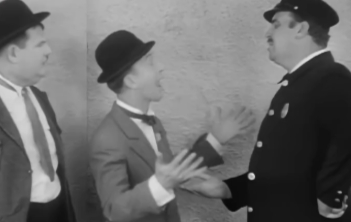
The story follows baggage handlers Wilbur and Chick, played by Lou Costello and Bud Abbott. Their ordinary job quickly becomes anything but ordinary when they become involved with mysterious crates containing the bodies of Count Dracula and Frankenstein’s Monster. What begins as a simple delivery turns into a frightening adventure involving vampires, monsters, haunted locations, and supernatural schemes.
Lou Costello’s character is especially important to the film’s comedic energy. Wilbur is easily frightened, highly confused, and constantly surrounded by things he does not understand. His reactions provide a perfect contrast to the calm and calculating behavior of the monsters. Every time Wilbur becomes convinced that something strange is happening, Chick attempts to dismiss his fears.
This classic Abbott and Costello formula works extremely well because the audience often knows that Wilbur is right even when Chick refuses to believe him. The humor comes from the dramatic difference between what the characters think is happening and what the audience can clearly see.
At the center of the story is Count Dracula, portrayed by Bela Lugosi. Lugosi’s presence is particularly significant because he had famously played Dracula in the iconic 1931 film. Seeing him return to the role alongside Abbott and Costello creates an unusual connection between classic horror and classic comedy.
Dracula remains mysterious and threatening, while Abbott and Costello bring a completely different type of energy to the story. Instead of allowing the horror atmosphere to become too serious, their constant arguments, misunderstandings, and physical comedy keep the movie playful.
The film also features Lon Chaney Jr. as the Wolf Man. Chaney had already become strongly associated with the character, making his appearance another major attraction for horror fans. Glenn Strange also appears as Frankenstein’s Monster, continuing the tradition of Universal’s famous monster movies.
Bringing these characters together was a clever concept. Each monster represents a different side of classic horror cinema, while Abbott and Costello represent fast-paced verbal comedy and physical slapstick. Watching these worlds interact gives the movie a distinctive personality.
One of the most enjoyable aspects of Abbott and Costello Meet Dracula is its ability to move between suspense and comedy. A scene can begin with an eerie atmosphere, mysterious lighting, or a frightening creature, only for Abbott and Costello to completely disrupt the tension with a ridiculous misunderstanding.
This balance is one reason the film remains entertaining decades after its original release. The comedy does not depend entirely on modern references or contemporary trends. Instead, it relies on timeless elements such as fear, confusion, friendship, deception, and physical humor.
Abbott and Costello were masters of comic timing. Their performances often depended on rhythm: one character says something seriously, the other misunderstands it, an argument begins, and the situation quickly becomes more ridiculous. Their chemistry is particularly effective here because the supernatural setting gives them endless opportunities for confusion.
Lou Costello’s physical reactions are another major part of the entertainment. His exaggerated expressions and nervous movements turn even simple encounters into memorable comedy. Bud Abbott, meanwhile, often plays the straight man who tries to maintain control while everything around him becomes increasingly bizarre.
The contrast between the two performers is essential. If both characters were equally frightened or equally foolish, the comedy would lose some of its impact. Abbott’s attempts to remain logical provide the perfect setup for Costello’s chaotic reactions.
The 1948 film also represents an interesting moment in Hollywood history. Classic monster movies had already become a major part of popular culture, while comedy teams such as Abbott and Costello were enormously successful. Combining these two popular entertainment styles was a natural way to attract audiences looking for something familiar but different.
The result is not a traditional horror movie and not simply a standard Abbott and Costello comedy. It is a hybrid that uses elements from both genres. There are monsters, castles, mysterious transformations, and supernatural threats, but there are also misunderstandings, wordplay, slapstick, and perfectly timed reactions.
For modern viewers, the film can also be appreciated as a snapshot of classic Hollywood entertainment. The performances, costumes, sets, and visual style transport audiences back to the era of studio filmmaking. Even when the special effects look simple by today’s standards, the atmosphere has a charm that modern productions often struggle to recreate.
The idea of colorizing classic black-and-white footage can give contemporary audiences another way to experience this historic film. A 2026 colorized presentation can make the costumes, sets, and characters feel visually different while preserving the original performances and story. For viewers who are accustomed to modern color cinema, colorization may make an older movie feel more accessible.
However, the real heart of the experience remains the performances. No visual update can replace the chemistry between Abbott and Costello or the iconic presence of Bela Lugosi as Dracula.
What makes Abbott and Costello Meet Dracula particularly memorable is its willingness to let comedy and horror coexist. Dracula can be genuinely intimidating, the Wolf Man can be frightening, and Frankenstein’s Monster can appear imposing, but the audience is never far away from another ridiculous Abbott and Costello moment.
That combination has helped the film remain a beloved example of crossover entertainment. It introduced audiences to a unique meeting between comedy legends and horror icons, creating scenes that continue to be revisited by classic movie fans.
More than seven decades after its release, Abbott and Costello Meet Dracula remains a fascinating piece of entertainment history. It demonstrates how classic Hollywood could bring seemingly unrelated genres together and create something entertaining for a wide audience.
Whether you enjoy classic horror, vintage comedy, Universal monsters, or simply old Hollywood movies, this film offers plenty to discover. Bela Lugosi’s Dracula brings the atmosphere of classic horror, Lon Chaney Jr.’s Wolf Man adds another legendary monster, and Abbott and Costello provide the laughs.
The result is a wonderfully strange combination of scares, chaos, and comedy.
And that is exactly why Abbott and Costello Meet Dracula continues to stand out. It is not trying to be purely frightening or purely serious. It is having fun with the characters, the monsters, and the conventions of classic horror while allowing Abbott and Costello to do what they did best: turn complete chaos into comedy.
For anyone discovering the film for the first time, it is a reminder that great comedy does not need complicated technology or modern production techniques. Sometimes, all it takes is two brilliant comedians, a few legendary monsters, perfect timing, and a ridiculous situation.