Foster Brooks Had a Talent for Creating Unforgettable Characters
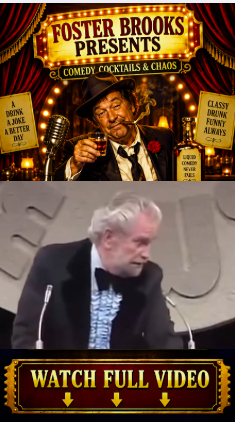
Foster Brooks became widely recognized for his comedic portrayal of a seemingly intoxicated character. His signature approach was not simply about stumbling through lines. Instead, he carefully controlled his timing, pauses, facial expressions, exaggerated pronunciation, and physical movements.
That attention to detail allowed Brooks to transform ordinary conversations into elaborate comedy routines.
The Scoutmaster character was another opportunity for him to play with that style. Rather than treating the role as a straightforward authority figure, Brooks brought his familiar comic personality into the situation. Every pause seemed to create another opportunity for a joke, while every interaction could suddenly move in an unexpected direction.
That unpredictability was one of his greatest strengths as a performer.
The Scoutmaster Setup Created the Perfect Comedy Situation
A Scoutmaster is naturally associated with organization, responsibility, discipline, and leadership. Putting Foster Brooks into that setting created an immediate contrast.
The humor came from watching Brooks approach the role with complete seriousness while simultaneously behaving in ways that made the situation increasingly ridiculous.
Instead of rushing through the material, Brooks allowed the character to develop. His delivery often felt deliberately slow and conversational, giving the audience time to anticipate what might happen next.
That pacing was crucial.
A comedy routine like this works because the performer understands that the pause before the punchline can be just as important as the punchline itself. Brooks had mastered that technique, and his Scoutmaster routine gave him plenty of room to demonstrate it.
Dean Martin’s Reaction Made the Sketch Even Better
While Foster Brooks was clearly the center of the routine, Dean Martin played an important role simply by being himself.
Martin had an exceptionally relaxed presence on television. He rarely needed to overreact to make a moment entertaining. A smile, a glance, a laugh, or a perfectly timed response could become part of the comedy.
During Brooks’ Scoutmaster routine, those reactions added another layer to the performance.
Instead of feeling like a comedian delivering jokes to a silent host, Brooks appeared to be genuinely interacting with Martin. Whenever Martin laughed, the atmosphere became even more relaxed. His reaction gave the audience another reason to enjoy what was happening onstage.
The dynamic between the two entertainers is what made the routine feel so natural.
Why Foster Brooks’ Comedy Worked So Well
Foster Brooks understood the value of commitment.
Once he entered one of his characters, he rarely broke the rhythm. He allowed the audience to accept the character’s world before gradually pushing the situation into more absurd territory.
His comedy was also heavily dependent on timing.
A sentence could become funny because of the way Brooks stretched a word, paused unexpectedly, or looked at another performer before continuing. Those small choices created anticipation and gave his routines a distinctive rhythm.
The Scoutmaster character benefited from exactly those techniques.
Rather than relying entirely on elaborate props or complicated staging, Brooks could generate laughs through performance alone. His voice, posture, facial expressions, and interaction with Martin became the main ingredients.
That is a difficult style of comedy to execute convincingly, but Brooks made it look effortless.
Dean Martin Was the Perfect Partner for Foster Brooks
The success of the routine also demonstrates why Dean Martin was such an effective host for comedy.
Martin did not need to dominate every scene. He understood how to give another performer room to shine while still remaining an important part of the moment.
His laid-back personality created a comfortable environment for Brooks to experiment.
That contrast was particularly effective. Brooks brought exaggerated character comedy, while Martin provided the relaxed reaction that kept the scene grounded.
The result was a classic variety-show dynamic: one performer creates the chaos, while the other reacts to it.
For viewers, Martin’s laughter could feel almost contagious.
The Power of Reaction Comedy
One of the most memorable aspects of classic television comedy is the reaction shot.
A joke becomes even funnier when the camera catches another performer struggling not to laugh. Dean Martin was especially effective in this role because his reactions never seemed overly forced.
When Brooks delivered another unexpected line or pushed the character into another ridiculous situation, Martin’s response became part of the entertainment.
This is why the routine remains interesting even for viewers who already know Foster Brooks’ comedy style.
You are not simply watching Brooks perform.
You are also watching Dean Martin experience the performance.
That distinction gives the sketch a sense of spontaneity.
Foster Brooks and the Art of Playing the “Drunk” Character
Brooks’ famous “drunk” character was a carefully constructed comedic persona. Although the character appeared disoriented, the performance itself required tremendous precision.
Brooks knew exactly when to pause, when to exaggerate a word, and when to let silence carry the joke.
That contrast between apparent confusion and precise comedic timing became one of his trademarks.
The Scoutmaster routine allowed audiences to see how flexible that persona could be within different situations. Whether he was appearing in a bar, participating in a professional setting, or taking on an authority role, Brooks could adapt the same fundamental comedic techniques to a new scenario.
That adaptability helped make him one of the recognizable comedy performers of the variety television era.
Why Classic Dean Martin Comedy Still Feels Special
There is a particular charm to vintage variety television that is difficult to recreate.
Programs associated with entertainers like Dean Martin often combined music, comedy, celebrity guests, sketches, and spontaneous interactions within the same show. That format gave performers opportunities to react to one another rather than simply deliver isolated routines.
The Foster Brooks Scoutmaster appearance is a good example of that atmosphere.
The entertainment comes not only from the written jokes but also from the interaction between performers.
Martin laughing at Brooks.
Brooks maintaining his character.
The audience responding to the escalating situation.
Those elements combine to create a moment that feels bigger than the individual punchlines.
Foster Brooks’ Legacy of Character Comedy
Foster Brooks left behind a distinctive comedic legacy. His performances demonstrated how much could be achieved through timing, character development, and controlled exaggeration.
He did not need complicated technology or elaborate production effects.
His voice and physical comedy could carry an entire routine.
That is part of what makes his performances so recognizable decades later. Viewers can immediately identify the rhythm of a Foster Brooks routine: the deliberate delivery, the pauses, the exaggerated confidence, and the inevitable escalation.
When that style was placed alongside Dean Martin’s relaxed personality, the result was particularly entertaining.
A Comedy Moment Built on Chemistry
Ultimately, the appeal of Foster Brooks’ Scoutmaster act goes beyond the character itself.
It is about chemistry.
Brooks knew how to create a comic situation, and Dean Martin knew how to react to it. Their contrasting styles gave the routine its energy.
Brooks pushed the scene toward absurdity, while Martin’s laughter provided the perfect response.
That combination is one reason classic Dean Martin comedy remains so enjoyable for fans of vintage television. The best moments often feel less like carefully separated jokes and more like entertainers genuinely having fun together.
And when Foster Brooks brought his unforgettable comedic personality into the Scoutmaster role, Dean Martin’s inability to keep a straight face became part of the show.
For fans of Foster Brooks, Dean Martin, and classic variety television, this Scoutmaster routine is another reminder of why their comedy continues to attract audiences decades later.