https://youtu.be/cV8PdUxnO0c?si=Umsjcy9KVrHTHgvm
Foster Brooks: The Man Behind the “Lovable Lush”
Foster Brooks developed a signature comedy character that audiences could recognize almost instantly. His seemingly intoxicated persona featured slurred words, uncertain movements, long pauses, and sentences that appeared to wander away from their original destination.
But beneath the apparent confusion was a remarkably disciplined performer.
Brooks understood that the funniest moments often came from delaying the punchline. Rather than rushing through a joke, he allowed the audience to follow every verbal detour. A pause became an opportunity to build anticipation, while a confused expression could make an ordinary line even funnier.
That approach made his performances feel spontaneous, even when the timing was carefully controlled.
His character was not simply a collection of drunken mannerisms. It was a complete comedic creation, built around rhythm, personality, and the contrast between apparent disorder and genuine precision.
When Brooks entered a celebrity roast, he brought that entire character with him.
Why Bob Hope Was the Perfect Roast Target
Bob Hope was one of the most celebrated entertainers of his generation. With a career spanning comedy, film, radio, television, and live performance, he understood how to command an audience and deliver a joke with confidence.
That made him a fascinating target for another comedian.
Celebrity roasts turn the usual rules of entertainment upside down. The person accustomed to delivering the punchlines suddenly becomes the subject of them. Friends and fellow performers get the opportunity to tease the guest of honor, often drawing humor from public reputation, familiar mannerisms, and the playful rivalries of show business.
For Foster Brooks, a figure as recognizable as Bob Hope offered a perfect opportunity.
Brooks did not need to compete with Hope’s polished style. His deliberately awkward character provided a completely different kind of entertainment.
The contrast was the joke: a legendary entertainer facing a comedian who seemed to be struggling just to finish a sentence.
The Unexpected Comedy of Foster Brooks
What made Foster Brooks so effective was his ability to make an audience uncertain about what would happen next.
He could begin a thought with apparent confidence, lose his way halfway through, and pause as though the words had disappeared from his memory. Then, just when the audience expected another detour, he could deliver a punchline with impeccable timing.
That unpredictability was central to his appeal.
During a roast, where the audience already expects sharp humor, Brooks’ delivery added another layer of comedy. The jokes were only part of the entertainment. The way he approached them was equally important.
His drawn-out pauses invited anticipation. His exaggerated expressions suggested that something had gone terribly wrong. His character seemed to fight its way through every sentence.
Yet the routine continued to move toward its destination.
That combination made Brooks a natural fit for the classic celebrity roast format.
The Dean Martin Era: When Personality Ruled Television
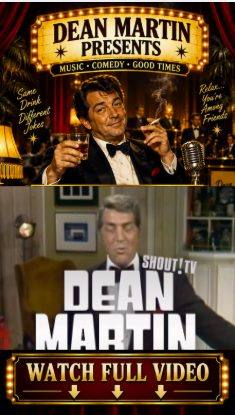
The Dean Martin era of television comedy holds a special place in the memories of classic entertainment fans.
Dean Martin’s relaxed hosting style, combined with the presence of well-known performers and comedians, helped create an atmosphere that often felt more like a gathering of entertainers than a formal television production.
The Dean Martin Celebrity Roast became particularly memorable for its combination of celebrity guests, playful insults, and performers who knew how to turn the spotlight into an opportunity for comedy.
The format encouraged entertainers to show different sides of their personalities. A serious public figure could become the target of a joke, while an established comedian could experiment with a character or delivery style.
Foster Brooks fit naturally into that environment.
His performances relied on personality rather than elaborate staging. He could hold attention through nothing more than his voice, expressions, pauses, and distinctive way of telling a story.
That was the appeal of classic television comedy: the performer was the main event.
Why the Contrast Between Brooks and Hope Worked
Great comedy often depends on contrast.
Bob Hope was known for his experience, confidence, and polished delivery. Foster Brooks built his character around uncertainty, hesitation, and the illusion that he had little control over the situation.
Put those contrasting styles into a roast, and the comedic possibilities become obvious.
Brooks could appear to approach a joke with complete confusion, making the audience wonder how he would reach the punchline. Hope’s status as a comedy veteran added significance to the exchange because the audience understood the reputation of the person being roasted.
The humor came from watching two very different comedic identities meet in the same setting.
It was not necessary for the performers to share the same style. In fact, their differences made the interaction more interesting.
One represented the confidence of a seasoned entertainer. The other represented the lovable chaos of a character who never seemed entirely sure what he was doing.
That contrast is one reason classic roast comedy remains so enjoyable.
The Secret Was Always in the Timing
Foster Brooks’ apparent clumsiness concealed one of his greatest strengths: impeccable comic timing.
His delivery depended on knowing when to stop, when to continue, and when to let the audience react. A pause that lasted a little too long could lose its effect, while a perfectly placed hesitation could turn an ordinary sentence into a memorable moment.
Brooks understood that difference.
He made the audience wait for the punchline, but he also made the waiting entertaining. His facial expressions and vocal delivery kept the room engaged even when the joke had not yet reached its conclusion.
This was especially effective in a live-style television setting, where audience reactions became part of the rhythm.
Laughter could build during a pause, interrupt the next line, and make the moment feel even more spontaneous.
Brooks knew how to work with that rhythm rather than fight against it.
Why Fans Still Love Classic Roast Comedy
Classic celebrity roasts continue to appeal to audiences because they capture a style of entertainment that depends on human interaction.
The jokes matter, but so do the reactions. A comedian’s expression, the honoree’s response, and the audience’s laughter all contribute to the experience.
There is also a sense of familiarity. Viewers recognize the performers and understand the reputations that make the jokes meaningful.
Foster Brooks brought an especially distinctive presence to these gatherings. His character was immediately recognizable, and his delivery could transform a straightforward joke into a full performance.
For fans of Dean Martin-era television, that combination represents the charm of a time when entertainers could captivate a room through personality and timing alone.
No elaborate visual effects were necessary. The comedy came from the people onstage.
Foster Brooks’ Enduring Comedy Legacy
Foster Brooks remains memorable because he developed a character that was both instantly recognizable and technically demanding.
His “lovable lush” appeared to stumble through conversations, but the performance required control over every pause, gesture, and change in delivery.
That contrast was the foundation of his success.
He showed that a comedian did not need to deliver every punchline quickly or loudly. Sometimes, the funniest approach was to slow everything down and allow the audience’s expectations to do the work.
His appearances in classic roast settings demonstrated how effectively that technique could translate to an audience filled with celebrated entertainers.
The result was comedy rooted in character, timing, and a willingness to let a joke unfold at its own pace.
Final Thoughts
Bob Hope never saw this Foster Brooks roast coming — at least, that is the irresistible feeling behind the idea of these two comedy legends sharing the spotlight.
Foster Brooks brought his unforgettable “lovable lush” persona, his slow-burn delivery, and his extraordinary ability to turn hesitation into humor. Bob Hope represented the confidence and experience of a performer who had spent decades entertaining audiences.
Together, they evoke everything fans love about the Dean Martin era of television: legendary personalities, playful roasting, and comedy that depends on timing rather than spectacle.
The lasting appeal of Foster Brooks lies in that remarkable contradiction. His character looked as though it had lost control, but the comedian behind it knew exactly how to build a laugh.
He could stretch a sentence, turn a pause into a punchline, and make the simplest joke feel like an unpredictable adventure.
That is what made Foster Brooks special — and why his style remains a treasured part of classic television comedy.