Tim Conway: The Quiet Charisma That Made Him a Comedy Legend
Even when he was standing quietly in the background, Conway had a remarkable ability to attract the audience’s attention. His natural charisma, expressive reactions, and extraordinary understanding of comedic timing allowed him to make a lasting impression without always needing to speak. In an industry where performers often compete to deliver the loudest punchline or the biggest reaction, Tim Conway proved that subtlety could be just as powerful as an elaborate comedy routine.
His unique talent came from understanding that comedy was not simply about telling jokes. It was also about observing people, reacting to unexpected situations, and creating moments that felt both surprising and familiar. Sometimes, a brief glance or a barely noticeable change in expression was enough to make viewers anticipate something funny. This quiet confidence became one of the defining characteristics of his performance style.
The Power of Subtle Comedy
One of the most remarkable aspects of Tim Conway’s talent was his ability to make small gestures feel significant. While other performers might rely on exaggerated movements or dramatic dialogue, Conway could create laughter through a simple pause, an awkward posture, or a look of innocent confusion.
His approach required exceptional awareness of the scene around him. He understood when to draw attention to himself and when to allow another performer to lead the conversation. By remaining quiet at the right moment, he could build anticipation and make his eventual reaction even more effective.
This subtle form of comedy also encouraged audiences to pay closer attention. Viewers often discovered humor in the smallest details, including the way Conway moved his eyes, tilted his head, or appeared to struggle with an ordinary task. These details made his characters feel distinctive and helped transform otherwise simple scenes into memorable entertainment.
Rather than forcing the audience to laugh, Conway allowed humor to develop naturally. His performances demonstrated that a comedian could command attention through patience, precision, and a strong understanding of human behavior.
Tim Conway and The Carol Burnett Show
Tim Conway’s remarkable screen presence became especially evident through his appearances on The Carol Burnett Show. The popular television variety program brought together talented performers who could transform everyday situations into unforgettable comedy sketches.
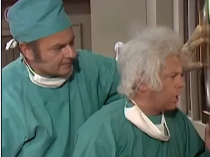
Working alongside Carol Burnett, Harvey Korman, Vicki Lawrence, and other members of the cast, Conway demonstrated that being part of an ensemble did not mean disappearing into the background. Even in scenes where another actor delivered the main dialogue, his reactions could become an important part of the humor.
His collaborations with Harvey Korman were particularly memorable. Korman often played characters who attempted to maintain their dignity, while Conway introduced unexpected behavior that gradually made the situation more ridiculous. The contrast between their performances created a natural comedic rhythm.
Conway did not always need to interrupt a scene or deliver a punchline to make an impression. Sometimes, his quiet expression suggested that he understood something the other characters did not. At other times, his seemingly innocent behavior made an already confusing situation even more absurd.
These moments helped establish his reputation as a performer who could elevate a sketch through both major comedic actions and seemingly insignificant details.
Why His Facial Expressions Were So Effective
Facial expressions played an essential role in Tim Conway’s comedy. His ability to communicate confusion, innocence, uncertainty, and mischief without extensive dialogue gave his performances a distinctive visual quality.
A simple look could suggest that a character was struggling to understand an obvious instruction. A slow reaction could make a straightforward conversation feel unexpectedly awkward. Even a moment of silence could become funny when Conway used his expression to reveal the character’s complete misunderstanding of the situation.
These techniques were effective because they connected with familiar human experiences. Almost everyone has encountered a confusing conversation, misunderstood a simple instruction, or tried to remain calm in an uncomfortable situation. Conway exaggerated these experiences just enough to make them hilarious without making them impossible to recognize.
His expressions also gave other performers opportunities to react. A fellow actor might notice Conway’s unusual behavior and struggle to continue the scene with a straight face. That interaction often added another layer of humor, allowing the audience to enjoy both the original joke and the reaction it produced.
The Importance of Timing and Patience
Great comedy often depends on knowing when not to speak. Tim Conway understood this principle exceptionally well. Rather than rushing toward the next punchline, he frequently allowed a moment to develop until the audience could fully appreciate its absurdity.
A pause might initially appear insignificant, but Conway could use it to create anticipation. The longer he maintained a particular expression or continued a peculiar action, the more viewers began to expect an unexpected outcome. When the moment finally arrived, the resulting laughter felt natural and satisfying.
This approach distinguished him from performers who depended primarily on rapid dialogue. Conway recognized that silence could be an active part of a performance. It gave audiences time to notice details, anticipate possibilities, and become increasingly involved in the scene.
His timing was particularly valuable in sketch comedy, where performers needed to balance scripted material with spontaneous reactions. By controlling the rhythm of a scene, he could make even familiar situations feel fresh.
How Conway Made Supporting Moments Memorable
A successful comedy sketch depends on more than its central joke. Background activity, secondary characters, and small reactions can all contribute to the overall effect. Tim Conway understood how these elements worked together.
When he occupied a supporting position, he could add humor without distracting unnecessarily from the main action. His movements and expressions gave scenes additional personality, making the fictional world feel more alive.
This ability reflected his understanding of ensemble performance. He did not need every moment to revolve around him. Instead, he could recognize opportunities to strengthen the scene as a whole, whether through a subtle reaction or an unexpected physical gesture.
Ironically, this willingness to remain understated often made him even more noticeable. Audiences appreciated performers who could deliver a joke directly, but Conway offered something different: the pleasure of discovering humor in a place they might not initially have expected.
His work illustrates an important lesson for comedians and actors alike. A memorable performance is not necessarily the one with the most dialogue. Sometimes, the smallest contribution can have the greatest impact.
A Timeless Style of Television Humor
Although television comedy has changed considerably over the years, Tim Conway’s approach remains enjoyable because it is rooted in fundamental principles of performance. His humor depended on timing, observation, physical expression, and the interaction between characters.
These qualities do not require audiences to understand a particular cultural reference or follow a complicated storyline. A confused expression, an awkward pause, or a character behaving with complete seriousness in a ridiculous situation can remain funny across generations.
His work on The Carol Burnett Show continues to introduce viewers to the craftsmanship behind classic sketch comedy. Modern audiences can still appreciate how carefully a seemingly spontaneous moment is constructed and how a skilled performer can make a simple gesture feel unforgettable.
Conway also demonstrated that warmth and unpredictability could work together. His characters might behave strangely, but their performances rarely felt hostile or unnecessarily cruel. Instead, the humor often emerged from their innocence, peculiar logic, or inability to recognize how ridiculous they appeared.
Tim Conway’s Lasting Legacy
Tim Conway remains a beloved figure in classic American television because he understood how to make audiences laugh without constantly demanding their attention. His quiet charisma, expressive acting, and exceptional timing allowed him to turn brief appearances into memorable comedic moments.
His performances remind viewers that comedy is an art of details. A glance can establish a character’s personality, a pause can build anticipation, and a small reaction can transform an ordinary scene into something extraordinary.
Ultimately, Conway’s greatest strength was his ability to make humor feel effortless. Whether delivering a memorable line, interacting with another performer, or simply standing quietly in the background, he brought a distinctive energy to the screen.
For fans of classic television comedy, Tim Conway represents a rare combination of technical skill, natural charm, and creative unpredictability. His work continues to demonstrate that true comedic talent is not measured by how much attention a performer demands, but by how effectively that performer turns a moment into laughter. That is why his quiet presence could be just as unforgettable as his biggest performances.