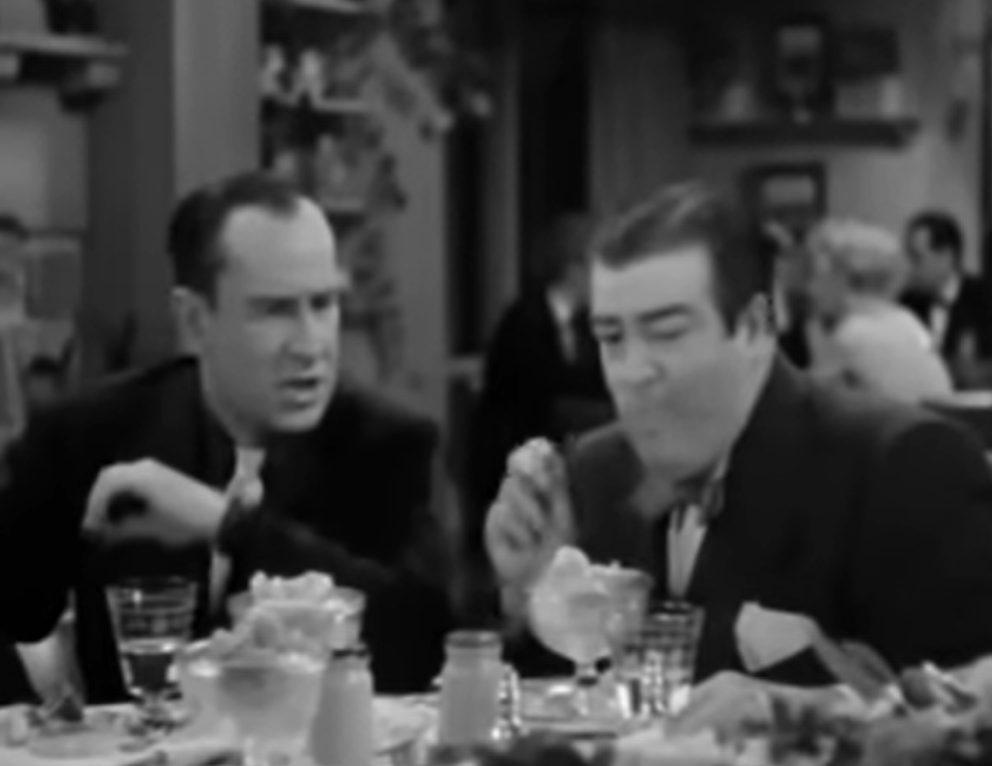
Sometimes the funniest scenes in movie history have almost nothing to do with the movie’s plot.
Abbott and Costello proved that better than almost anyone.
In the 1948 comedy The Noose Hangs High, Bud Abbott and Lou Costello find themselves in serious trouble involving gangsters, missing money, and the possibility that their lives may be in danger. Eventually, they come up with a wonderfully ridiculous solution: if they can get themselves arrested, jail might actually be the safest place for them.
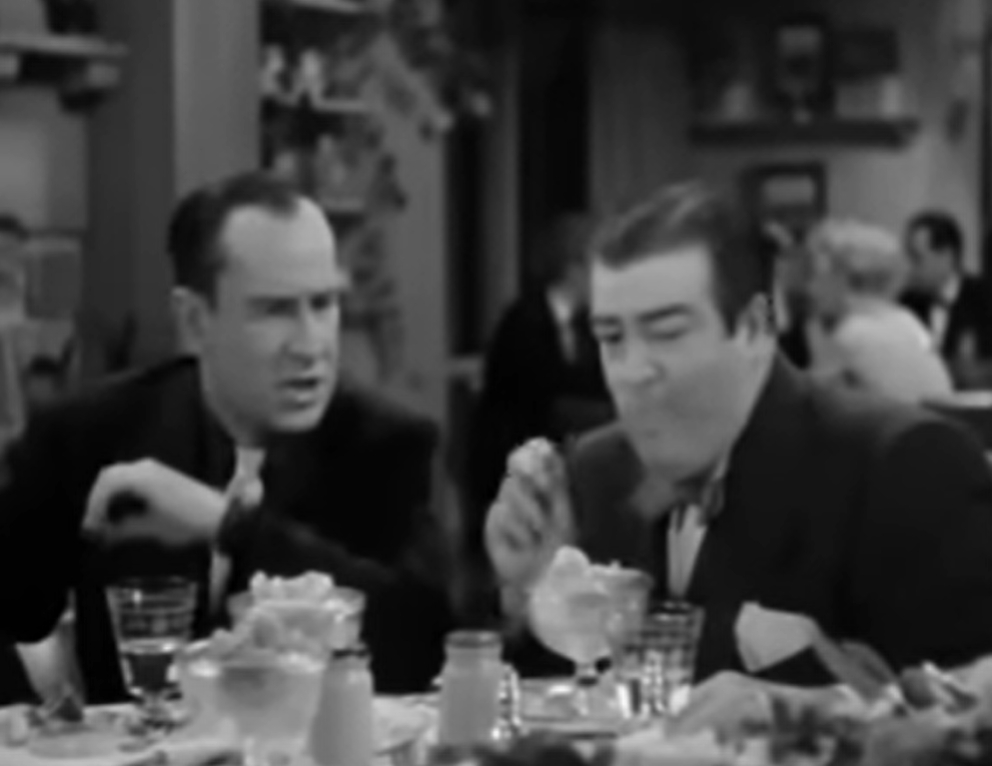
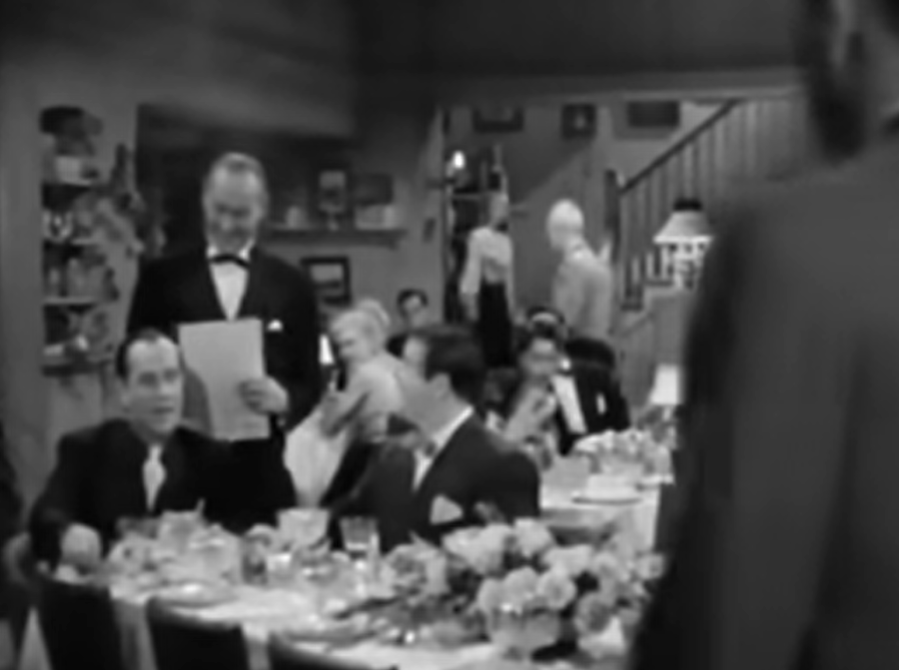
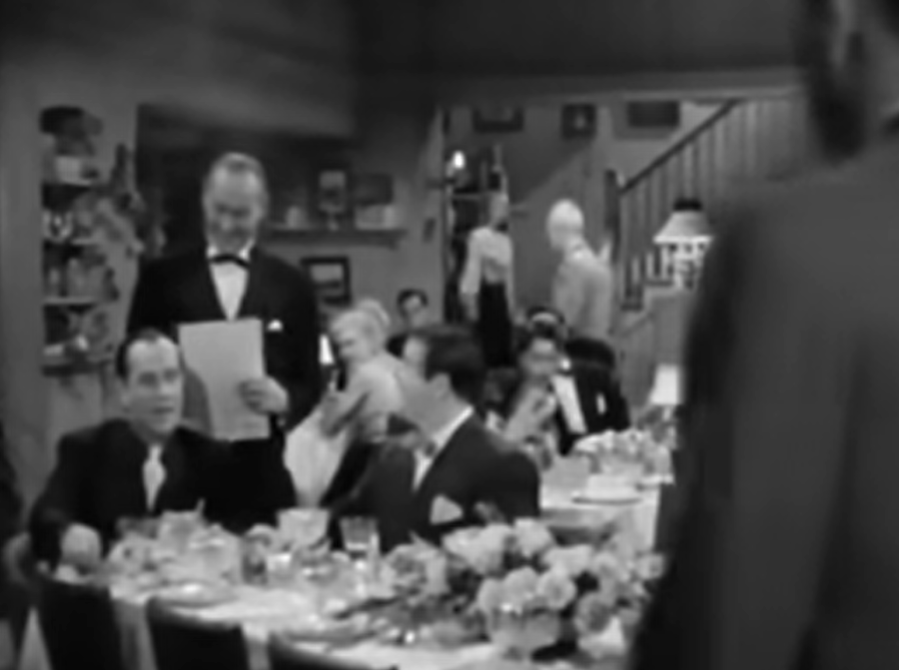
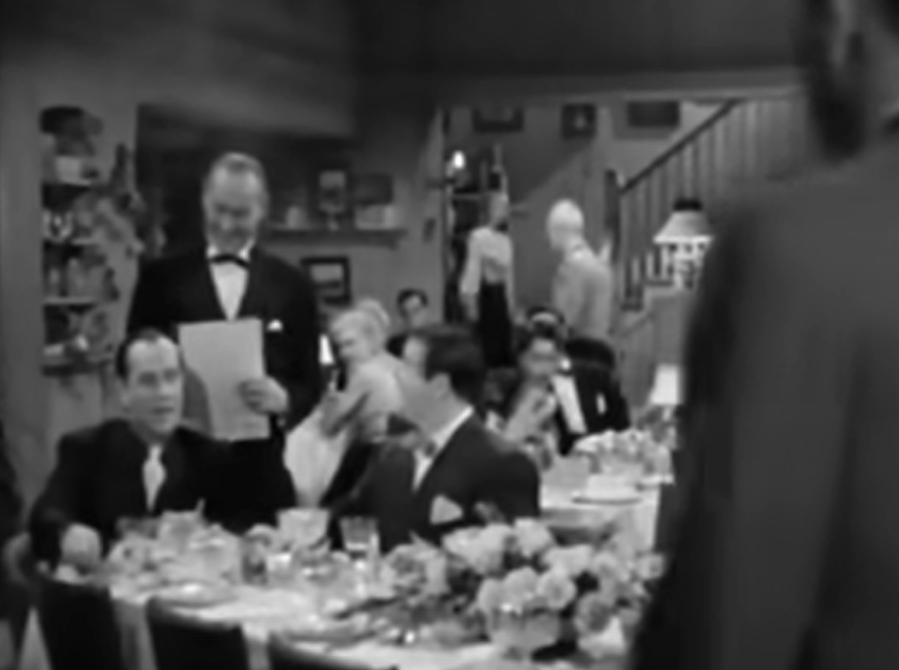
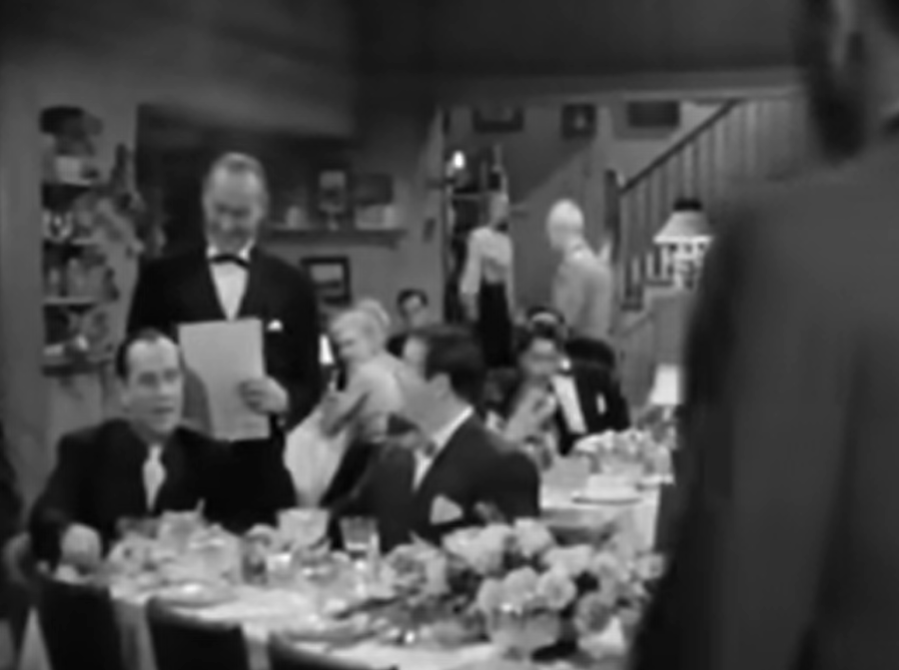
So they head into an expensive restaurant and begin running up a bill they have no intention of paying.
What follows should simply be a bridge between two parts of the story.
Instead, the movie practically stops for several minutes and lets Abbott and Costello do what they did best.
They talk.
They argue.
They misunderstand each other.
A simple bottle of mustard becomes the center of an increasingly impossible conversation. A discussion about the ages of a man and a young woman somehow turns basic arithmetic into a threat to common sense.
Nothing explodes.
Nobody falls off a building.
There are no special effects.
It is simply Bud and Lou sitting together at a table.
And more than 75 years later, it is still incredibly funny.
The Plot Can Wait — Comedy Has Taken Over
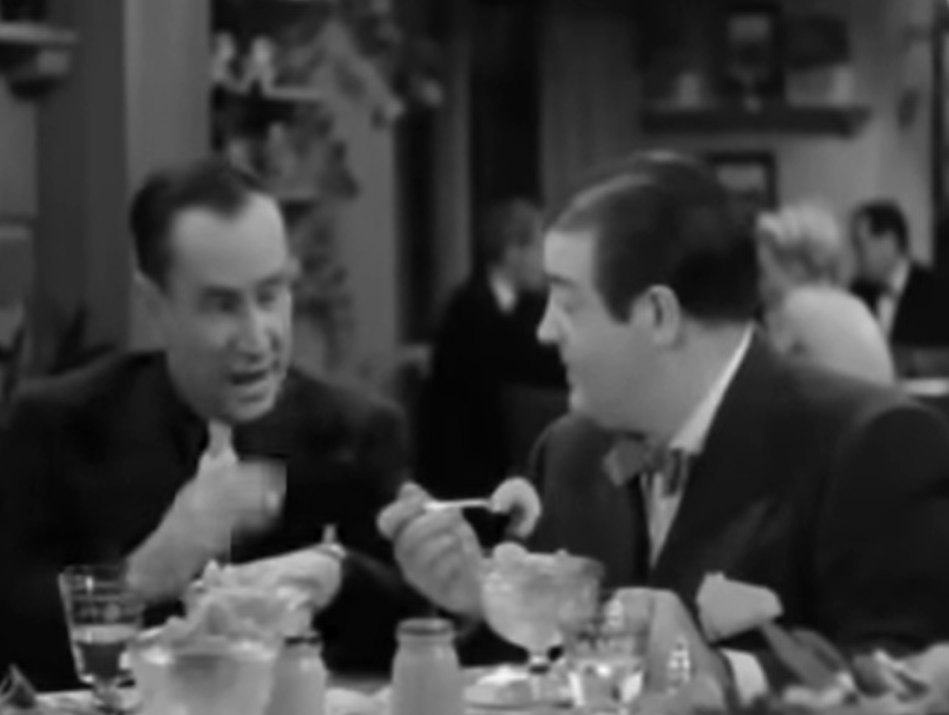
One of the pleasures of watching old Abbott and Costello films is realizing that the story sometimes exists primarily to move the duo from one comedy routine to another.
The Noose Hangs High is a perfect example.
Released in 1948, the movie follows Bud and Lou as two window washers who are mistakenly sent to collect $50,000 for a bookmaker. Naturally, the money disappears, gangsters become involved, and everything gets progressively more dangerous.
But during the restaurant sequence, almost all of that disappears.
For several minutes, there is no real need to advance the story.
The filmmakers simply give Abbott and Costello room to perform.
That might sound unusual to modern viewers accustomed to movies where every scene is expected to push the plot forward.
But Abbott and Costello came from a performance tradition where the routine itself was the attraction.
People wanted to watch them work.
The story could wait.
The Mustard Routine Starts With Almost Nothing
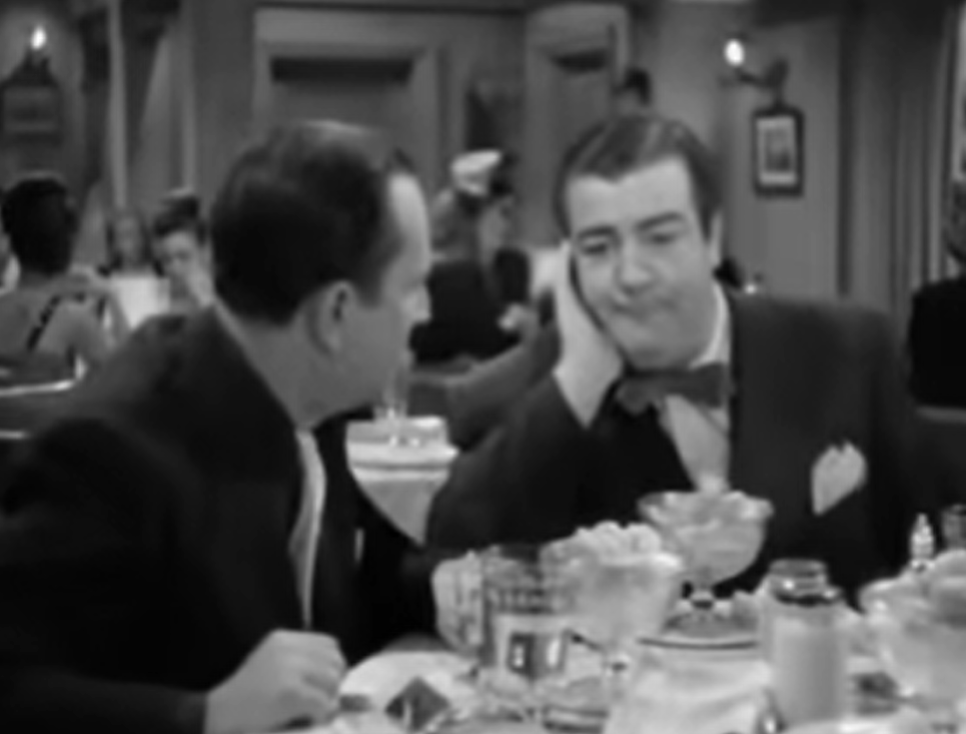
The brilliance of the “Mustard” routine is how ordinary the subject is.
Lou does not want mustard.
Bud keeps talking about mustard.
That is basically it.
From that tiny disagreement, the conversation begins twisting itself into knots.
Bud tries to explain something.
Lou interprets it differently.
Bud corrects him.
Lou becomes more confused.
Bud insists the answer should be obvious.
Lou realizes that nothing about the conversation seems obvious anymore.
The pattern is classic Abbott and Costello.
They could take one harmless word and keep turning it around until the English language itself seemed broken.
That is exactly what made “Who’s on First?” legendary, and the same comic machinery is operating here.
The topic changes.
The structure does not.
Bud believes he is explaining something perfectly clearly.
Lou believes Bud is deliberately trying to drive him insane.
The audience can understand both sides.
That is where the laughter comes from.
Bud Abbott Makes Confusion Sound Logical
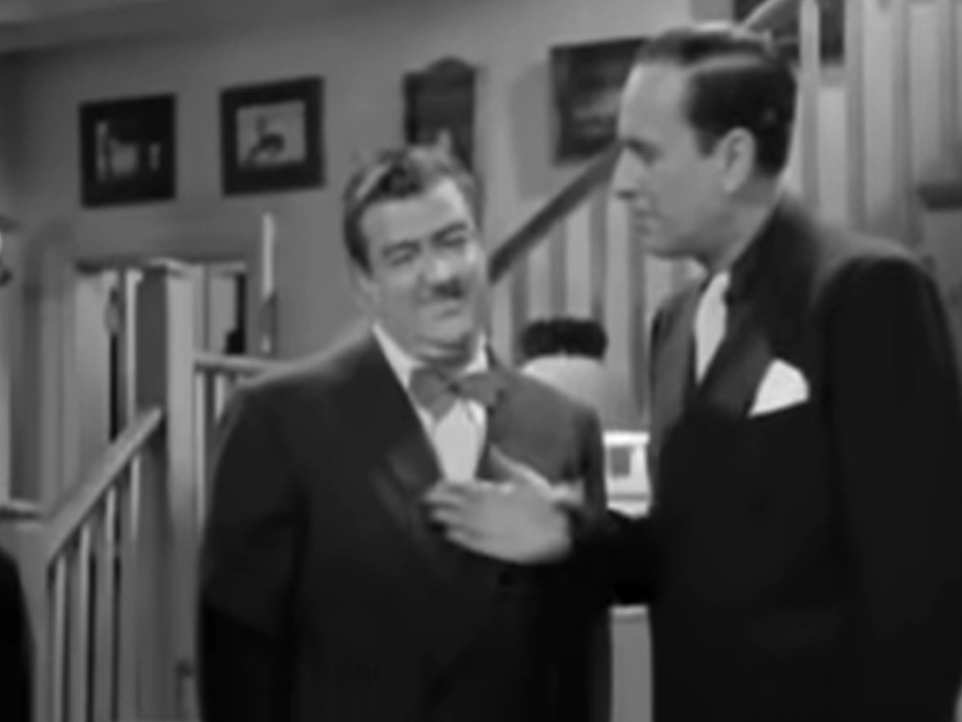
Abbott was one of the greatest straight men in American comedy.
That description sometimes makes his role sound easier than it actually was.
It was not.
Abbott had to deliver ridiculous logic with complete confidence.
If he laughed at his own explanation or signaled too clearly that he knew it was nonsense, the routine would lose its tension.
Instead, Bud behaves like the smartest man at the table.
In his mind, the problem is not the explanation.
The problem is Lou.
He speaks quickly, confidently, and with increasing impatience.
Every time Lou fails to understand, Bud reacts as though he cannot believe he has to explain the obvious one more time.
That attitude is essential.
The audience begins laughing because Bud’s explanation sounds reasonable for just long enough to make Lou’s confusion seem foolish.
Then suddenly the logic turns around.
Now Lou seems correct.
Then Bud changes direction again.
It is verbal sleight of hand.
Lou Costello Turns Confusion Into an Art Form
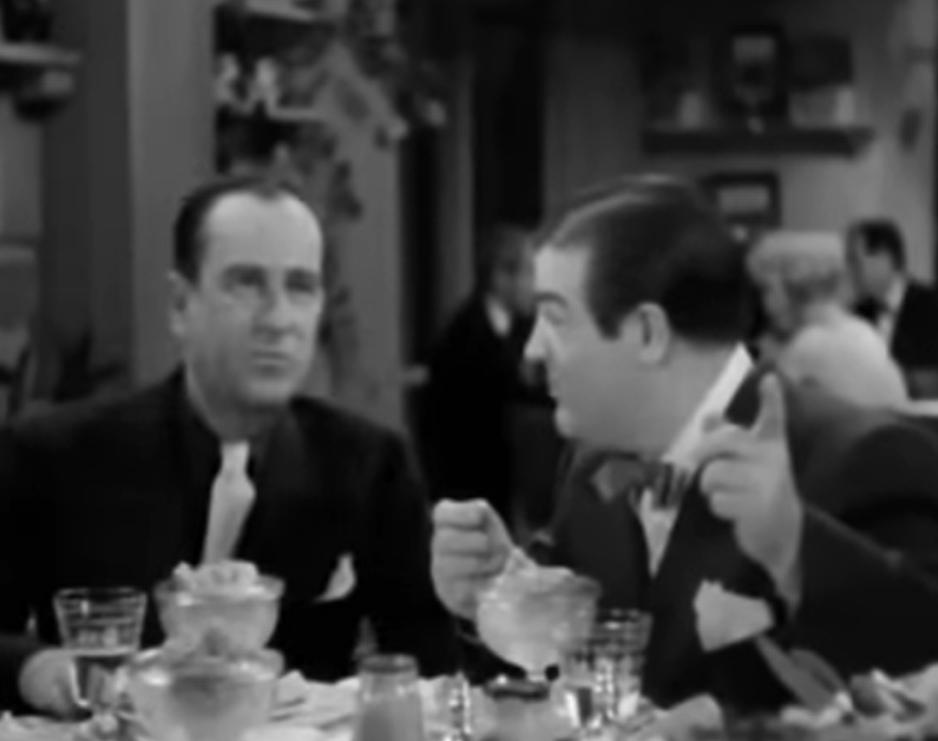
Lou Costello’s character rarely accepts confusion quietly.
He fights it.
That is what makes the routine so energetic.
Lou listens carefully.
He tries to follow Bud’s reasoning.
For a moment, he believes he understands.
Then Bud says something that destroys everything.
You can almost watch the thoughts moving across Costello’s face.
His eyes narrow.
His head turns.
His confidence disappears.
Then comes irritation.
Costello was extraordinary at making the audience feel his frustration physically.
He did not simply say, “I don’t understand.”
His entire body seemed offended by the fact that the universe had stopped making sense.
The shoulders moved.
The face tightened.
The voice changed.
Sometimes he looked as if Bud had personally betrayed him.
That emotional reaction gives the wordplay life.
On paper, some of these conversations might look like clever puzzles.
With Lou Costello performing them, they become battles for survival.
Then Mathematics Becomes Dangerous
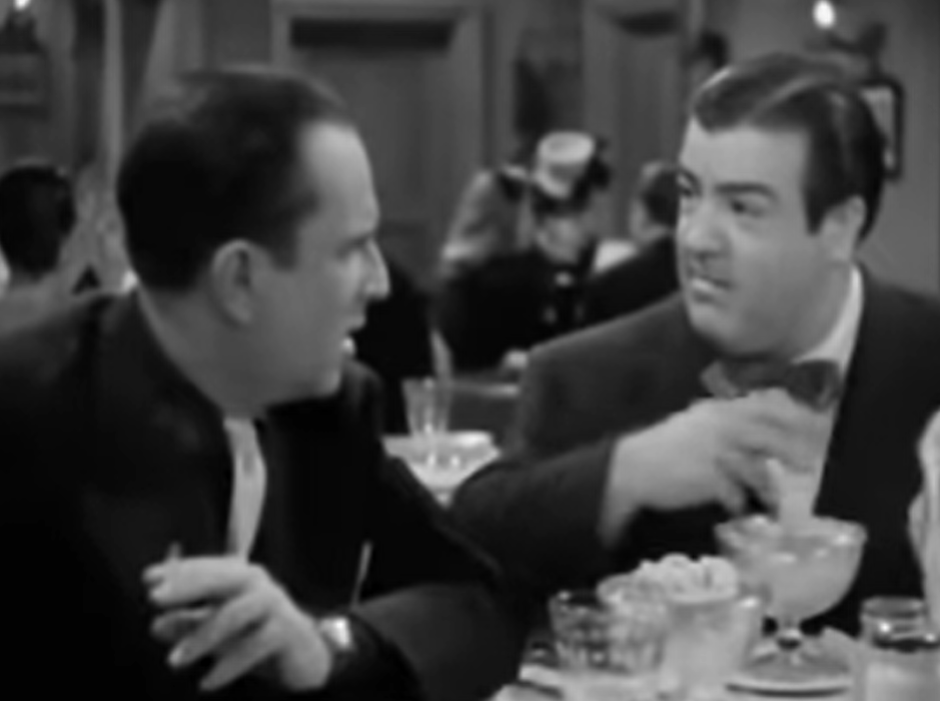
The age routine takes the same basic formula and applies it to numbers.
Bud introduces a situation involving a man and a much younger girl.
From there, the conversation turns into one of Abbott and Costello’s wonderful attacks on arithmetic.
At first, the problem sounds simple.
One person is a certain age.
Another person is younger.
Time passes.
Everyone gets older.
What could possibly go wrong?
Everything.
Lou becomes convinced that somehow the difference between their ages is changing.
Bud attempts to explain.
The explanation creates another problem.
Lou tries to calculate it himself.
That makes things worse.
Soon, ordinary addition begins sounding like advanced theoretical physics.
ClassicFlix lists “You’re 40, She’s 10” among the established Abbott and Costello routines featured in The Noose Hangs High.
The genius is that the audience knows the real answer is simple.
An age difference remains the same.
But Abbott and Costello build such a fast-moving chain of faulty logic that even the viewer can briefly lose track of what should be obvious.
That is an impressive trick.
They do not merely confuse Lou.
For a few seconds, they confuse everybody.
Speed Is Everything
Listen to the rhythm of the conversation.
Abbott does not leave large spaces between his lines.
Costello often responds almost immediately.
One idea crashes into the next.
The faster they go, the harder it becomes for Lou to escape Bud’s logic.
That speed came from years of performing routines before live audiences.
Abbott and Costello did not begin as movie stars.
Their comedy developed through vaudeville, burlesque, radio, and live performance.
They learned which pauses produced laughs.
They learned when to interrupt.
They learned how long an audience needed to understand a joke before the next one arrived.
A contemporary account of the production described Bud and Lou rapidly demonstrating some of their established routines during a story meeting, showing how much of this material already existed as polished performance pieces before being incorporated into the film.
That experience is obvious in the restaurant scene.
Nothing feels accidental.
The confusion looks spontaneous.
The timing underneath it is incredibly precise.
They Know When to Let the Audience Catch Up
Speed alone is not enough.
Great comedy also requires silence.
Abbott and Costello knew exactly when to stop.
Lou hears something ridiculous.
He freezes.
He looks at Bud.
Sometimes that look lasts only a second.
But the audience needs that second.
It gives viewers time to realize the same thing Lou has just realized.
Then the laughter comes.
Modern comedy is sometimes edited so tightly that reactions disappear almost immediately.
Here, the camera can simply stay with the performers.
They do not need fast cuts to create energy.
The energy is already at the table.
They Make an Expensive Restaurant Feel Like a Burlesque Stage
There is something especially funny about where the routines happen.
Bud and Lou are sitting in a fancy establishment, supposedly trying to spend enough money to get themselves arrested.
Around them is the atmosphere of respectable adult society.
Then these two grown men begin arguing about mustard and basic arithmetic.
The contrast is perfect.
It is almost as though someone transported an old vaudeville act into an elegant nightclub.
In fact, that is essentially what happened.
Film historian and classic-movie commentary on The Noose Hangs High has often noted how the movie creates room for established Abbott and Costello stage routines. TCM describes the plot as largely an excuse to introduce material they had developed through burlesque and radio, while later reviews have singled out the extended restaurant section as a showcase for their verbal comedy.
The setting changes.
The act survives.
The Funniest Part Is How Serious Lou Becomes
Lou is not trying to make a joke.
That distinction matters.
To him, this argument is important.
He genuinely wants Bud’s explanation to make sense.
Every time he gets close to understanding, Bud changes something and Lou falls back into confusion.
His frustration becomes increasingly sincere.
That sincerity keeps the routine from feeling like two comedians simply reciting jokes.
For Lou, there are real stakes.
He needs to prove that he is not stupid.
Unfortunately, every attempt to prove it creates additional evidence against him.
Bud understands this perfectly.
The harder Lou tries, the easier he becomes to trap.
Repetition Becomes Funnier Instead of Boring
Normally, repeating the same argument would become tiresome.
Abbott and Costello make repetition the point.
Bud says something.
Lou objects.
Bud explains.
Lou repeats the explanation incorrectly.
Bud corrects him.
They return to almost the exact same point.
But every cycle changes slightly.
A new word enters.
A number changes.
Lou thinks he has discovered the flaw.
Bud immediately creates another explanation.
It is like watching two people climb a staircase that somehow keeps returning them to the first floor.
The audience knows where they are headed.
That makes each failed attempt even funnier.
Abbott Rarely Lets Lou Win
Another essential part of their comedy is the imbalance between the two men.
Bud usually controls the conversation.
He decides what the rules are.
Lou spends most of his time trying to understand those rules.
Even when Lou discovers an obvious contradiction, Abbott can simply change the logic and keep going.
That unfairness makes audiences sympathize with Costello.
We can see that Bud is manipulating him.
We also enjoy watching it happen.
Then occasionally Lou finds a way to turn the situation around.
Those moments feel especially satisfying because they are rare.
Their comedy becomes a kind of friendly combat.
Bud has language.
Lou has emotion.
Neither one is willing to surrender.
This Is Why the Duo Worked
Strip away the costumes, movie plots, gangsters, and elaborate situations, and Abbott and Costello’s basic relationship becomes extremely clear in this scene.
Bud thinks he knows everything.
Lou desperately wants to understand.
Bud explains.
Lou misunderstands.
Bud gets impatient.
Lou gets angry.
Then somehow Bud makes Lou doubt himself all over again.
It is one of the simplest comedy formulas imaginable.
It is also incredibly difficult to do well.
The chemistry between the two performers is what makes it work.
They know each other’s rhythm so completely that the dialogue almost feels musical.
You can hear the tempo change.
Fast.
Slow.
Pause.
Explosion.
Back to fast.
Their timing is the real performance.
The Scene Also Shows Why Old Comedy Can Survive
Many jokes age badly because they depend on a specific celebrity, political event, or piece of slang.
Confusion does not age.
Neither does frustration.
Neither does arguing with a friend who insists that his completely ridiculous explanation makes perfect sense.
That is why this sequence remains accessible decades later.
The clothes are old-fashioned.
The restaurant looks different from modern restaurants.
The movie is black-and-white.
None of that matters once Bud starts explaining something to Lou.
Suddenly, the scene feels familiar.
Everyone has had a conversation like this.
Someone explains something badly.
You ask a question.
They explain it again.
Now you understand it even less.
Eventually, you are no longer discussing the original subject.
You are arguing about the explanation.
Abbott and Costello turned that universal frustration into an art form.
The Plot Returns Eventually — But We Remember the Routine
At some point, The Noose Hangs High has to return to its gangsters, money, and dangerous situation.
The story continues.
But many viewers remember these few minutes better than the larger plot.
That says something important about Abbott and Costello.
Their movies gave audiences stories.
Their routines gave audiences memories.
People may forget exactly why Bud and Lou were sitting in that restaurant.
They remember Lou fighting with Bud about mustard.
They remember the impossible arithmetic.
They remember the looks on Costello’s face.
They remember Abbott’s absolute confidence while saying something that makes less sense every second.
That is comedy reduced to its basic ingredients.
Two performers.
A table.
A conversation.
Perfect timing.
More Than 75 Years Later, the Routine Still Works
There is no complicated reason this video remains enjoyable.
Abbott and Costello were simply exceptionally good at what they did.
They understood rhythm.
They understood character.
They understood how confusion builds.
Most importantly, they understood each other.
Bud could lead Lou directly into a trap with a few words.
Lou could turn that trap into five minutes of escalating frustration.
Neither performer needed to explain why it was funny.
They trusted the routine.
And they trusted the audience.
That trust is visible throughout this restaurant sequence from The Noose Hangs High.
A simple meal turns into a verbal battlefield.
Mustard becomes a philosophical problem.
Basic arithmetic becomes impossible.
Lou loses his patience.
Bud refuses to admit anything is wrong.
And generations later, people are still laughing.
That may be the greatest compliment a comedy team can receive.
The world around their routines has changed almost completely.
The laughter has not.