Some of the greatest moments on The Carol Burnett Show weren’t written by the writers.
They weren’t rehearsed.
They didn’t require elaborate costumes.
Sometimes all Carol Burnett needed was one fearless person sitting in the audience.
And in January 1977, that person was Terry McCann.
What began as an ordinary audience question turned into one of the most memorable spontaneous moments in the show’s history: an audience member walking onto the stage, commanding Carol’s orchestra and performing a duet with the star of the show.
And somehow, the funniest moment didn’t happen until the song was almost over.
Carol’s Audience Could Say Almost Anything
One of the defining traditions of The Carol Burnett Show was the audience Q&A.
Carol would walk onto the stage before the sketches and musical numbers and have the studio lights raised.
Then she would simply talk to people.
There was an element of risk built into the idea.
Carol didn’t know exactly what people were going to ask.
She couldn’t completely prepare her answers.
That’s precisely what made it exciting.
Carol has said that she originally resisted the concept because she was much more comfortable hiding behind characters, costumes and physical comedy. Eventually, however, the Q&A became one of her favorite parts of the program.
Then Terry McCann Raised Her Hand
On January 15, 1977, one audience interaction became something much bigger.
The woman was Terry McCann.
Carol noticed that Terry resembled the look associated with Bea Arthur’s character Maude and asked whether people often stopped her because of the resemblance.
Terry explained that they did.
According to the surviving PBS transcript, she even joked about people at the studio asking for autographs.
Already, the audience was laughing.
But Terry wasn’t finished.
https://youtu.be/EVUAle5Q4wo?si=YDCfoxWMtEYMGS4j
“I’d Like to Sing”
Then came the surprise.
Terry announced that she wanted to sing a song.
Most television hosts might have laughed and moved on.
Carol Burnett did something else.
She invited her up.
That decision perfectly illustrates why Carol’s audience segments produced so many memorable moments.
She was willing to follow the conversation wherever it went.
Now an ordinary audience member was walking onto the stage of one of America’s biggest television variety shows.
And Terry Wasn’t Nervous
This is where the moment becomes wonderful.
Carol asks her name.
“Terry McCann.”
Then she asks Terry what she wants to sing.
Terry doesn’t hesitate.
She turns toward the orchestra and announces:
“You Made Me Love You” — in the key of G.
The audience bursts into laughter.
It’s the confidence that makes the moment.
Terry doesn’t behave like someone who has unexpectedly wandered onto a television stage.
For a few seconds, she behaves like the show belongs to her.
Carol can only watch.
And Then the Orchestra Actually Plays
The incredible thing is that the moment doesn’t stop there.
The orchestra begins.
Terry starts singing.
And according to Carol’s later recollections, Terry was actually good.
This wasn’t simply an audience member attempting a funny stunt.
She could perform.
Carol later remembered Terry as completely fearless.
Soon Carol decides to join her.
Now what started as a random audience request has become a genuine duet on national television.
Carol Had a 28-Piece Orchestra Ready
There’s another detail that makes this moment particularly wonderful from today’s perspective.
Carol later recalled that her show had a 28-piece orchestra.
So when Terry confidently called out the song and key, there was a full professional television orchestra sitting there ready to follow her.
No backing track.
No smartphone.
No karaoke machine.
Just:
“You Made Me Love You.”
“Key of G.”
And off they went.
The Audience Loved It
Terry sings.
Carol joins her.
The audience begins clapping along.
At this point, something remarkable has happened.
The boundary between performer and audience has almost disappeared.
A woman who arrived expecting to watch The Carol Burnett Show is suddenly performing on The Carol Burnett Show.
And the show’s star is now her duet partner.
You couldn’t plan something quite like this without losing part of what makes it special.
Then Comes the Ending
Eventually they reach the end of the song.
There’s a problem.
Carol knows one ending.
Terry knows another.
They start heading in different musical directions.
The grand finish begins falling apart.
Then Terry looks at the woman whose name is literally in the title of the television show and tells her:
“You screwed it up.”
Carol replies:
“I’m sorry.”
The audience erupts.
Imagine Saying That to Carol Burnett
That’s what makes the punchline extraordinary.
Terry has been invited out of the audience.
Carol has given her the stage.
A professional orchestra is accompanying her.
Carol joins her duet.
And when the ending doesn’t work…
Terry blames Carol.
It’s perfect.
And because it wasn’t scripted, Carol’s reaction has an authenticity that would be extremely difficult to recreate.
Carol Loved the Moment
Years later, Carol still remembered Terry.
She repeatedly told the story in interviews.
In one recollection, Carol explained that the moment was so funny that they made room in the broadcast so it could remain in the show.
That’s significant.
A variety show had planned sketches.
Guest stars.
Musical performances.
Costumes.
Sets.
An enormous orchestra.
Yet an unscripted encounter with one woman from the audience was simply too good to lose.
That’s the Magic of Live Audience Comedy
Comedy writers can construct brilliant jokes.
But they cannot manufacture genuine unpredictability.
Carol understood that.
The audience Q&A created situations in which nobody — sometimes including Carol — knew what would happen next.
That uncertainty generated a different kind of laughter.
People weren’t merely waiting for a punchline.
They were watching something unfold.
Terry Became Part of Television History
Terry wasn’t a famous comedian.
She wasn’t one of the announced guest stars.
The official guest for that January 15, 1977 episode was Glen Campbell. PBS lists other highlights including Tim Conway, Harvey Korman and Vicki Lawrence.
Yet decades later, Terry’s appearance is still discussed.
That’s extraordinary.
One spontaneous decision — asking to sing — turned an audience member into part of the show’s history.
Carol’s Generosity Made It Possible
The moment also tells us something important about Carol Burnett.
A less secure star might have worried about losing control of the stage.
Carol did the opposite.
She gave Terry the opportunity.
Then when Terry started succeeding, Carol didn’t rush to take the spotlight back.
She joined the fun.
And when Terry delivered the final joke at Carol’s expense, Carol allowed herself to become the punchline.
That’s generosity.
And great comedy often requires it.
Why This Clip Is Perfect for Reels
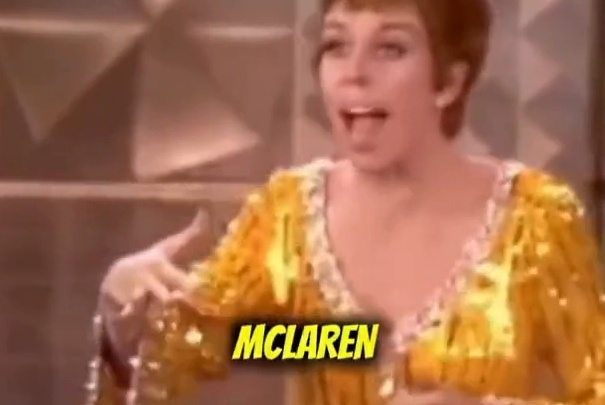
Your 18(3).mp4 captures the most important setup:
Carol meets Terry.
Terry announces that she wants to sing.
Carol invites her up.
Terry walks confidently toward the stage.
Even without seeing the entire performance, viewers immediately want to know:
Is Carol really going to let this random woman sing?
Yes.
And what happens afterward is even better.
That creates an excellent curiosity hook for Facebook.
Classic Television Could Be Wonderfully Unpredictable
Today, viral moments are often deliberately engineered.
This wasn’t.
An audience member raised her hand.
Carol called on her.
Terry wanted to sing.
Carol said yes.
That’s it.
From that tiny decision came a moment Carol Burnett would still be talking about decades later.
No elaborate premise.
No special effects.
No scripted twist.
Just two funny women, a television orchestra and one incredibly confident audience member.
And Terry Got the Last Laugh
Perhaps the perfect ending to the story is that Terry didn’t simply get her television moment.
She got the final punchline.
Carol Burnett welcomed her onto the stage.
Carol Burnett sang with her.
And Terry McCann looked at Carol Burnett and effectively told the legendary comedian:
You ruined my ending.
Carol’s response?
“I’m sorry.”
That is exactly the kind of spontaneous television moment that can’t be recreated.
And nearly fifty years later, it’s still funny.