Foster Brooks: The Comedian Who Turned Waiting Into an Art Form
Most comedians want their jokes to move smoothly.
They introduce a subject.
Build anticipation.
And deliver a punchline at exactly the right moment.
Foster Brooks approached comedy differently.
He made hesitation part of the entertainment.
His famous stage character appeared to struggle with ordinary speech.
Words came slowly.
Sentences wandered.
And simple statements became unexpectedly complicated.
But the delays were carefully controlled.
Brooks understood that audiences could laugh before hearing the actual joke.
He knew how to build anticipation through silence.
And he recognized that a well-timed pause could be just as effective as a clever punchline.
That distinctive approach made him one of the most memorable comedians associated with classic television.
The Audience Knew Something Funny Was Coming
Foster Brooks developed a recognizable comedic persona.
His character was an exaggerated tipsy gentleman who attempted to maintain dignity despite obvious difficulty speaking.
The audience understood the premise.
They knew he might hesitate.
Repeat a syllable.
Or lose track of a sentence.
But they couldn’t predict exactly when those moments would occur.
That uncertainty created anticipation.
Imagine Brooks approaching a microphone.
He stands confidently.
Adjusts his posture.
And prepares to address the audience.
The crowd is already smiling.
They know the performance will be funny.
But they have no idea how long it will take him to finish the opening sentence.
One Simple Sentence Could Become a Comedy Masterpiece
A talented comedian doesn’t always need complicated material.
Sometimes, the simplest situation provides the greatest opportunity for humor.
Foster Brooks could turn a routine introduction into a complete performance.
He might begin with a formal greeting.
Pause unexpectedly.
Attempt to continue.
Then hesitate again.
The audience would laugh.
Brooks would maintain his serious expression.
And the sentence would become increasingly difficult to complete.
What should have taken only a few seconds could develop into an extended comedy sequence.
The humor wasn’t necessarily contained in the words.
It emerged from the delivery.
The pauses.
And the character’s determination to sound perfectly respectable.
The First Pause Was Only the Beginning
Imagine a classic television studio filled with excited spectators.
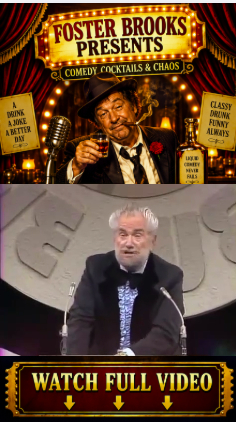
Foster Brooks stands before the microphone.
He looks toward the audience.
Then begins speaking.
The first few words sound ordinary.
Suddenly, he stops.
The room becomes quiet.
Brooks appears to search for the next word.
The audience begins laughing.
He tries again.
Another hesitation follows.
Now the laughter grows louder.
Brooks remains completely serious.
He seems determined to finish his statement.
But every attempt to continue creates another opportunity for comedy.
The punchline is still far away.
Yet the audience is already enjoying every second.
Why Foster Brooks Never Rushed the Joke
Comedy depends on rhythm.
A joke delivered too quickly may lose its impact.
A pause that lasts too long can weaken the performance.
But Foster Brooks understood how to balance anticipation and surprise.
His character’s hesitations appeared unpredictable.
Yet the timing was carefully shaped.
He knew when the audience needed a moment to laugh.
He understood how long to wait before continuing.
And he recognized when another stumble would make the situation even funnier.
By controlling the pace, Brooks made the audience participate in the joke.
They waited.
Anticipated.
And laughed at the uncertainty.
The delay itself became entertainment.
Dean Martin Loved Foster Brooks’s Unpredictable Style
Dean Martin was one of the most recognizable television entertainers of his era.
Known as the King of Cool, he built his public image around effortless charm.
He appeared relaxed.
Confident.
And comfortable sharing the stage with talented performers.
Foster Brooks’s comedy created a wonderful contrast.
Brooks’s character seemed unable to complete a simple statement.
Dean could respond with a smile.
A raised eyebrow.
Or an expression of amused disbelief.
The combination was naturally entertaining.
Brooks created anticipation through hesitation.
Dean’s reactions added another layer of humor.
And the audience enjoyed watching both performers.
The Dean Martin Celebrity Roasts Were Perfect for Foster Brooks
The Dean Martin Celebrity Roast specials brought together famous entertainers for evenings of playful comedy.
Actors.
Comedians.
Singers.
And television personalities delivered humorous speeches about celebrity guests of honor.
The format was ideal for Foster Brooks.
A roast speech normally sounds formal.
The speaker stands confidently.
Addresses the guest of honor.
And delivers carefully timed jokes.
Brooks’s character turned that familiar structure upside down.
He attempted to sound dignified.
But his exaggerated speech difficulties made even the introduction hilarious.
The audience didn’t need to wait for a traditional insult or punchline.
The performance was funny from the beginning.
Foster Brooks’s Serious Face Made the Joke Even Better
One of the most important elements of Brooks’s comedy was his expression.
His character rarely seemed aware of how ridiculous the situation had become.
He attempted to remain serious.
Professional.
And completely composed.
That contrast made the performance entertaining.
Imagine Brooks struggling through a sentence.
The audience laughs.
He pauses.
Then continues as though nothing unusual has happened.
The laughter grows.
But Brooks maintains his dignity.
He doesn’t explain the joke.
He doesn’t acknowledge the audience’s amusement.
He simply keeps trying to finish the statement.
The more seriously he behaves, the funnier the situation becomes.
The Punchline Wasn’t Always the Funniest Part
In traditional comedy, the punchline is often the main event.
The setup builds toward a surprising conclusion.
And the audience laughs when the final line arrives.
But Foster Brooks demonstrated that the journey could be just as entertaining.
His hesitations created laughter.
His attempts to recover created more laughter.
And his exaggerated seriousness made every delay amusing.
By the time the punchline arrived, the audience had already enjoyed an entire sequence of jokes.
The final line became a bonus.
The real entertainment was watching Brooks struggle toward it.
The Longer He Waited, the Harder They Laughed
Anticipation can make comedy more effective.
When an audience expects something funny, every additional delay can increase the tension.
Foster Brooks understood this perfectly.
He could begin a statement.
Pause.
Then attempt to continue.
The audience would wait.
Another hesitation would arrive.
And the laughter would grow.
The delay created a playful question.
Would he ever finish the sentence?
Brooks made the uncertainty entertaining.
He seemed determined to complete the thought.
But his character’s speech kept getting in the way.
The audience loved watching the struggle.
Foster Brooks Could Make Silence Hilarious
Silence is a powerful tool in comedy.
A pause can emphasize a joke.
Create anticipation.
Or allow the audience to recognize an unexpected situation.
Foster Brooks used silence as an essential part of his performance.
He could stop in the middle of a sentence.
Look thoughtful.
Then attempt to continue.
The audience understood the character’s difficulty.
And the silence became funny.
Brooks didn’t need to fill every moment with words.
Sometimes, the absence of words created the biggest laugh.
His ability to control those pauses helped distinguish his comedy from more conventional stand-up routines.
The Audience Was Laughing Before He Finished His First Thought
Imagine Foster Brooks beginning a formal speech.
He stands confidently.
Looks toward the audience.
And starts speaking.
The opening words sound respectable.
Then comes a hesitation.
The audience smiles.
Brooks attempts to continue.
Another pause follows.
Now the audience laughs.
He repeats part of the sentence.
The laughter grows louder.
And the first thought still hasn’t reached its conclusion.
Brooks remains completely serious.
He appears determined to deliver his message.
But the audience is already enjoying the performance.
The punchline hasn’t arrived.
Yet the comedy is in full motion.
Why His Tipsy Gentleman Character Was So Memorable
Foster Brooks’s famous character relied on a clear contradiction.
He wanted to appear dignified.
But his exaggerated speech suggested that he was struggling to maintain control.
He attempted to deliver formal remarks.
Yet ordinary words became difficult.
He behaved as though everything was normal.
But the audience could see the absurdity.
That contrast created a recognizable comedic identity.
Brooks’s performance was not simply random stumbling.
It was a carefully developed portrayal.
His pauses.
Facial expressions.
And attempts to recover all contributed to the humor.
The character became memorable because audiences understood the joke immediately.
And Brooks continued finding new ways to surprise them.
The Perfect Comedy Partner Didn’t Need to Interrupt
Dean Martin’s relaxed hosting style complemented Foster Brooks’s performances.
He understood that Brooks needed time.
The hesitations were part of the routine.
Interrupting too quickly could weaken the rhythm.
Dean could allow the comedian to continue.
Smile at an unexpected pause.
And let the audience enjoy the moment.
That restraint was important.
Brooks could build anticipation.
The audience could respond.
And Dean’s expressions could add another layer of entertainment.
The result was a comedy partnership based on timing rather than constant dialogue.
Sometimes, the funniest thing Dean could do was simply watch.
Foster Brooks Turned Formal Speeches Into Comedy Chaos
A formal speech usually follows a predictable structure.
The speaker introduces themselves.
Addresses the audience.
And delivers prepared remarks.
Foster Brooks used that familiar format to create humor.
His character would begin with exaggerated seriousness.
Then struggle to complete an ordinary sentence.
The audience would laugh.
He would attempt to recover.
But the next phrase might be just as difficult.
The speech gradually became a comedy routine.
What began as a dignified introduction turned into an unpredictable performance.
And the audience enjoyed the contrast between the character’s intentions and his actual delivery.
Every Hesitation Created Another Opportunity for Laughter
A comedian must understand how an audience responds.
Foster Brooks recognized that laughter could develop in stages.
The first hesitation created amusement.
The second increased anticipation.
And the third could produce an even stronger reaction.
He allowed those moments to build.
He didn’t need to rush toward the punchline.
Instead, he used each delay to create another opportunity for humor.
The audience became increasingly engaged.
They waited for the next word.
Wondered what might happen.
And laughed when Brooks struggled again.
The performance became a sequence of carefully timed surprises.
The King of Cool Could Barely Keep a Straight Face
Dean Martin was famous for his relaxed composure.
He appeared comfortable in almost any situation.
But Foster Brooks’s routines could create moments that challenged that image.
Imagine Brooks struggling through a formal introduction.
Dean listens patiently.
A pause arrives.
Dean smiles.
Brooks tries again.
Another hesitation follows.
Dean’s smile grows wider.
The audience laughs.
Brooks remains serious.
And Dean appears increasingly amused.
The contrast makes the moment entertaining.
One performer is struggling to complete a sentence.
The other is enjoying the performance.
And the audience is laughing at both.
Why the Audience Loved Being Kept Waiting
Waiting is usually frustrating.
But in comedy, anticipation can be enjoyable when the performer controls it skillfully.
Foster Brooks made audiences curious about what would happen next.
Would he complete the sentence?
Would another hesitation interrupt him?
Would the punchline arrive unexpectedly?
The uncertainty created excitement.
Every pause invited the audience to participate.
They could anticipate the next stumble.
Recognize the joke.
And laugh before the final line.
Brooks turned delay into entertainment.
The audience wasn’t impatient.
They were enjoying the suspense.
Foster Brooks’s Timing Was More Precise Than It Appeared
His character’s speech sounded disorganized.
But successful comedy requires control.
Brooks understood where to place a hesitation.
How to emphasize a repeated word.
And when to resume speaking.
The timing had to feel unpredictable while remaining entertaining.
That balance required skill.
A poorly timed pause could interrupt the rhythm.
But a well-placed hesitation could create enormous laughter.
Brooks mastered the technique.
His performances demonstrated that apparent confusion could be carefully structured comedy.
The audience saw a character struggling to speak.
But behind the performance was a comedian with remarkable control over timing.
The Best Moments Happened Between the Words
Comedy is often associated with clever dialogue.
But Foster Brooks demonstrated that the spaces between words could be equally entertaining.
A pause could suggest confusion.
A repeated syllable could create anticipation.
And a hesitant recovery could become the highlight of a sentence.
The audience paid attention to every detail.
Not simply what Brooks said.
But how he said it.
And how long he took.
Those details gave his performances a distinctive rhythm.
The humor lived between the words.
And that made even ordinary statements memorable.
Why Foster Brooks Remains a Classic Comedy Favorite
Foster Brooks became a familiar figure in television comedy through his distinctive character and memorable appearances.
His routines relied on recognizable techniques.
Timing.
Hesitation.
Character commitment.
And playful exaggeration.
These elements continue to appeal to viewers who enjoy vintage entertainment.
His performances also demonstrate how much comedy can emerge from simple situations.
A microphone.
A formal speech.
And an audience waiting for the next word can be enough.
Brooks didn’t need elaborate production.
His timing carried the performance.
And his interactions with Dean Martin added another layer of charm.
The Punchline Finally Arrived — But the Audience Was Already Laughing
Imagine Foster Brooks approaching the end of a long, hesitant statement.
The audience has already laughed several times.
Dean Martin is smiling.
And Brooks remains determined to finish.
He pauses once more.
The room becomes quiet.
He begins the final phrase.
Another hesitation follows.
The audience laughs again.
Then, at last, the punchline arrives.
The room erupts.
But the final joke isn’t the only reason everyone is laughing.
They’ve enjoyed the entire journey.
Every pause.
Every stumble.
And every attempt to recover has contributed to the performance.
The punchline completes the routine.
But the anticipation made it unforgettable.
The Genius of Making an Audience Laugh Without Saying Much
Foster Brooks understood a principle that many comedians spend years learning.
More words don’t always mean more laughter.
Sometimes, the most effective moment is a pause.
A look.
Or an unexpected hesitation.
Brooks could create humor with remarkably little dialogue.
His character’s struggle to speak became the central joke.
The audience recognized the pattern.
And they enjoyed every variation.
This economy of language made his performances distinctive.
He could stretch a simple statement into an extended comedy sequence.
And keep the audience entertained throughout.
FOSTER BROOKS MADE THE AUDIENCE WAIT FOR THE PUNCHLINE—AND THEY LOVED EVERY SECOND!
Picture a classic television stage filled with laughter and anticipation.
Foster Brooks stands before the microphone.
The audience watches closely.
Dean Martin sits nearby with his familiar relaxed smile.
Brooks adjusts his posture.
Looks toward the crowd.
And prepares to deliver what sounds like an important speech.
He begins.
The first few words come slowly.
Then he pauses.
The audience smiles.
Brooks attempts to continue.
Another hesitation.
The laughter begins.
Dean Martin looks amused.
Brooks remains completely serious.
He starts the next phrase.
Stops.
And tries again.
Now the audience is laughing louder.
The sentence seems to be taking forever.
But nobody wants him to hurry.
Every delay is entertaining.
Every attempted recovery creates another laugh.
And every pause increases anticipation.
Dean smiles.
The audience waits.
Brooks continues.
Finally, after a series of perfectly timed hesitations, he reaches the punchline.
The room erupts.
But the funniest part wasn’t simply the final remark.
It was everything that happened before it.
The waiting.
The stumbles.
The serious expression.
And the unforgettable timing.
Foster Brooks has done something extraordinary.
He’s turned the delay itself into the joke.
And the audience has loved every second.
FOSTER BROOKS MADE THE AUDIENCE WAIT FOR THE PUNCHLINE—AND THEY LOVED EVERY SECOND! With his legendary tipsy gentleman character, masterful pauses, and unforgettable comic timing, Brooks proved that sometimes the greatest laughter comes not from what a comedian says—but from how brilliantly he makes everyone wait to hear it.
ONE LEGENDARY COMEDIAN. ONE MICROPHONE. ONE SENTENCE THAT SEEMED TO LAST FOREVER. AND AN ENTIRE AUDIENCE LAUGHING LONG BEFORE THE PUNCHLINE FINALLY ARRIVED!
What makes Foster Brooks funniest to you—his exaggerated pauses, his serious facial expressions, or Dean Martin’s priceless reactions? Share your favorite classic comedy moment in the comments!
#FosterBrooks #DeanMartin #DeanMartinCelebrityRoast #ClassicComedy #FosterBrooksComedy #VintageTelevision #ComedyLegends #DeanMartinShow #ClassicTVMoments #OldHollywood #HollywoodNostalgia #LegendaryComedians #FunnyClassicTV #KingOfCool