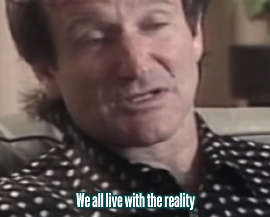
His influence extended beyond movies and television. Robin Williams became much more than a successful actor and comedian. He became a cultural figure whose humor, creativity, and emotional honesty continued to affect people in many different areas of entertainment and popular culture. His unique approach to comedy inspired performers who wanted to make audiences laugh while also expressing something meaningful about human life.
Williams demonstrated that comedy could be intelligent, emotional, unpredictable, and deeply personal at the same time. He did not treat humor as something that existed only for entertainment. He often used comedy to explore emotions, relationships, fear, loneliness, friendship, family, and the challenges of everyday life. This combination gave his performances a special quality that separated him from many other entertainers.
His influence could also be seen in the way younger comedians approached improvisation. Williams showed how quickly an actor could respond to a situation and create something completely unexpected. His rapid delivery, changing voices, physical movements, and spontaneous observations became part of his recognizable performance style. Many entertainers admired his ability to remain completely present in the moment while allowing an idea to develop naturally.
He also helped demonstrate the value of combining comedy with serious acting. Williams could make an audience laugh loudly in one scene and then create a quiet emotional moment in another. His performances showed that a comedian could successfully move between humor and drama without losing authenticity. This encouraged audiences to see comedic performers as capable of much greater emotional and artistic range.
Beyond his professional work, Williams became associated with generosity and compassion. He frequently participated in charitable activities and supported causes involving children, families, healthcare, and people facing difficult circumstances. His public image therefore became connected not only with laughter but also with kindness and human connection.
His influence reached audiences of different generations because his performances contained emotions that remained easy to understand. A child might remember him for an energetic and hilarious character, while an adult might remember a quieter performance that explored sadness, friendship, or personal growth. This ability to communicate on multiple emotional levels helped his work remain meaningful long after individual films had ended.
Robin Williams also influenced the broader idea of what a performer could be. He proved that extraordinary energy could coexist with vulnerability and that a larger-than-life personality could still communicate deeply personal emotions. His career encouraged performers to take creative risks, experiment with different styles, and avoid limiting themselves to a single category.
His legacy can be found in comedy clubs, acting classrooms, stand-up performances, films, television programs, and countless discussions about great entertainers. Young performers continue to study his timing, physical comedy, improvisational ability, character work, and emotional range. His performances remain examples of how preparation and spontaneity can work together to create unforgettable entertainment.
Perhaps his greatest influence was the reminder that laughter can create a powerful connection between people. Robin Williams had a remarkable ability to make audiences feel as though they were sharing a moment with him rather than simply watching a performance. His humor could be wild and energetic, yet it often came from recognizable human experiences.
For these reasons, Robin Williams remains an important figure in entertainment history. His influence was never limited to the screen. It reached comedians, actors, writers, audiences, and people who simply appreciated the power of laughter. His work demonstrated that great entertainment can be both hilarious and deeply human, leaving an emotional impression that continues across generations.