There are many deaths in Western stories, but very few feel as complicated, painful, and unforgettable as the fate of Jake Spoon in Lonesome Dove.
His final moments are not built around a spectacular gunfight. There is no triumphant music, no heroic last stand, and no easy villain for the audience to hate. Instead, the scene becomes something far more uncomfortable: a confrontation between friendship and justice.
Jake is surrounded by men who once knew him, rode with him, drank with him, laughed with him, and shared the dangerous life of the frontier.
Yet now those same men are preparing to hang him.
That is what makes the scene so powerful.
Captain Woodrow Call and Augustus “Gus” McCrae are not hanging a stranger. They are hanging one of their own.
And Jake knows it.
A Friendship That Cannot Save Him
Jake Spoon was never as disciplined as Call or as wise as Gus. He had charm, confidence, and the easy personality of a drifter who always believed tomorrow would somehow give him another chance.
For much of his life, that attitude worked.
Jake could ride into a town, tell a story, flirt with a woman, gamble a little, and leave before his mistakes caught up with him.
But eventually, the frontier stops giving second chances.
When Jake falls in with a group of killers and thieves, he crosses into territory from which even old friendship cannot rescue him.
The tragedy is that Jake does not seem to fully understand how far he has fallen until it is too late.
He still thinks of himself as the same Jake Spoon his old companions remember.
And in some ways, he is.
He is still familiar.
Still recognizable.
Still capable of joking.
Still capable of looking at Gus and Call as if the years between them should count for something.
But the men facing him are no longer dealing with the Jake they remember.
They are dealing with the consequences of what Jake allowed himself to become.
That difference drives the entire scene.
“I Didn’t See No Line”
One of the most haunting ideas connected to Jake’s fate is his failure to recognize exactly when he crossed the line.
That is what makes his story so human.
Most people do not suddenly wake up and decide to ruin their lives. Disaster often arrives through smaller choices.
One bad decision.
One dangerous companion.
One moment of cowardice.
One time choosing not to interfere.
Then another.
And another.
Eventually, a man may look behind him and realize that the person he used to be is very far away.
Jake’s tragedy is not simply that he became associated with bad men.
It is that he failed to recognize the moral boundary until he was already on the wrong side of it.
The frontier world of Lonesome Dove is brutal, but its moral code is often surprisingly clear.
Men like Call and Gus understand that certain actions carry consequences that cannot be negotiated away.
Stealing horses is serious.
Murder is worse.
And riding with men who commit such crimes creates responsibility, even if a person claims he did not personally perform every violent act.
Jake’s defense is essentially that he did not see the line.
Call’s response, in spirit, is that the line existed whether Jake saw it or not.
That is one of the darkest truths in the entire story.
Ignorance does not erase consequence.
Call’s Terrible Consistency
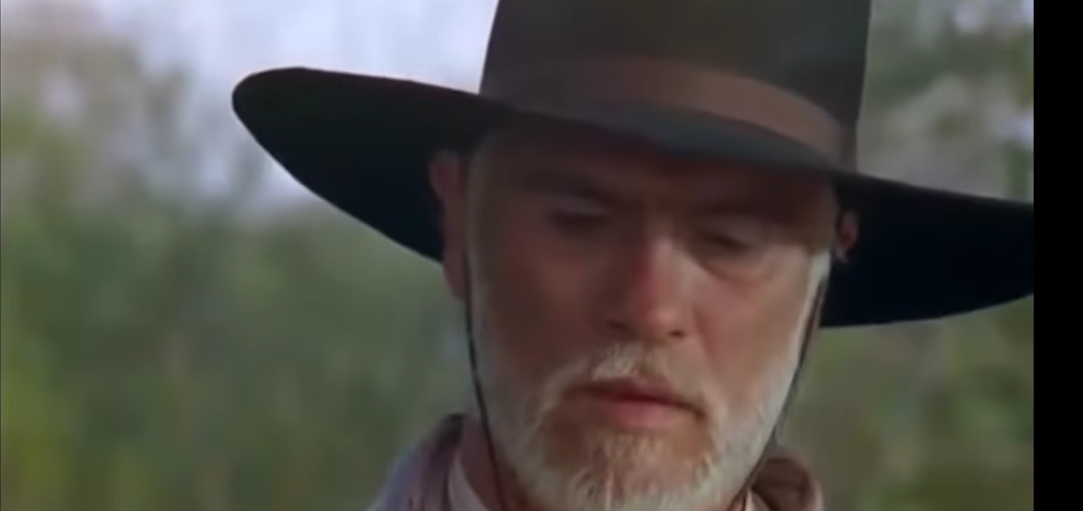
Woodrow Call is often described as hard, and in this scene that hardness becomes almost painful to watch.
But Call is not acting out of hatred.
If anything, the scene hurts because he does not hate Jake.
He remembers him.
He knows him.
He probably wishes the situation were different.
Yet Call believes that law and responsibility must mean something, especially in a country where formal institutions are weak and violence is common.
If Call makes an exception for Jake because Jake is an old friend, then everything Call has claimed to stand for becomes meaningless.
That is the burden of Call’s character.
He believes rules must apply even when they hurt him personally.
This quality makes him admirable.
It also makes him frightening.
There is very little emotional flexibility in him.
Once he decides what duty requires, emotion has almost no power to change the result.
In another story, friendship might lead to mercy.
In Lonesome Dove, friendship makes the judgment more painful, but it does not change it.
Gus Understands the Tragedy Differently
Gus McCrae brings a different emotional energy to the scene.
Where Call represents discipline, Gus represents humanity.
He jokes more.
He speaks more openly.
He understands weakness because he has plenty of weaknesses of his own.
That is why Jake’s fate feels especially painful when Gus is involved.
Gus is the kind of man who could forgive many personal failures.
He understands drinking, gambling, bad decisions, and the temptation to avoid responsibility.
But even Gus recognizes that Jake has traveled too far.
There is a sadness in that recognition.
It is not righteous satisfaction.
It is disappointment.
The men are not celebrating justice.
They are mourning the fact that justice has become necessary.
That distinction is essential.
A weaker Western would turn Jake into a villain and make the audience happy to see him punished.
Lonesome Dove refuses to make things that simple.
Jake is guilty, but he is also familiar.
He is foolish, but not completely monstrous.
He made terrible choices, but viewers can still remember the man he used to be.
That is why his death remains uncomfortable long after the scene ends.
“Find a Tree to Hang Ya From, Son”
The language of the scene is brutally plain.
There is no courtroom.
No judge in robes.
No carefully prepared legal procedure.
The frontier provides a tree.
A rope.
A few men who have decided that the facts are clear.
That simplicity can feel shocking to a modern audience.
But dramatically, it fits the world these characters inhabit.
The American frontier in Lonesome Dove is a place where law often travels on horseback.
Men like Call and Gus have spent their lives trying to impose some form of order on a country where violence can appear without warning.
The punishment is harsh because the world itself is harsh.
Yet the scene never asks the audience to enjoy it.
Instead, it forces us to watch the emotional cost.
Jake is not dragged screaming toward death like a cartoon villain.
He remains strangely himself.
And that makes everything worse.
Jake Spoon’s Last Bit of Pride
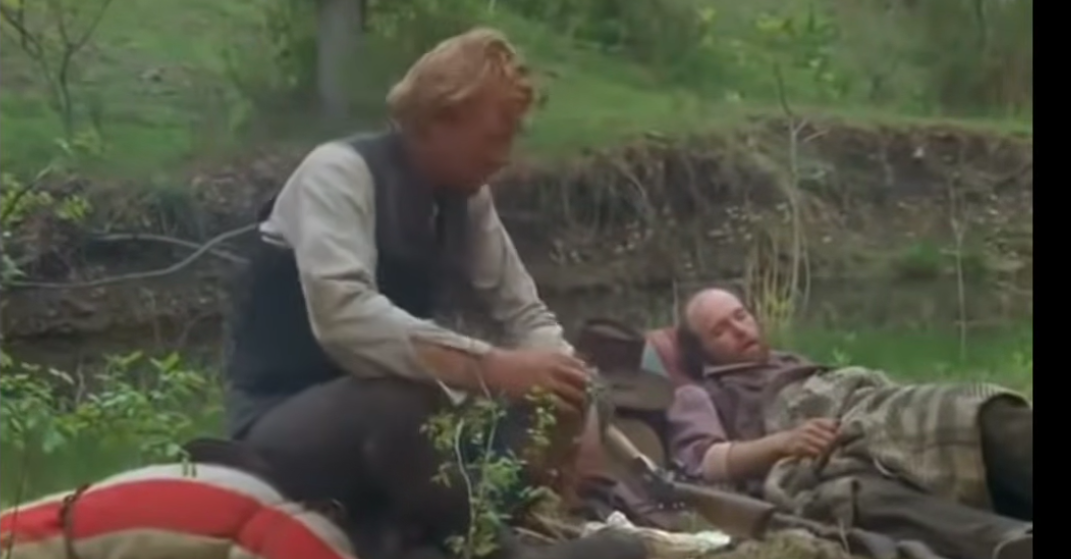
Perhaps the most memorable part of Jake’s final moments is the way he tries to preserve some dignity.
He knows there is no escape.
There will be no sudden rescue.
Gus and Call have made their decision.
So Jake does one of the few things still available to him.
He tries to face death as himself.
His farewell — “Adios, boys” — is simple, almost casual.
That phrase contains an enormous amount of meaning.
It sounds like something one cowboy might say to friends before riding away.
But this time Jake is not riding to another town.
He is leaving forever.
The casual goodbye becomes heartbreaking because it briefly restores the old relationship between the men.
For one instant, they are not lawmen and condemned prisoner.
They are just old companions again.
Then the moment passes.
The rope remains.
Why the Scene Still Hurts
The death of Jake Spoon is unforgettable because it asks an uncomfortable question:
How far should loyalty go?
Should friendship survive anything?
Call and Gus answer no.
There are choices so serious that friendship cannot erase them.
But the scene does not pretend that making the correct moral decision feels good.
Sometimes the right decision can still feel terrible.
That is one of the central strengths of Lonesome Dove.
Its characters are rarely divided into simple heroes and villains.
They are men carrying memories, regrets, habits, promises, and failures across enormous distances.
The frontier exposes all of them.
Jake’s weakness is exposed.
Call’s rigidity is exposed.
Gus’s sadness is exposed.
And the audience is forced to sit with all three.
The Real Meaning of Jake’s Death
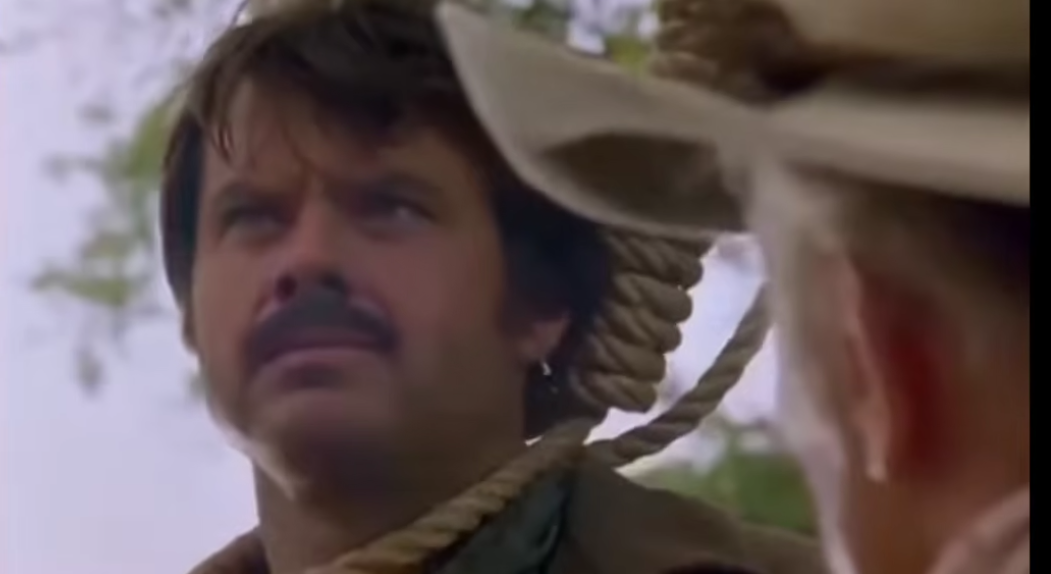
Jake Spoon’s execution is ultimately not just about punishment.
It is about responsibility.
Jake spent much of his life drifting away from responsibility.
When trouble came, he moved.
When relationships became complicated, he left.
When dangerous men surrounded him, he failed to separate himself soon enough.
His charm allowed him to escape consequences for years.
But charm cannot defeat consequence forever.
The tree waiting for Jake becomes the final destination of every decision he avoided making.
That is what makes his story so tragic.
He did not begin as an evil man.
He became a man who stopped taking responsibility for where his choices were leading him.
By the time he understood, there was no road back.
One of the Greatest Moral Moments in Western Television
Many Westerns are remembered for gunfights.
Lonesome Dove is remembered for people.
That is why Jake Spoon’s hanging remains one of its most powerful scenes.
There is violence, but violence is not the point.
The point is the look between old friends.
The silence.
The knowledge that everyone understands what is about to happen.
Call does what he believes duty requires.
Gus accepts a terrible necessity.
Jake finally confronts consequences he spent his life avoiding.
And then comes that final farewell.
“Adios, boys.”
A few simple words.
No grand speech.
No dramatic confession.
Just a cowboy saying goodbye to the men who once rode beside him.
That is why the scene stays with viewers.
Because beneath the horses, ropes, dust, and frontier justice, it is really about something much more timeless:
The moment when friendship reaches its limit.
The moment when choices finally demand payment.
And the heartbreaking truth that sometimes the men who care about you most are also the men who refuse to save you from what you have done.