WATCH FULL VIDEO
There’s a particular second in the 1996 film Michael when everything changes.
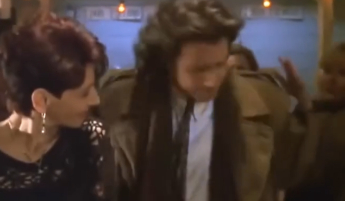
John Travolta’s character, a scruffy, chain-smoking, sugar-addicted angel, is standing in a nondescript roadside bar. The music is playing. People are talking, drinking, existing in their ordinary night. Then Travolta begins to move.
Not in a big, announced way.
Not with a spotlight or a choreographed entrance.
He just starts dancing.
And within moments, the entire room follows.
That single transition — from stillness to motion, from observer to catalyst — is the reason the clip keeps circulating nearly thirty years later. People don’t just watch the whole sequence. They rewatch the beginning. The exact moment the dance catches fire.
The Power of the Start
Most famous dance scenes in movies are built like set pieces. The music swells. The character takes a breath. The audience is told, in cinematic language, that something special is about to happen.
The bar scene in Michael works differently. It feels almost accidental. Travolta’s Michael doesn’t perform for the room. He dances because the music is there and his body knows what to do with it. The joy is private at first. Then it becomes impossible to ignore.
That quality is what makes the opening seconds so rewatchable. You can see the decision happen in real time. One moment he’s just another guy in a bar. The next, he’s the reason everyone else wants to move.
Travolta has always been exceptional at this kind of physical storytelling. In Saturday Night Fever, the dancing was hungry and ambitious. In Grease, it was polished and charismatic. In Michael, it feels closer to pure play. There’s less at stake and somehow more freedom.
An Underrated Peak
Michael was never the biggest film of Travolta’s career. It arrived in the mid-1990s, after the massive Pulp Fiction comeback and before the later waves of attention. The movie itself is a gentle, slightly messy Nora Ephron comedy about an angel who is nothing like the stained-glass version people expect. It has charm, but it didn’t become a permanent cultural reference point the way some of his other work did.
The dance scene, however, refused to stay buried with the rest of the movie.
Over the years it has quietly built a reputation among people who love watching Travolta move. Fans describe it as one of the purest examples of his gift. There’s no aggressive precision, no obvious effort to impress. Just a man who hears music and responds with his whole body, then pulls an entire room into the same feeling.
In an overcoat, no less. The fact that he makes dancing in a long coat look that natural only adds to the magic.
Why This Particular Moment Lands
Part of the appeal is nostalgia, of course. For anyone who came of age with Travolta’s earlier dance roles, seeing him still able to command a space with movement in the mid-90s felt reassuring. The gift hadn’t disappeared. It had simply changed temperature. Less fever, more ease.
But the scene also works because it captures something rarer than technical brilliance: the visible pleasure of dancing. Travolta looks like he is enjoying himself without self-consciousness. That quality is harder to fake than perfect footwork. When the other people in the bar start joining in, it feels earned rather than staged. The contagiousness is the point.
You can watch the clip and feel your own shoulders want to move. That’s the test of a great dance moment on film, and this one passes it cleanly.
The Travolta Difference
Plenty of actors can learn choreography. Very few can make dancing look like an extension of their personality. Travolta belongs to that smaller group. Even when the steps are simple, the way he occupies space carries authority and warmth at the same time. He never seems to be counting. He seems to be listening.
In the Michael scene, that listening is especially clear. The dance doesn’t feel imposed on the music. It feels discovered inside it. That distinction is why people keep returning to the opening moments. They want to watch the discovery happen again.
There’s also a generosity to the way he dances here. He’s not competing with the room or performing at it. He’s inviting it. When the invitation is accepted, the scene becomes something larger than a star showcase. It becomes a shared celebration.
A Scene That Outlived Its Movie
It’s not unusual for a single sequence to outshine the film that contains it. What is unusual is for that sequence to keep finding new viewers decades later through simple word of mouth and quiet recommendation. “You have to watch the dance in Michael” has become its own small tradition among people who care about this kind of movie magic.
The clip doesn’t need heavy context. You don’t have to know the plot or even particularly like the rest of the film. The moment Travolta starts moving carries its own complete argument: this is what it looks like when someone is completely at home in their body and the music.
For a generation that watched him define cool on the dance floor in the late 1970s, the Michael scene feels like a later, gentler chapter of the same story. The fever has cooled. The joy remains.
The Reason for the Rewatch
People don’t rewatch the scene because they forgot what happens. They rewatch it because the feeling it produces is reliable. In a world full of content designed to provoke stronger and louder reactions, there’s something restorative about a couple of minutes of pure, uncomplicated delight.
The exact second he begins to dance is the spark. Everything after it is just the fire spreading.
John Travolta has given audiences many memorable movement moments across five decades. This one continues to stand out because it never feels like work. It feels like a man who couldn’t help himself — and then made sure nobody else could either.
Have you always loved this scene, or did it find you later?
And when Travolta starts moving, do you feel the same pull the people in the bar do?
Share your thoughts in the comments.