Few comedy teams in film history have created a partnership as instantly recognizable and endlessly entertaining as Stan Laurel and Oliver Hardy. Their unique combination of Stan’s innocent, childlike personality and Ollie’s proud, easily frustrated character turned even the simplest situations into unforgettable comedy. One of the most creative examples of their classic style is “Brats,” released in 1930, a short comedy that takes their familiar personalities and transforms them into miniature versions of themselves.
“Brats” is particularly memorable because of its unusual visual concept. Instead of simply playing their ordinary characters, Laurel and Hardy portray both themselves and their mischievous young sons. The result is a playful comedy built around mistaken identities, exaggerated family behavior, and the kind of escalating chaos that made the duo famous.
The basic idea is wonderfully simple. Stan and Ollie are presented as fathers dealing with their troublesome sons. However, because Laurel and Hardy play both the adults and the children, the film creates a surreal and hilarious situation. The two comedians essentially become exaggerated reflections of themselves, allowing the audience to see their personalities from a completely different perspective.
Stan’s character remains nervous, confused, and innocent, while Ollie continues to display his familiar sense of dignity and authority. Their “children,” meanwhile, inherit many of the same characteristics. The boys are mischievous, stubborn, and determined to get their way. This creates a comic mirror effect in which the adults are forced to deal with younger versions of the very personalities that make their own partnership so chaotic.
One of the greatest strengths of “Brats” is its physical comedy. Laurel and Hardy were masters of timing, facial expressions, body language, and carefully constructed visual gags. Their comedy did not always require complicated dialogue. A look, a gesture, a pause, or a perfectly timed reaction could generate a huge laugh.
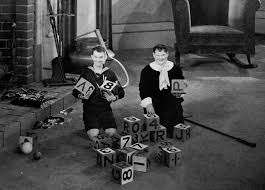
That style is especially effective in “Brats.” Because the story revolves around family chaos, ordinary domestic situations quickly become opportunities for slapstick. Objects, furniture, doors, toys, and household spaces become part of the comedy. The smallest action can trigger a chain reaction that leaves everyone more frustrated than before.
The film also demonstrates Laurel and Hardy’s remarkable ability to create comedy through contrast. Stan often appears confused and helpless, while Ollie tries to maintain control and dignity. When their younger counterparts enter the situation, the contrast becomes even stronger. The adults expect their children to behave properly, yet the children repeatedly create problems that resemble the very behavior of their fathers.
This idea gives “Brats” an extra layer of humor. The audience is not simply watching two comedians behave badly. Instead, they are watching Laurel and Hardy imitate themselves while also parodying the idea of parenthood. The result is a playful examination of family life through the exaggerated world of silent and early sound-era slapstick.
Another fascinating element is the visual presentation. The filmmakers used clever camera techniques and staging to make it appear as though multiple versions of Laurel and Hardy could exist in the same environment. For audiences in 1930, this kind of visual trickery added another dimension to the comedy.
Rather than depending entirely on dialogue, the film uses visual storytelling to create its jokes. This makes “Brats” accessible even to viewers who are unfamiliar with the language or cultural context of the period. The comedy is physical, expressive, and easy to understand.
Stan Laurel was particularly gifted at portraying childish behavior. His wide-eyed expressions, nervous movements, and seemingly endless ability to make situations worse became central to his screen persona. In “Brats,” those qualities are exaggerated through the presence of his child character.
Oliver Hardy, meanwhile, provides the perfect counterbalance. Ollie often believes that he is the responsible adult in the room. He wants order, respect, and control. Unfortunately for him, his attempts to maintain authority frequently make the situation even funnier. His famous reactions—especially his expressions of disbelief and frustration—are among the highlights of the duo’s comedy.
The chemistry between Laurel and Hardy is what ultimately makes the film work. Individually, both performers were talented comedians, but together they created a unique rhythm. Stan could provoke Ollie without necessarily intending to, while Ollie’s attempts to correct Stan almost always resulted in another disaster.
“Brats” takes this relationship and places it inside a family setting. By adding their miniature counterparts, the film essentially multiplies the chaos. It is as though the audience has been given two Laurel-and-Hardy partnerships instead of one.
The short also represents an important period in the careers of Laurel and Hardy. The early 1930s were a crucial time for the duo as they developed the screen personas that would make them international comedy legends. Their films from this era combined silent-film physicality with the possibilities of sound, creating a style that remained highly visual while gradually incorporating spoken dialogue and sound effects.
“Brats” therefore offers a fascinating glimpse into their creative evolution. It demonstrates how much could be achieved through staging, editing, performance, and visual imagination. Even without elaborate locations or complicated plots, Laurel and Hardy could transform an ordinary room into a complete comedy playground.
More than nine decades later, “Brats” remains enjoyable because its humor is built around universal experiences. Family arguments, mischievous children, frustration, pride, and the struggle to maintain order are situations that audiences can still recognize today. The technology may be old-fashioned, but the comedic emotions remain surprisingly familiar.
There is also something charming about watching Laurel and Hardy completely commit to the absurdity of the premise. They never treat the concept as ordinary. Every reaction is exaggerated, every conflict becomes increasingly ridiculous, and every attempt to restore order seems destined to fail.
That is the essence of their comedy: the harder the characters try to control a situation, the more uncontrollable it becomes.
For longtime Laurel and Hardy fans, “Brats” is a fascinating example of the duo experimenting with visual storytelling and character doubling. For newcomers, it provides an entertaining introduction to the distinctive personalities that made Stan Laurel and Oliver Hardy such enduring stars.
Their influence can still be seen in comedy today. Modern comedians continue to use physical timing, character contrast, escalating misunderstandings, and visual repetition—techniques that Laurel and Hardy mastered decades ago.
Ultimately, “Brats” is more than a simple short comedy. It is a creative showcase of Laurel and Hardy’s imagination, timing, chemistry, and physical comedy. By turning themselves into both fathers and children, they created a wonderfully strange world where their personalities could collide in new and unexpected ways.
If you enjoy classic comedy, vintage Hollywood, slapstick humor, or legendary comedy duos, “Brats” is a memorable piece of film history. It captures the playful spirit of Laurel and Hardy at a time when they were becoming two of the most beloved comedians in the world.
Decades may have passed since “Brats” first appeared on screen, but the laughter remains. Stan Laurel’s innocent confusion and Oliver Hardy’s legendary frustration still work together perfectly—and that timeless chemistry is exactly why Laurel and Hardy continue to entertain audiences around the world.