Skip to content

Recent Posts

  • Tim Conway didn’t need a big stage to create unforgettable comedy. His smallest gestures could bring the biggest laughs.
  • His physical movements made his characters even more entertaining.
  • Tim Conway’s secret weapon was often doing absolutely nothing at exactly the right moment.
  • His appearance on Mork & Mindy introduced his comedy to a wider international audience.
  • 😂🔥 JIM CARREY UNLEASHED TOTAL CHAOS ON SNL — AND THE JIMMY STEWART IMPRESSION MADE IT EVEN FUNNIER!

Most Used Categories

  • Reels (8,050)
  • Sport News (1,340)
  • News (272)
  • Music (27)
  • Home (2)
Skip to content

VB News

Subscribe
  • Privacy Policy
  • Terms of Use
  • About Us
  • Contact Us
  • HOME
  • Home
  • 🎸🔥 NOVEMBER 1963: THE BEATLES SET MANCHESTER ON FIRE — AND BEATLEMANIA WAS CAPTURED IN FULL COLOUR! 🎥❤️

🎸🔥 NOVEMBER 1963: THE BEATLES SET MANCHESTER ON FIRE — AND BEATLEMANIA WAS CAPTURED IN FULL COLOUR! 🎥❤️

kimjiwonNovember 23, 2026
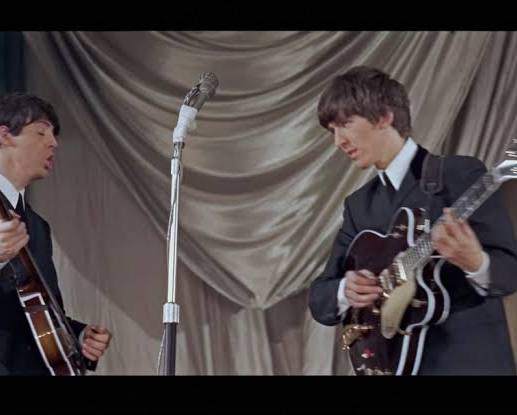

🎥🔥 THE BEATLES IN FULL COLOUR, 1963 — FOUR YOUNG MUSICIANS, THOUSANDS OF SCREAMING FANS, AND THE HISTORIC PERFORMANCE THAT CAPTURED BEATLEMANIA FOREVER!

November 20, 1963: The Night Manchester Witnessed Beatles History


On November 20, 1963, four young musicians from Liverpool stepped onto the stage of the ABC Cinema in Manchester, unaware that their performance would become one of the most remarkable visual records of early Beatlemania.

John Lennon, Paul McCartney, George Harrison, and Ringo Starr were already transforming British popular music.

Their songs dominated the charts, their distinctive hairstyles were becoming fashionable, and their concerts attracted thousands of enthusiastic fans.

But this particular evening held something special.

Cameras from British Pathé were waiting to capture the excitement in colour.

The resulting footage would become part of The Beatles Come to Town, a short news documentary released in cinemas the following month.

More than sixty years later, the film remains a fascinating opportunity to experience The Beatles at the beginning of their extraordinary international journey.

FOUR YOUNG MEN WALKED ONTO A STAGE — AND THE SCREAMS THAT FOLLOWED BECAME PART OF MUSIC HISTORY! 🎸🔥

The Beatles Before Their American Breakthrough

In November 1963, The Beatles were already enormous stars in Britain.

Their popularity had grown rapidly following the success of singles such as “Please Please Me,” “From Me to You,” and “She Loves You.”

Their debut album, Please Please Me, had introduced audiences to their energetic combination of rock and roll, pop melodies, and close vocal harmonies.

Their second album, With the Beatles, was about to be released.

Yet their historic appearance on The Ed Sullivan Show in America was still several months away.

The Manchester concert therefore captured the group during a particularly fascinating period.

They were no longer unknown musicians performing in small Liverpool clubs.

But they had not yet experienced the full international explosion that would transform them into global cultural icons.

The excitement surrounding their British concerts was already extraordinary.

And Manchester was about to experience it firsthand.

Inside the ABC Cinema: Beatlemania Takes Over

The ABC Cinema in Manchester was filled with anticipation as fans gathered to see their favorite band.

For many young people, attending a Beatles concert was more than an evening of entertainment.

It was an opportunity to witness the musicians who represented a new generation of popular culture.

As John, Paul, George, and Ringo appeared onstage, the atmosphere became electric.

Fans screamed, waved, and struggled to contain their excitement.

The musicians wore the matching suits that had become part of their signature appearance.

Their coordinated stage movements and confident personalities reflected years of performing together.

Yet the extraordinary audience reaction made the evening unlike an ordinary concert.

At times, the screaming threatened to overwhelm the music itself.

This was Beatlemania in its earliest and most powerful form.

THE AUDIENCE WASN’T JUST LISTENING TO THE BEATLES — THEY WERE EXPERIENCING A MUSICAL REVOLUTION! ❤️🎶

She Loves You: The Song That Electrified Manchester

Among the performances captured by British Pathé was the band’s sensational hit “She Loves You.”

Written by John Lennon and Paul McCartney, the song had been released in August 1963.

Its unforgettable chorus and energetic delivery quickly made it one of the defining recordings of the band’s early career.

The song’s opening immediately grabs attention.

The rhythm is lively, the vocals are enthusiastic, and the harmonies create an infectious sense of excitement.

During the Manchester performance, Lennon and McCartney share the vocal spotlight, while George Harrison contributes guitar and Ringo Starr provides the driving beat.

The band’s chemistry is unmistakable.

Every movement and musical phrase demonstrates the confidence they had developed through years of live performances.

The audience responds with overwhelming enthusiasm.

For viewers watching the surviving footage today, the performance offers an extraordinary glimpse into the moment when British pop music was changing forever.

Why Seeing The Beatles in Colour Is So Special

Much of the surviving television and news footage from The Beatles’ early years exists in black and white.

For modern audiences, those images have become closely associated with the group’s early history.

But The Beatles Come to Town offers something different.

Its colour cinematography brings the atmosphere of 1963 to life with remarkable immediacy.

The musicians’ stage clothing, the lighting, and the excited faces of the audience appear in a way that feels surprisingly vivid.

Rather than seeming like distant historical figures, The Beatles look like four young performers enjoying an extraordinary moment in their careers.

The footage also captures the audience’s reactions.

Smiling faces, emotional expressions, and enthusiastic cheering reveal how deeply the music connected with young fans.

These details make the documentary more than a simple concert recording.

It becomes a visual portrait of an entire generation experiencing a cultural transformation.

The Beatles Come to Town: A Remarkable Musical Time Capsule

Released in December 1963, The Beatles Come to Town was a short British Pathé documentary designed for cinema audiences.

The film captured the excitement surrounding the band’s Manchester appearance.

Rather than focusing exclusively on the musicians, the documentary also explored the extraordinary public response to their growing fame.

Its cameras recorded the enthusiastic crowds and the atmosphere surrounding the concert.

This broader perspective makes the footage especially valuable.

It documents not only how The Beatles performed but also how audiences reacted to them.

The documentary shows that Beatlemania was about more than popular records.

It was a social phenomenon that influenced youth culture, fashion, entertainment, and the relationship between musicians and their fans.

For historians and music enthusiasts, the film remains an important record of the early 1960s.

John, Paul, George, and Ringo: Four Personalities, One Extraordinary Sound

One of the most fascinating aspects of the footage is the opportunity to observe the individual personalities of The Beatles.

John Lennon brings confidence, humor, and an unmistakable vocal presence.

Paul McCartney contributes melodic warmth, energetic singing, and a natural connection with the audience.

George Harrison adds distinctive guitar playing and a quieter stage personality.

Ringo Starr provides the rhythmic foundation that holds the band’s energetic performances together.

Each musician has a recognizable identity.

Yet their greatest strength comes from the way they perform as a group.

Their vocal harmonies, instrumental coordination, and shared enthusiasm create a sound that remains instantly recognizable.

In the Manchester footage, this musical partnership appears remarkably natural.

The Beatles are not relying on elaborate stage effects or complicated production techniques.

They simply perform their songs with extraordinary confidence.

And that is enough to create unforgettable excitement.

The Cultural Impact of Beatlemania

By the end of 1963, The Beatles had become symbols of a changing generation.

Their music represented youthful optimism, independence, and excitement.

Their hairstyles and clothing influenced fashion trends.

Their interviews and public appearances introduced audiences to their distinctive Liverpool humor.

And their concerts demonstrated the enormous emotional connection between popular musicians and young fans.

The Manchester performance captures this cultural transformation at an important moment.

The Beatles were helping redefine what it meant to be a successful music group.

Their popularity would soon expand across the Atlantic, leading to their historic American breakthrough in 1964.

But the extraordinary excitement already visible in Manchester showed that something remarkable was happening.

The world was about to discover what British audiences already knew.

The Beatles were unlike anything popular music had experienced before.

Why the 1963 Manchester Performance Still Matters

More than six decades later, the British Pathé footage continues to fascinate Beatles fans.

It preserves the energy of a live performance from a period when the band was rapidly becoming a worldwide sensation.

It also captures the innocence and excitement of early Beatlemania.

There are no enormous video screens, elaborate digital effects, or modern concert productions.

Instead, four musicians stand onstage with their instruments and microphones.

The songs are energetic.

The audience is ecstatic.

And the atmosphere is unforgettable.

For longtime fans, the footage brings back memories of an extraordinary musical era.

For younger viewers, it offers a rare opportunity to experience the origins of one of the most influential bands in history.

Final Thoughts: The Day Beatlemania Was Captured in Living Colour

The Beatles’ appearance at Manchester’s ABC Cinema on November 20, 1963, remains a remarkable chapter in the history of popular music.

Captured by British Pathé and preserved in The Beatles Come to Town, the performance offers an unforgettable glimpse of John Lennon, Paul McCartney, George Harrison, and Ringo Starr during their early rise to international fame.

Their performance of “She Loves You” demonstrates the energy, musical chemistry, and charisma that made them extraordinary.

But the documentary’s greatest achievement may be its ability to preserve the excitement of the audience.

The screaming fans, joyful expressions, and overwhelming enthusiasm reveal the extraordinary impact The Beatles had already achieved.

IN 1963, FOUR YOUNG MUSICIANS WALKED ONTO A MANCHESTER STAGE — AND THE CAMERAS CAPTURED A MOMENT THAT WOULD LIVE FOREVER! 🎥❤️🔥

More than sixty years later, the music still sounds exciting.

The performances remain unforgettable.

And the magic of Beatlemania continues to inspire generations.

❤️ IF YOU COULD TRAVEL BACK TO 1963, WOULD YOU CHOOSE TO SEE THE BEATLES PERFORM “SHE LOVES YOU” LIVE IN MANCHESTER?

🎬 WATCH FULL BELOW LINK 👇👇👇

#TheBeatles #JohnLennon #PaulMcCartney #GeorgeHarrison #RingoStarr #Beatlemania #TheBeatles1963 #SheLovesYou #BritishPathe #TheBeatlesComeToTown #Manchester1963 #ClassicRock #MusicHistory #FabFour

🎥🔥 THE BEATLES IN FULL COLOUR, 1963 — FOUR YOUNG MUSICIANS, THOUSANDS OF SCREAMING FANS, AND THE HISTORIC PERFORMANCE THAT CAPTURED BEATLEMANIA FOREVER!

November 20, 1963: The Night Manchester Witnessed Beatles History

On November 20, 1963, four young musicians from Liverpool stepped onto the stage of the ABC Cinema in Manchester, unaware that their performance would become one of the most remarkable visual records of early Beatlemania.

John Lennon, Paul McCartney, George Harrison, and Ringo Starr were already transforming British popular music.

Their songs dominated the charts, their distinctive hairstyles were becoming fashionable, and their concerts attracted thousands of enthusiastic fans.

But this particular evening held something special.

Cameras from British Pathé were waiting to capture the excitement in colour.

The resulting footage would become part of The Beatles Come to Town, a short news documentary released in cinemas the following month.

More than sixty years later, the film remains a fascinating opportunity to experience The Beatles at the beginning of their extraordinary international journey.

FOUR YOUNG MEN WALKED ONTO A STAGE — AND THE SCREAMS THAT FOLLOWED BECAME PART OF MUSIC HISTORY! 🎸🔥

The Beatles Before Their American Breakthrough

In November 1963, The Beatles were already enormous stars in Britain.

Their popularity had grown rapidly following the success of singles such as “Please Please Me,” “From Me to You,” and “She Loves You.”

Their debut album, Please Please Me, had introduced audiences to their energetic combination of rock and roll, pop melodies, and close vocal harmonies.

Their second album, With the Beatles, was about to be released.

Yet their historic appearance on The Ed Sullivan Show in America was still several months away.

The Manchester concert therefore captured the group during a particularly fascinating period.

They were no longer unknown musicians performing in small Liverpool clubs.

But they had not yet experienced the full international explosion that would transform them into global cultural icons.

The excitement surrounding their British concerts was already extraordinary.

And Manchester was about to experience it firsthand.

Inside the ABC Cinema: Beatlemania Takes Over

The ABC Cinema in Manchester was filled with anticipation as fans gathered to see their favorite band.

For many young people, attending a Beatles concert was more than an evening of entertainment.

It was an opportunity to witness the musicians who represented a new generation of popular culture.

As John, Paul, George, and Ringo appeared onstage, the atmosphere became electric.

Fans screamed, waved, and struggled to contain their excitement.

The musicians wore the matching suits that had become part of their signature appearance.

Their coordinated stage movements and confident personalities reflected years of performing together.

Yet the extraordinary audience reaction made the evening unlike an ordinary concert.

At times, the screaming threatened to overwhelm the music itself.

This was Beatlemania in its earliest and most powerful form.

THE AUDIENCE WASN’T JUST LISTENING TO THE BEATLES — THEY WERE EXPERIENCING A MUSICAL REVOLUTION! ❤️🎶

She Loves You: The Song That Electrified Manchester

Among the performances captured by British Pathé was the band’s sensational hit “She Loves You.”

Written by John Lennon and Paul McCartney, the song had been released in August 1963.

Its unforgettable chorus and energetic delivery quickly made it one of the defining recordings of the band’s early career.

The song’s opening immediately grabs attention.

The rhythm is lively, the vocals are enthusiastic, and the harmonies create an infectious sense of excitement.

During the Manchester performance, Lennon and McCartney share the vocal spotlight, while George Harrison contributes guitar and Ringo Starr provides the driving beat.

The band’s chemistry is unmistakable.

Every movement and musical phrase demonstrates the confidence they had developed through years of live performances.

The audience responds with overwhelming enthusiasm.

For viewers watching the surviving footage today, the performance offers an extraordinary glimpse into the moment when British pop music was changing forever.

Why Seeing The Beatles in Colour Is So Special

Much of the surviving television and news footage from The Beatles’ early years exists in black and white.

For modern audiences, those images have become closely associated with the group’s early history.

But The Beatles Come to Town offers something different.

Its colour cinematography brings the atmosphere of 1963 to life with remarkable immediacy.

The musicians’ stage clothing, the lighting, and the excited faces of the audience appear in a way that feels surprisingly vivid.

Rather than seeming like distant historical figures, The Beatles look like four young performers enjoying an extraordinary moment in their careers.

The footage also captures the audience’s reactions.

Smiling faces, emotional expressions, and enthusiastic cheering reveal how deeply the music connected with young fans.

These details make the documentary more than a simple concert recording.

It becomes a visual portrait of an entire generation experiencing a cultural transformation.

The Beatles Come to Town: A Remarkable Musical Time Capsule

Released in December 1963, The Beatles Come to Town was a short British Pathé documentary designed for cinema audiences.

The film captured the excitement surrounding the band’s Manchester appearance.

Rather than focusing exclusively on the musicians, the documentary also explored the extraordinary public response to their growing fame.

Its cameras recorded the enthusiastic crowds and the atmosphere surrounding the concert.

This broader perspective makes the footage especially valuable.

It documents not only how The Beatles performed but also how audiences reacted to them.

The documentary shows that Beatlemania was about more than popular records.

It was a social phenomenon that influenced youth culture, fashion, entertainment, and the relationship between musicians and their fans.

For historians and music enthusiasts, the film remains an important record of the early 1960s.

John, Paul, George, and Ringo: Four Personalities, One Extraordinary Sound

One of the most fascinating aspects of the footage is the opportunity to observe the individual personalities of The Beatles.

John Lennon brings confidence, humor, and an unmistakable vocal presence.

Paul McCartney contributes melodic warmth, energetic singing, and a natural connection with the audience.

George Harrison adds distinctive guitar playing and a quieter stage personality.

Ringo Starr provides the rhythmic foundation that holds the band’s energetic performances together.

Each musician has a recognizable identity.

Yet their greatest strength comes from the way they perform as a group.

Their vocal harmonies, instrumental coordination, and shared enthusiasm create a sound that remains instantly recognizable.

In the Manchester footage, this musical partnership appears remarkably natural.

The Beatles are not relying on elaborate stage effects or complicated production techniques.

They simply perform their songs with extraordinary confidence.

And that is enough to create unforgettable excitement.

The Cultural Impact of Beatlemania

By the end of 1963, The Beatles had become symbols of a changing generation.

Their music represented youthful optimism, independence, and excitement.

Their hairstyles and clothing influenced fashion trends.

Their interviews and public appearances introduced audiences to their distinctive Liverpool humor.

And their concerts demonstrated the enormous emotional connection between popular musicians and young fans.

The Manchester performance captures this cultural transformation at an important moment.

The Beatles were helping redefine what it meant to be a successful music group.

Their popularity would soon expand across the Atlantic, leading to their historic American breakthrough in 1964.

But the extraordinary excitement already visible in Manchester showed that something remarkable was happening.

The world was about to discover what British audiences already knew.

The Beatles were unlike anything popular music had experienced before.

Why the 1963 Manchester Performance Still Matters

More than six decades later, the British Pathé footage continues to fascinate Beatles fans.

It preserves the energy of a live performance from a period when the band was rapidly becoming a worldwide sensation.

It also captures the innocence and excitement of early Beatlemania.

There are no enormous video screens, elaborate digital effects, or modern concert productions.

Instead, four musicians stand onstage with their instruments and microphones.

The songs are energetic.

The audience is ecstatic.

And the atmosphere is unforgettable.

For longtime fans, the footage brings back memories of an extraordinary musical era.

For younger viewers, it offers a rare opportunity to experience the origins of one of the most influential bands in history.

Final Thoughts: The Day Beatlemania Was Captured in Living Colour

The Beatles’ appearance at Manchester’s ABC Cinema on November 20, 1963, remains a remarkable chapter in the history of popular music.

Captured by British Pathé and preserved in The Beatles Come to Town, the performance offers an unforgettable glimpse of John Lennon, Paul McCartney, George Harrison, and Ringo Starr during their early rise to international fame.

Their performance of “She Loves You” demonstrates the energy, musical chemistry, and charisma that made them extraordinary.

But the documentary’s greatest achievement may be its ability to preserve the excitement of the audience.

The screaming fans, joyful expressions, and overwhelming enthusiasm reveal the extraordinary impact The Beatles had already achieved.

IN 1963, FOUR YOUNG MUSICIANS WALKED ONTO A MANCHESTER STAGE — AND THE CAMERAS CAPTURED A MOMENT THAT WOULD LIVE FOREVER! 🎥❤️🔥

More than sixty years later, the music still sounds exciting.

The performances remain unforgettable.

And the magic of Beatlemania continues to inspire generations.

❤️ IF YOU COULD TRAVEL BACK TO 1963, WOULD YOU CHOOSE TO SEE THE BEATLES PERFORM “SHE LOVES YOU” LIVE IN MANCHESTER?

🎬 WATCH FULL BELOW LINK 👇👇👇

#TheBeatles #JohnLennon #PaulMcCartney #GeorgeHarrison #RingoStarr #Beatlemania #TheBeatles1963 #SheLovesYou #BritishPathe #TheBeatlesComeToTown #Manchester1963 #ClassicRock #MusicHistory #FabFour

Post navigation

Previous: The Chilling Truth Behind Dr. Schultz’s Deadly Precision | Django Unchained (2012)
Next: 🤠🔥 JOHN TRAVOLTA PUT ON A COWBOY HAT… AND HIS CHARM DID THE REST! ❤️🎬

Related Posts

Tim Conway didn’t need a big stage to create unforgettable comedy. His smallest gestures could bring the biggest laughs.

November 23, 2026 kingkong

His physical movements made his characters even more entertaining.

November 23, 2026 kingkong

Tim Conway’s secret weapon was often doing absolutely nothing at exactly the right moment.

November 23, 2026 kingkong

Leave a Reply Cancel reply

Your email address will not be published. Required fields are marked *

Copyright All Rights Reserved | Theme: BlockWP by Candid Themes.