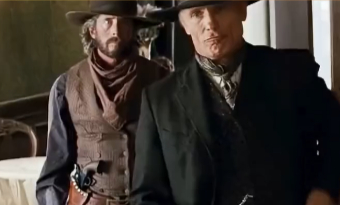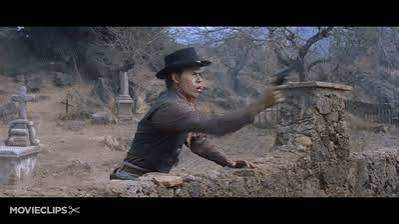
Few Western films have captured the spirit of the American frontier quite like The Magnificent Seven (1960). Filled with unforgettable characters, tense confrontations, and breathtaking action, John Sturges’s classic tells the story of seven gunfighters who risk everything to protect a small Mexican village from a ruthless gang of bandits.
But beneath the spectacular gun battles and iconic cowboy imagery lies a much deeper story.
It’s a story about ordinary people who have been pushed too far, strangers who discover a reason to stand together, and seven men who gradually realize that their mission means far more than the money they were promised.
When the bandits return to threaten the village, the gunfighters must put their courage and experience to the ultimate test. What follows is a dangerous confrontation that demonstrates why this legendary Western remains one of the most memorable films of its generation.
🌵 A Peaceful Village Living Under the Shadow of Violence
The story begins in a small Mexican farming community where life should be simple.
The villagers work their land, raise their families, and depend on one another to survive. Their greatest concern should be the harvest, the changing seasons, and providing food for the people they love.
Unfortunately, peace has become a distant memory.
A ruthless bandit leader named Calvera repeatedly raids the settlement, taking food, supplies, and anything else his men desire. His gang operates through intimidation, knowing that the villagers have neither the weapons nor the experience to fight back.
Every time the bandits arrive, fear spreads through the community.
The villagers understand that resisting could bring terrible consequences. Yet continuing to surrender means accepting a future in which their homes and livelihoods will never truly belong to them.
Something must change.
And that change begins when a small group of villagers decides to seek help beyond their own community.
🤠 Seven Strangers Agree to Take an Impossible Job
Their search eventually leads them to Chris Adams, played by Yul Brynner.
Chris is a confident and experienced gunfighter who understands the dangers of confronting a large group of armed bandits. He also recognizes that the villagers need more than encouraging words.
They need people who know how to fight.
Chris begins assembling a group of six other gunfighters, each bringing a different personality, background, and set of abilities.
Among them is Vin Tanner, portrayed by Steve McQueen, whose confidence and quick reactions make him one of the group’s most memorable members.
There is also Bernardo O’Reilly, played by Charles Bronson, a tough but compassionate man whose relationship with the village children reveals a softer side beneath his hardened exterior.
James Coburn appears as the mysterious knife fighter Britt, while Robert Vaughn portrays Lee, a gunfighter struggling with his own fears.
Brad Dexter plays Harry Luck, and Horst Buchholz brings youthful energy to the role of Chico.
Together, the seven men agree to defend the village.
Their motivations are not identical. Some are interested in the payment, others are attracted by the challenge, and some simply cannot ignore people who desperately need help.
Whatever their reasons, they are about to become part of something much bigger than themselves.
🔫 Preparing for a Battle That Nobody Can Guarantee Winning
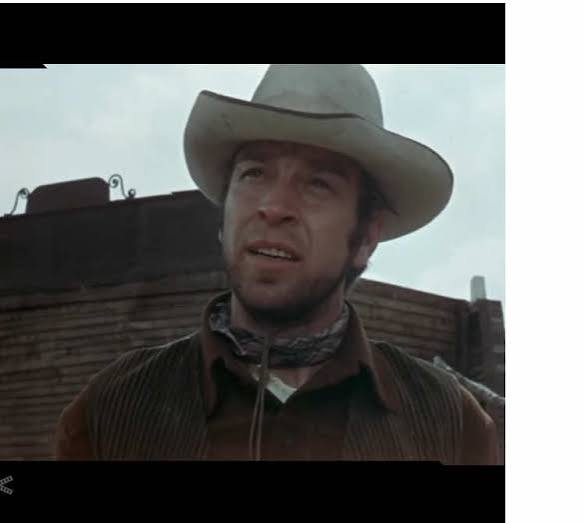
When the seven gunfighters arrive, the villagers are initially uncertain about what these strangers can accomplish.
Seven men may possess impressive skills, but Calvera commands a much larger gang.
The odds appear overwhelmingly unfavorable.
Chris understands that courage alone will not be enough. The group must organize the village, prepare defensive positions, and teach the residents how to protect themselves.
The training sequences become an important part of the film because they reveal a gradual transformation.
At first, the villagers are frightened and inexperienced.
They hesitate when handling weapons and struggle to imagine themselves standing against the bandits.
But the gunfighters encourage them to become more confident.
The community begins to understand that defending their homes is not necessarily an impossible task.
Meanwhile, the seven men develop a stronger connection with the people they have agreed to protect.
What began as a dangerous assignment slowly becomes a personal responsibility.
⚡ Calvera Returns, and the Village Faces Its Greatest Test
The arrival of Calvera and his men brings the tension to a new level.
Calvera, played by Eli Wallach, is not portrayed as an ordinary outlaw.
He is charismatic, calculating, and confident in his ability to control the village through fear.
His men follow him because they believe nobody has the courage or strength to challenge their authority.
But this time, the situation is different.
The seven gunfighters are waiting.
The village has been prepared, and its residents are no longer completely helpless.
The confrontation becomes a test of everything Chris and his companions have worked to accomplish.
Every movement matters.
The gunfighters must remain alert, understand the positions of their enemies, and protect the people who depend on them.
The tension is especially effective because the audience understands what is at stake.
This is not simply a battle between rival groups of armed men.
It’s a fight over whether an entire community will continue living under intimidation or finally have the opportunity to reclaim its freedom.
💥 The Gunfight That Defines the Spirit of the Film
One of the greatest strengths of The Magnificent Seven is the way it approaches action.
Rather than treating every confrontation as an isolated display of gunfire, John Sturges connects the battles to the characters and their relationships.
The village streets, buildings, and open spaces become important parts of the conflict.
The gunfighters cannot concentrate on a single opponent. They must constantly remain aware of the larger situation.
Their individual abilities are impressive, but cooperation is what makes them effective.
Chris provides leadership and direction.
Vin brings confidence and resourcefulness.
Britt demonstrates remarkable skill and precision.
Bernardo’s connection with the villagers gives his actions an emotional dimension.
Each character contributes something different, reinforcing the idea that the group is stronger together than it would be as seven individuals fighting separately.
The action also creates moments of suspense between bursts of gunfire.
A quiet street can suddenly become dangerous.
A seemingly secure position may become vulnerable.
And every decision carries consequences.
This careful balance between tension and action helps give the film its enduring appeal.
❤️ The Villagers Are Fighting for More Than Their Homes
Although the seven gunfighters are the central heroes, the villagers provide the emotional foundation of the story.
Their struggle represents something universal.
They are not seeking wealth, power, or revenge.
They simply want to live without constantly worrying about the next raid.
The relationship between Bernardo and the village children is particularly important.
At first, the children see the gunfighters as larger-than-life heroes.
But Bernardo gradually develops genuine affection for them, showing that even a man accustomed to violence can care deeply about protecting innocent people.
These quieter moments give the film an emotional balance that makes its action more meaningful.
The gunfighters may be experienced with weapons, but the villagers remind them what they are actually fighting for.
Freedom is not an abstract idea when the people at risk are families, children, and neighbors.
It becomes something personal.
🎭 The Legendary Performances That Made the Seven Unforgettable
A major reason the film continues to attract audiences is its remarkable ensemble cast.
Yul Brynner gives Chris Adams an unmistakable sense of authority. His calm movements and controlled delivery make the character feel like a natural leader.
Steve McQueen brings energy and personality to Vin Tanner. His screen presence creates an interesting contrast with Brynner’s more restrained performance.
Charles Bronson gives Bernardo emotional depth, while James Coburn makes Britt memorable through his quiet confidence and physical precision.
Robert Vaughn’s Lee adds another dimension to the group by showing that courage and fear can exist within the same person.
Eli Wallach also deserves recognition for his portrayal of Calvera.
Rather than creating a completely one-dimensional villain, he gives the bandit leader a distinctive personality that makes the conflict more interesting.
Together, these performances turn the seven gunfighters into characters audiences remember long after the final scene.
🌟 Why The Magnificent Seven Remains a Western Classic
Released in 1960 and directed by John Sturges, The Magnificent Seven became one of the defining Western films of its era.
Its story was inspired by Akira Kurosawa’s acclaimed Japanese film Seven Samurai (1954), adapting the central idea of a group of skilled warriors defending a vulnerable farming community into the setting of the American Western.
The result was a film that combined traditional cowboy action with themes of friendship, sacrifice, courage, and collective responsibility.
Its influence can still be seen in later action films built around unlikely teams coming together to protect people in danger.
But what makes the original particularly special is its emotional conclusion.
The seven men arrive as strangers, each with personal reasons for accepting the mission.
By the end, their experiences have changed the meaning of what they are doing.
They have discovered that helping others can be more important than personal rewards, even when the cost is painfully high.
🎬 Seven Men, One Village, and a Legacy That Never Fades
More than six decades after its release, The Magnificent Seven continues to demonstrate why classic Westerns remain so powerful.
Its gunfights deliver excitement, its characters provide unforgettable personalities, and its story offers something more meaningful than a simple battle between good and evil.
At its heart, the film celebrates people who refuse to accept that fear must determine their future.
The seven gunfighters may be skilled with weapons, but their greatest achievement is helping an ordinary community discover its own strength.
Chris Adams and his companions cannot guarantee that everyone will survive, nor can they promise that doing the right thing will lead to an easy victory.
What they can do is stand beside people who have nowhere else to turn.
And that decision gives their journey its lasting significance.
The final lesson of The Magnificent Seven is not that seven extraordinary men can defeat every enemy.
It’s that courage, loyalty, and sacrifice can inspire ordinary people to stand up for what matters most.
That is what makes this 1960 Western more than a collection of spectacular gunfights.
It is a timeless story about the power of standing together when everything seems lost.