There are Westerns built around gunfights, horseback chases, dusty towns, and revenge. Then there is The Outlaw Josey Wales.
Released in 1976 and directed by Clint Eastwood, the film arrived at a fascinating moment in American cinema. Traditional Westerns were no longer dominating Hollywood as they once had. The era of New Hollywood had brought darker, more psychologically complex films such as The Godfather Part II, Jaws, and Taxi Driver. Against that backdrop, making a large-scale Western might have seemed like a journey backward.
Instead, Eastwood created a film that looked toward the past while quietly redefining what a Western hero could be.
At first glance, Josey Wales appears to be a classic revenge-driven outlaw. But beneath the violence is a much more human story about grief, survival, unlikely friendship, and the possibility of building a new family after everything familiar has been destroyed.
A Man Who Loses Everything
The story begins during the American Civil War. Josey Wales is initially not a legendary gunfighter or hardened outlaw. He is a Missouri farmer living a relatively peaceful life.
That life is destroyed when Union-aligned guerrillas attack his home. His family is murdered, and Wales is left with almost nothing except his grief and anger. The experience transforms him completely, pushing him toward the Confederate bushwhackers in search of revenge.

This origin is important because it changes the way audiences see Wales. He does not begin his journey because he dreams of becoming a killer. Violence is forced into his life by circumstances beyond his control.
And once he enters the war, escape becomes almost impossible.
When the conflict ends, Wales’s Confederate unit agrees to surrender under the promise of amnesty. Instead, the men are ambushed and massacred. Wales survives and becomes a hunted fugitive.
From that point forward, the movie becomes a relentless journey through a dangerous frontier, with Wales pursued by federal officers and even by his former commander Fletcher.
But the most interesting part of the journey is not simply whether Wales will survive.
It is what kind of man he will become after surviving.
The Outlaw Who Accidentally Finds a Family
One of the film’s greatest surprises is the way its revenge story gradually becomes a story about companionship.
Josey Wales begins almost completely alone. His world has been reduced to violence, suspicion, and survival. Yet as he travels toward Texas and Mexico, he begins encountering other people who are also outsiders, survivors, and victims of circumstances larger than themselves.
Among them is Lone Watie, an aging Cherokee played by Chief Dan George.
Instead of becoming another enemy, Watie becomes Wales’s companion and eventually something resembling a father figure and philosophical counterweight. His humor and quiet wisdom provide a striking contrast to Wales’s hardened personality.
Then the group grows.
A young Navajo woman joins them. So do an elderly Kansas pioneer woman and her granddaughter, Laura Lee. What initially looks like a random collection of strangers slowly develops into something much more meaningful.
Wales, who began the film with nothing left to protect, suddenly has people depending on him.
And that changes everything.
The movie’s emotional transformation happens almost quietly. Wales does not suddenly announce that he has abandoned revenge. Instead, his actions begin revealing that he has found something worth fighting for again.
The outlaw becomes a protector.
The man who lost his family begins creating another one.
The John Ford Influence Beneath the Gunfire
According to the review by Spanish film critic and cinephile Mario de la Rubia, this is where The Outlaw Josey Wales becomes much more than a conventional revenge Western.
The film draws strongly on the values associated with director John Ford: community, family, dignity, and the idea that people can create a sense of belonging even in a violent and uncertain world.
That perspective gives the movie an unusual emotional structure.
There are still shootouts. There are still deaths. There are still men chasing Wales across the frontier.
But the story increasingly asks a different question:
Can a man who has spent his life running from his past ever build a future?
The answer emerges through the people Wales meets.
They are not a perfect family. They are damaged, frightened, stubborn, and sometimes humorous. Yet their imperfections are exactly what make the group feel human.
Their eventual destination becomes more than a physical location. It represents the possibility of sanctuary.
One of the Film’s Most Remarkable Conversations
One of the film’s most memorable sequences comes when Wales encounters Comanche leader Ten Bears.
Rather than simply turning the meeting into another violent confrontation, Wales rides into the Comanche camp alone and unarmed to negotiate.
The scene represents a dramatic departure from the simplistic conflict structure found in many older Westerns.
Wales and Ten Bears recognize something in each other. Both are warriors shaped by violence. Both have witnessed betrayal and political promises that failed to deliver peace.
Instead of pretending that their histories are identical, the scene focuses on a shared understanding between two men who have become exhausted by endless bloodshed.
Their agreement is sealed through a solemn blood oath.
For a film remembered for gunfights, this quiet negotiation is arguably just as important as any shootout.
It shows that Wales’s journey is not simply about learning how to kill.
It is about learning when not to kill.
A Western You Can Almost Feel
Another major strength of The Outlaw Josey Wales is its physical atmosphere.
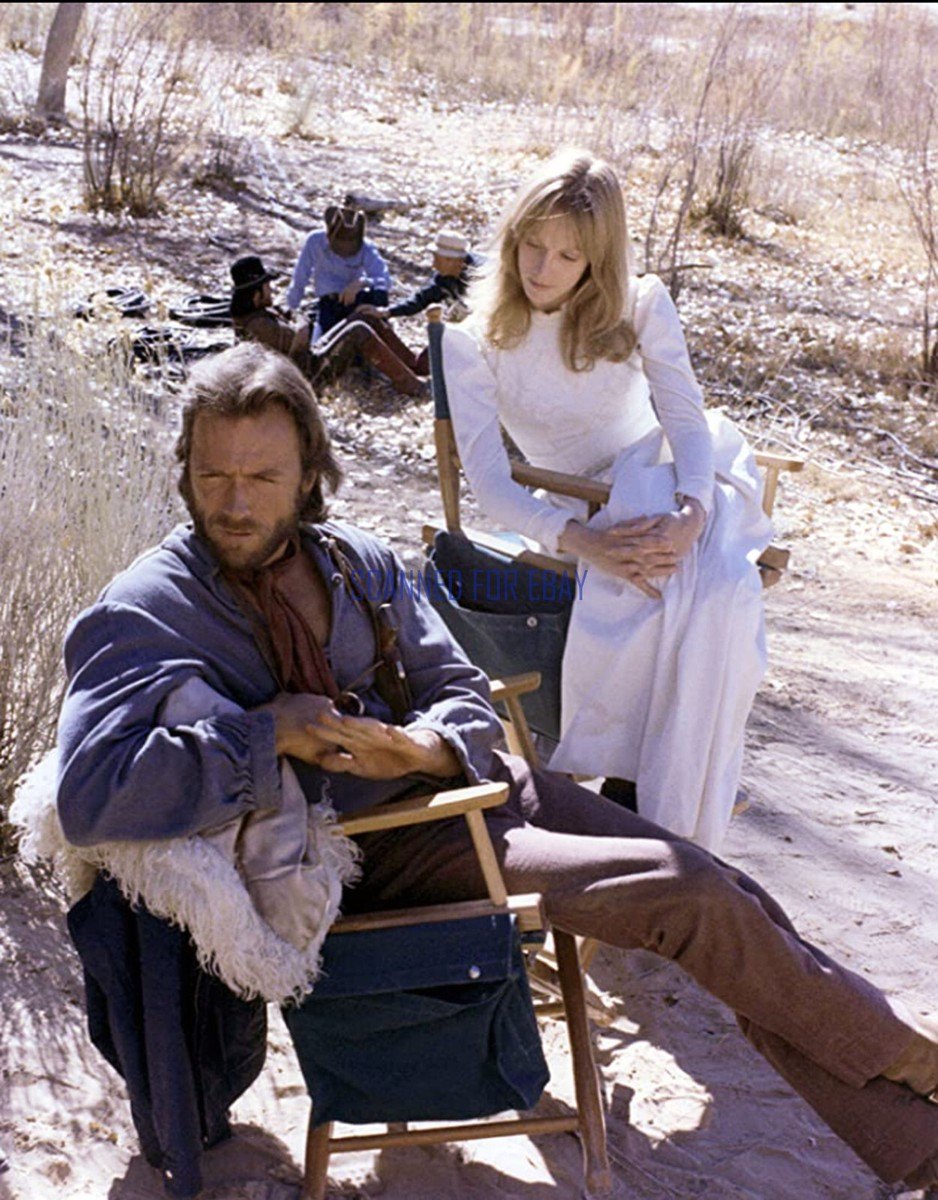
The film was shot across rugged locations in Northern California, Utah, and Arizona. Dust, autumn landscapes, changing weather, mountains, and wide-open frontier spaces give the movie a harsh, tangible quality.
The environment never feels like a simple backdrop.
It feels like another character.
The wide landscapes emphasize how small the characters are. The dusty roads make every journey seem exhausting. Rain and mud add physical discomfort to the story. And the vast spaces provide a powerful contrast with the intimate moments between the characters.
The sound design contributes to the same effect.
Thunderous rain, wagon wheels, gunshots, horses, and other raw environmental sounds create a sense of physical reality, while the musical score gives the story a larger, almost mythic quality.
Eastwood also avoids making the film relentlessly grim.
Dark violence is repeatedly interrupted by dry frontier humor and quieter moments of warmth. That balance allows the characters to breathe and prevents the story from becoming simply a succession of revenge scenes.
The Man Behind the Camera
The film’s production history makes its final result even more interesting.
The project was adapted from Forrest Carter’s novel The Rebel Outlaw: Josey Wales, also known as Gone to Texas. Philip Kaufman was initially involved as director and screenwriter, but creative disagreements during production led to Eastwood taking over directing duties.
That transition had a major impact on the film’s character.
Rather than presenting Wales only as a cynical political figure, Eastwood’s version emphasizes the emotional and almost classical dimensions of the story.
That approach would become an important part of Eastwood’s development as a filmmaker.
He was already an established screen presence, but The Outlaw Josey Wales demonstrated his ability to create a film in which the landscape, characters, silence, humor, and violence all contribute to a larger emotional idea.
The Final Encounter Is About More Than Revenge
Eventually, Wales comes face-to-face with Fletcher, the former commander who has been involved in the hunt for him.
At this point, the story could easily have delivered the expected Western ending: two men facing each other, guns drawn, one final showdown.
Instead, the movie chooses something more complicated.
Fletcher understands that Wales has created another life and chooses not to destroy it. Wales is allowed to disappear under a false identity, while the world is effectively told that Josey Wales is dead.
It is an ending built around recognition rather than revenge.
For much of the film, Wales has been defined by the violence of his past.
By the end, he is finally given the opportunity to stop being that man.
Why Josey Wales Still Matters
What makes The Outlaw Josey Wales memorable is not simply its gunfights or its iconic Western imagery.
It is the contradiction at its center.
Josey Wales is a man shaped by violence who ultimately discovers the value of peace.
He is a loner who finds companionship.
He is a grieving husband and father who discovers another form of family.
He is an outlaw who becomes a protector.
And he is a man obsessed with the past who eventually receives a chance to live in the future.
That combination helps explain why the film has remained an important part of Clint Eastwood’s Western legacy. The review by Mario de la Rubia places it alongside Pale Rider and Unforgiven as one of Eastwood’s significant achievements, emphasizing its ability to connect the traditions of classic Western cinema with the more complicated anti-hero stories of modern filmmaking.
More than four decades after its release, the film’s most powerful image may not be a gunfighter standing in the street.
It may be Josey Wales surrounded by people who were once strangers.
Because beneath all the dust, bullets, horses, and revenge, The Outlaw Josey Wales ultimately tells a surprisingly simple story:
Sometimes survival means more than staying alive. Sometimes it means finding something worth living for.