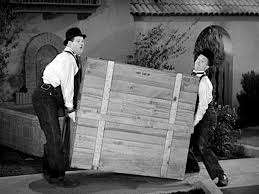
The Music Box, released in 1932, is one of the most famous and beloved comedy shorts starring Stan Laurel and Oliver Hardy. Known for their unforgettable chemistry, physical comedy, and perfectly timed misunderstandings, Laurel and Hardy turned an ordinary delivery job into an extraordinary battle against a seemingly impossible staircase. The film is a brilliant example of silent-era-inspired slapstick comedy combined with the personalities and dialogue that made the duo so popular during the early sound period.
The story begins with Stan Laurel and Oliver Hardy working as delivery men for a small company. Their assignment seems simple: deliver a large upright piano to a customer named Professor Theodore von Schwarzenhoffen. There is only one major problem. The customer’s house is located at the very top of a long, steep outdoor staircase. Instead of being a routine delivery, transporting the piano becomes a ridiculous adventure filled with accidents, arguments, misunderstandings, and physical obstacles.
The central joke of The Music Box is wonderfully simple. Stan and Ollie must move a heavy piano up an enormous staircase. What makes the situation so entertaining is that neither man seems capable of recognizing just how difficult the task will become. Their determination repeatedly gets them into trouble, while their attempts to solve each problem create even bigger problems.
At the beginning of the film, Laurel and Hardy approach their assignment with confidence. They load the piano onto a small delivery cart and prepare to transport it. When they discover the staircase, however, the challenge becomes immediately obvious. The stairs are long, steep, and narrow, making it extremely difficult to move such a large and heavy instrument.
Rather than giving up, the two men decide to carry on.
This determination is one of the most important elements of Laurel and Hardy’s comedy. They often find themselves in situations that could easily be avoided if they simply stopped and thought about what they were doing. Instead, they continue trying, even when every previous attempt has ended in disaster.
Stan Laurel’s character brings innocence and confusion to the situation. He often reacts to problems with a childlike attitude, while Oliver Hardy tries to appear confident and in control. Ollie’s frustration becomes increasingly obvious as Stan’s mistakes make the delivery more complicated. Their contrasting personalities create the foundation for many of the film’s funniest moments.
The piano itself becomes almost like a third character. It is enormous, awkward, and difficult to control. Every time Laurel and Hardy appear to have found a successful method for moving it, something goes wrong. The piano slips, falls, gets stuck, or threatens to send the two delivery men tumbling down the stairs.
One of the greatest strengths of The Music Box is its use of physical comedy. Instead of depending entirely on dialogue, the film communicates much of its humor through movement, facial expressions, timing, and carefully constructed situations. The staircase provides the perfect environment for this kind of comedy because every small mistake can turn into a spectacular disaster.
The physical effort involved in carrying the piano also creates a strong contrast between the two characters. Oliver Hardy constantly tries to maintain his dignity. He wants to behave like a professional delivery man, but the circumstances make that almost impossible. Stan, meanwhile, remains remarkably persistent and often seems surprised when his ideas cause trouble.
Their relationship is another major source of humor. Ollie frequently becomes angry with Stan, yet he continues working alongside him. Stan does not intentionally cause problems, but his innocent decisions often make everything worse. This familiar Laurel-and-Hardy dynamic allows the audience to understand the joke even before the disaster happens.
The staircase is especially important because it transforms a normal household task into an epic struggle. What should take only a few minutes becomes an exhausting journey. The repetition is deliberate. Each trip up the stairs seems to offer another opportunity for something to go wrong.
The film also demonstrates the importance of visual geography in classic slapstick. The staircase is not simply a background location. It determines how the characters move, where the piano can go, and how accidents unfold. The filmmakers use the physical space to create suspense and comedy at the same time.
As Laurel and Hardy continue their delivery, they encounter numerous obstacles. They struggle with the piano, deal with people around them, and repeatedly lose control of the situation. Their attempts at cooperation frequently turn into arguments. Yet despite their frustration, they keep moving forward.
This persistence gives the film its charm. Laurel and Hardy are not traditional heroes. They are ordinary working men who find themselves trapped in an absurd situation. Their failures are funny because they are recognizable. Almost everyone has experienced a simple task becoming unexpectedly complicated, although few people have experienced anything quite as disastrous as Laurel and Hardy’s piano delivery.
Another important feature of The Music Box is its use of escalation. The comedy does not simply repeat the same joke. Instead, each problem builds upon the previous one. A small difficulty becomes a larger accident, which creates an even bigger challenge. By the time the delivery is nearing completion, the audience has witnessed an entire chain of increasingly ridiculous events.
The film’s title is also perfectly appropriate. The music box—or more specifically, the piano—represents the entire mission. The instrument is supposed to bring music and enjoyment to its new owner, but transporting it produces almost nothing but chaos for Laurel and Hardy.
Despite the physical nature of the comedy, there is a warmth to the film. Stan and Ollie may argue constantly, but their partnership remains at the heart of the story. Their friendship and dependence on one another make the disasters enjoyable rather than cruel. The audience laughs at their misfortune while continuing to hope that they will eventually succeed.
The Music Box became one of Laurel and Hardy’s most celebrated short films and remains an important example of classic Hollywood slapstick. Its popularity is largely due to the simplicity of its premise and the extraordinary precision of its physical comedy. The staircase sequence has become one of the most recognizable images associated with Laurel and Hardy.
The film also demonstrates why the duo’s comedy has remained popular across generations. You do not need extensive knowledge of the period to understand the humor. The situation is immediately clear: two men have a piano, a staircase, and a job that must be completed. From that simple setup, the film creates a remarkable series of comic disasters.
More than ninety years after its release, The Music Box continues to show the timeless appeal of visual comedy. The expressions, gestures, falls, arguments, and perfectly timed accidents still communicate effectively to modern audiences. The humor does not depend on contemporary references or complicated storytelling. Instead, it relies on character, timing, and physical situations.
Ultimately, The Music Box is much more than a story about delivering a piano. It is a showcase for everything that made Laurel and Hardy such an iconic comedy team. Stan’s innocence, Ollie’s frustration, their endless determination, and the brilliantly constructed physical gags combine to create a short film that remains memorable decades after its original release.
The famous staircase turns an ordinary delivery into an unforgettable adventure. Every step becomes a new challenge, every solution creates another problem, and every failure strengthens the comedy. That simple idea, executed with exceptional timing and creativity, helped make The Music Box one of Laurel and Hardy’s enduring classics.
For anyone interested in classic comedy, The Music Box is an essential piece of film history. It captures Laurel and Hardy at their best: struggling against impossible circumstances, arguing over every little problem, and somehow turning complete disaster into unforgettable entertainment.