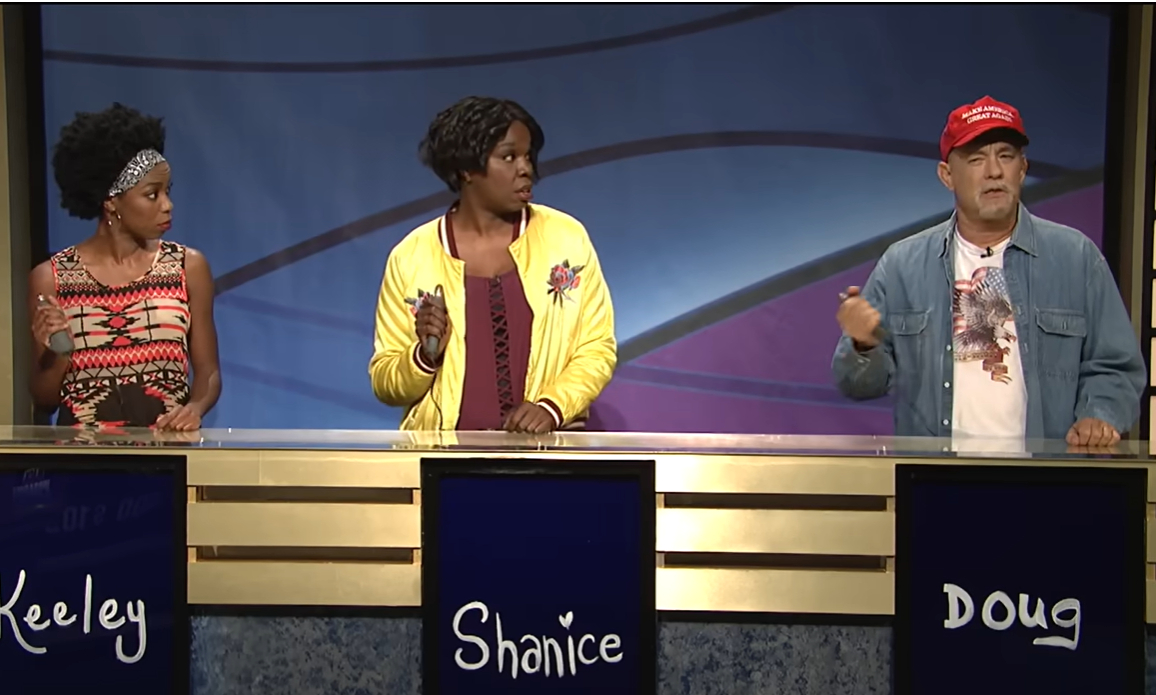
Tom Hanks walked onto Black Jeopardy wearing a denim shirt, an American-eagle T-shirt and a bright red “Make America Great Again” hat.
Kenan Thompson’s face immediately said what the audience was thinking:
This is going to be a disaster.
Then the questions started.
And something nobody expected happened.
The conservative white contestant named Doug began giving the same answers as the Black contestants beside him. They agreed about suspicious neighbors, unreliable repairmen, government programs, expensive technology—and even what kind of women they preferred.
For almost six minutes, SNL seemed to be proving that two groups portrayed as political opposites had far more in common than anyone wanted to admit.
Then the Final Jeopardy category appeared:
“Lives That Matter.”
And suddenly everybody stopped smiling.
THE SNL SKETCH THAT FOUND COMMON GROUND—THEN DESTROYED IT WITH FOUR WORDS
The timing could hardly have been more explosive.
It was October 22, 2016, less than three weeks before the U.S. presidential election.
Tom Hanks was hosting Saturday Night Live for the episode, with Lady Gaga appearing as musical guest. Peacock lists it as Season 42, Episode 4.
Politics was everywhere.
Donald Trump and Hillary Clinton dominated television.
SNL itself was producing headline-making election sketches almost every week.
So when Tom Hanks appeared wearing a MAGA hat, viewers could reasonably expect another straightforward political parody.
Instead, writers Michael Che and Bryan Tucker did something much more interesting. Contemporary coverage credits the pair with writing the sketch, which took the already established Black Jeopardy format and turned it into a conversation about race, class and cultural assumptions.
Kenan Thompson plays host Darnell Hayes.
Sasheer Zamata is Keeley.
Leslie Jones is Shanice.
Then Darnell introduces Doug.
Tom Hanks.
Red hat.
Goatee.
Bald-eagle shirt.
The room instantly changes.
Darnell cautiously asks whether Doug really thinks he is prepared for Black Jeopardy.
Doug doesn’t appear worried.
He has heard there is prize money.
He wants to win it.
Simple enough.
The game begins.
And almost immediately, SNL starts setting a trap for the audience.
The first contestants answer questions based on familiar cultural experiences.
A kitchen drawer full of takeout sauce packets and random items.
Distrust of retirement plans taking money from a paycheck.
Suspicion toward strangers.
The belief that some supposedly helpful new technology probably isn’t worth the trouble.
Doug begins buzzing in.
And he keeps getting the questions right.
Darnell looks stunned.
Keeley and Shanice look stunned.
The audience is delighted.
The full transcript confirms how carefully the game builds this surprise: Doug repeatedly recognizes the same everyday frustrations as the other contestants, forcing Darnell to reconsider his initial assumptions about him.
That is where the sketch becomes much smarter than the costume suggests.
Doug is visually designed to make the audience categorize him instantly.
The MAGA hat does most of the work.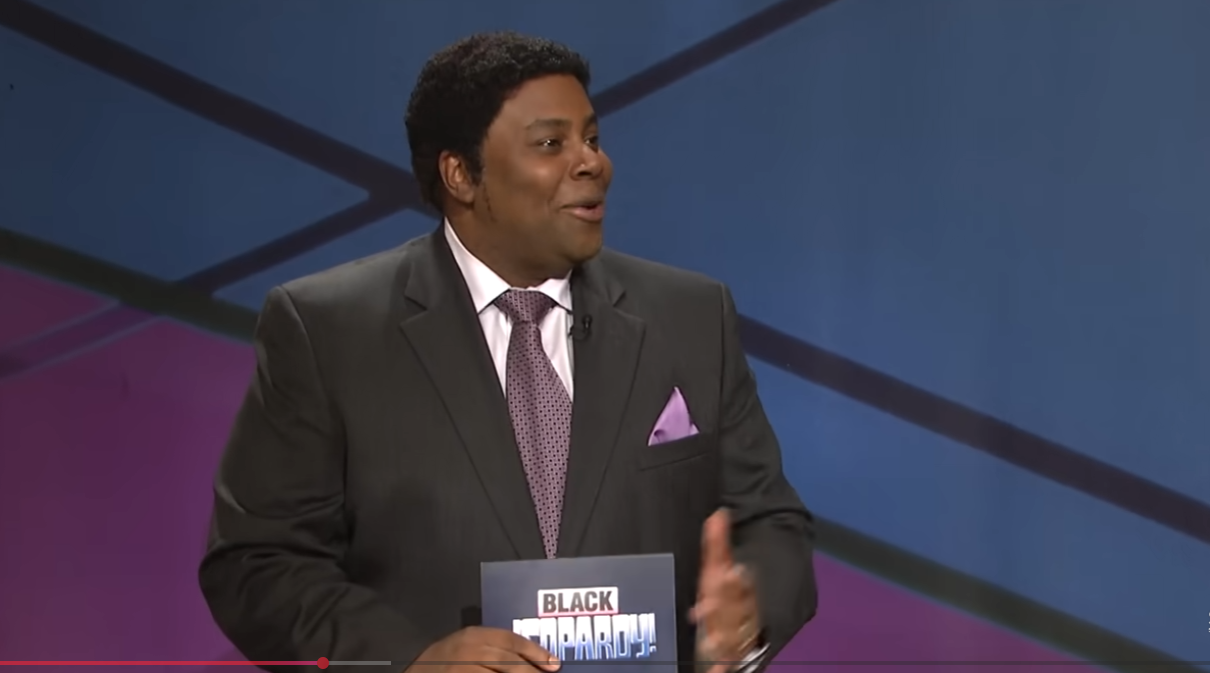
In October 2016, viewers knew exactly what political identity the prop was supposed to signal.
Then the writers spend almost the entire sketch undermining the assumption that political identity explains everything about him.
Take the question about retirement savings.
Doug distrusts money being automatically taken from his paycheck.
The others understand.
Then comes a question involving a neighborhood repairman.
Doug explains that he has his own version of the same guy—the man who somehow fixes appliances, air conditioners and practically anything else.
Darnell laughs.
Everybody has a guy.
The distance between them keeps shrinking.
Then Doug selects the category about larger women.
His answer fits perfectly.
Suddenly Leslie Jones’ Shanice is cheering him on.
Doug has gone from the suspicious outsider to someone the entire set seems to like.
At one point, even he realizes how strange the transformation is.
He cautiously remarks that the people around him are fun—and then hesitates, wondering whether he is even allowed to phrase it that way.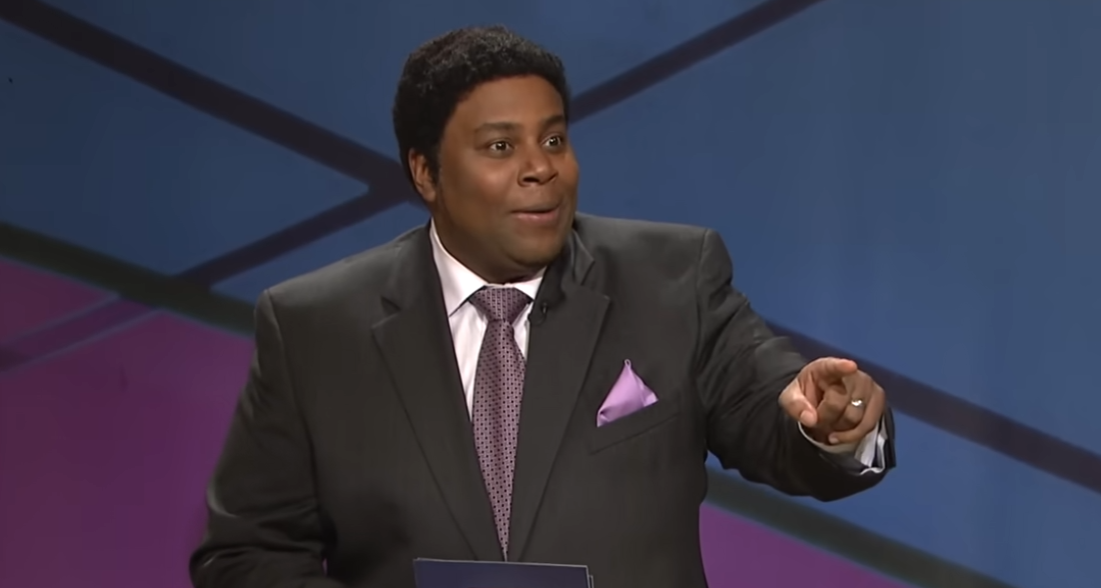
Darnell lets it slide.
Another wall falls.
The joke works because Kenan Thompson never makes Darnell cruel.
He begins skeptical, but he is genuinely delighted every time Doug gets another answer right.
That warmth was one of the reasons the sketch could handle potentially explosive material without turning into six minutes of people simply yelling at one another.
Years later, writer Bryan Tucker said Thompson’s naturally genial performance style helped make race-based sketches like Black Jeopardy work without becoming purely caustic.
And Tom Hanks plays Doug with equal restraint.
He could have turned the character into a cartoon.
He doesn’t.
Doug is funny.
He is awkward.
Some of his beliefs are clearly being satirized.
But Hanks never seems to be asking the audience simply to despise him.
That matters because the whole point of the sketch depends on the contestants discovering connections they did not expect.
The Washington Post described the episode’s central idea as finding shared experiences between Black Americans and rural white conservatives—particularly feelings of economic insecurity, distrust of institutions and a sense that powerful people make decisions without them.
That is most obvious when the game turns political.
Darnell presents a statement about every vote supposedly counting.
Doug responds with deep skepticism about whether ordinary voters really control the outcome.
Instead of arguing with him, the other contestants basically say:
We understand that feeling.
It is a remarkably unusual piece of political comedy because the punchline isn’t simply, “Look how stupid the other side is.”
The punchline becomes:
Wait… why are these people agreeing?
Even the prizes fit the same world.
One is a special chair reserved for Grandpa.
Another is essentially heavy-duty tape for repairing your car.
The entire fictional game show is built around ordinary people improvising solutions because professional help can be too expensive, inconvenient or untrustworthy.
The sketch keeps saying the same thing from different angles:
Maybe race and politics separate these characters.
But class, family habits and daily frustrations keep pushing them back together.
By the middle of the game, the mood has completely transformed.
Doug is smiling.
The contestants are cheering.
Darnell is practically rooting for him.
For one absurd moment, the MAGA-hat contestant appears to have found his new social circle.
And then SNL places four words on the screen.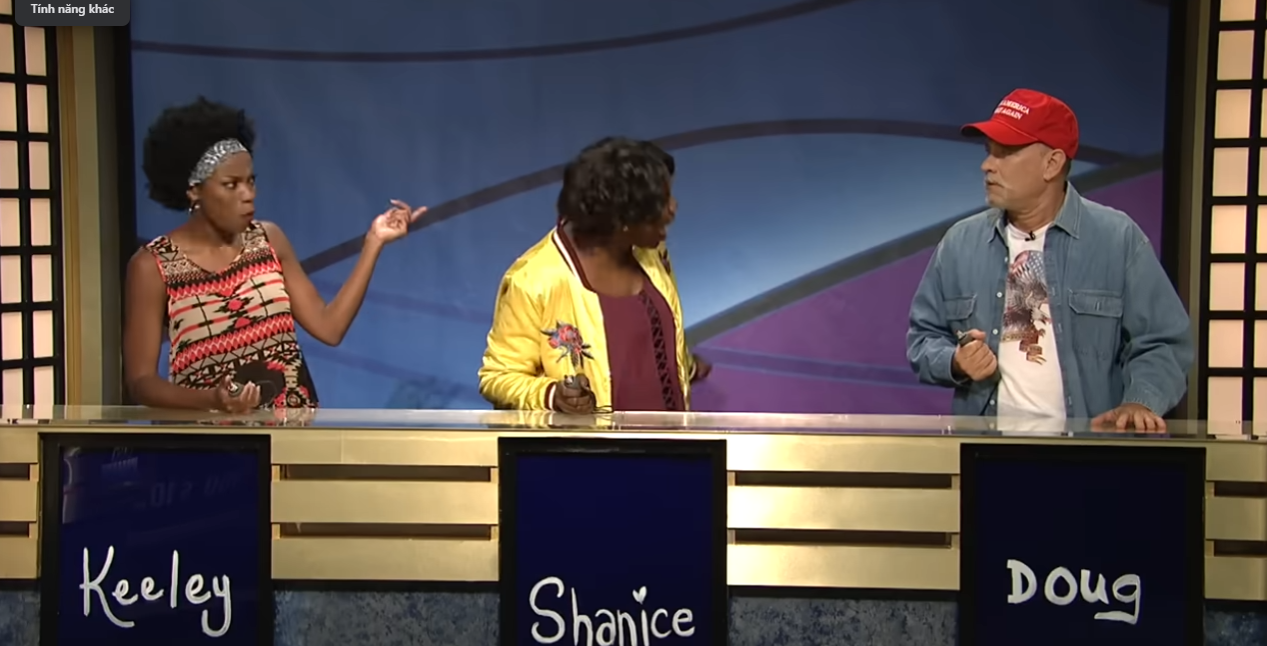
LIVES THAT MATTER
Silence.
Doug’s smile changes.
Keeley and Shanice turn toward him.
Darnell immediately understands exactly what is about to happen.
The entire sketch has spent minutes building a bridge.
The final category reveals the fault line underneath it.
Doug says he has plenty to say.
Darnell essentially decides they should stop before anyone finds out what happens next.
The transcript ends with Darnell joking that when they return, they can play the national anthem and see how badly things deteriorate.
It is an exceptionally sharp ending because the writers refuse to solve the problem.
They don’t suddenly make Doug abandon his politics.
They don’t make the other contestants forget their experiences.
They don’t pretend shared economic frustrations erase every disagreement about race.
But they also don’t erase the previous five minutes.
All that unexpected common ground was real within the sketch too.
That tension is why critics immediately noticed the segment.
The Guardian later named it among SNL’s best sketches of 2016, praising the way it acknowledged similarities between a white working-class conservative and Black Americans while still refusing to ignore the profound differences between them.
The Washington Post similarly argued that the sketch worked because it explored both racial and class divisions instead of treating American politics as a simple two-team argument.
And the idea proved durable.
Black Jeopardy was already a recurring format before Tom Hanks appeared. Earlier versions had featured other outsiders struggling with the show’s cultural logic. But the Hanks version became unusually prominent. The Washington Post later noted that Black Jeopardy had been created by Che and Tucker and that the Hanks installment became one of the best-known examples of SNL using racial stereotypes to overturn audience expectations rather than simply repeat them.
Even the writers apparently realized they had created something difficult to follow.
Years later, Tucker recalled that after the Tom Hanks sketch received such a huge response in the middle of the 2016 election, they considered it a possible grand finale for Black Jeopardy. They eventually revived the format when Chadwick Boseman hosted in 2018 as T’Challa from Black Panther.
Nearly a decade later, the Hanks sketch remains interesting because it refuses to give the audience the easiest joke.
Look at Doug at the beginning.
You think you know him.
Darnell thinks he knows him.
The contestants think they know him.
Then question after question complicates the picture.
By the end, they haven’t become politically identical.
They haven’t solved racism.
They haven’t solved class conflict.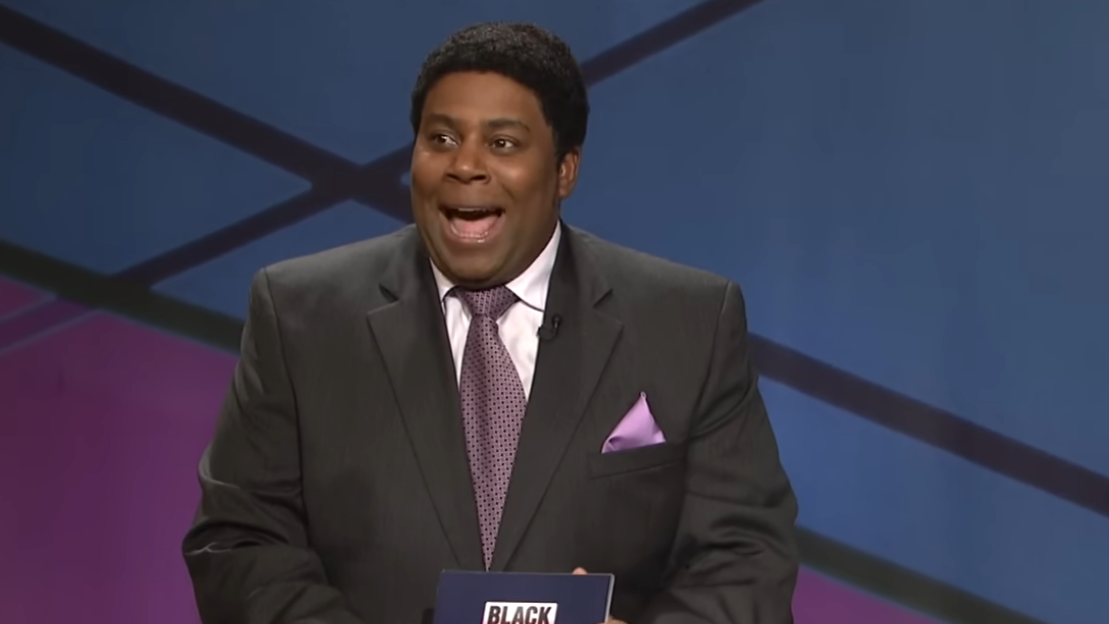
But they have discovered something that almost nobody expected when the red hat first appeared:
they can understand each other.
At least until Final Jeopardy.
And maybe that is why one little game-show parody became one of SNL’s most discussed sketches of the 2016 election season.
It didn’t pretend America had no divisions.
It did something funnier—and more uncomfortable.
It showed how much people who distrust one another can sometimes have in common…
right before revealing the one subject capable of blowing the whole thing apart.