The Good, the Bad and the Ugly is often remembered for its spectacular gunfights, unforgettable music, sweeping desert landscapes, and the legendary rivalry between Blondie, Angel Eyes, and Tuco. But beneath the action and dark humor is a more personal story that gives Tuco greater emotional depth: his complicated relationship with his brother.

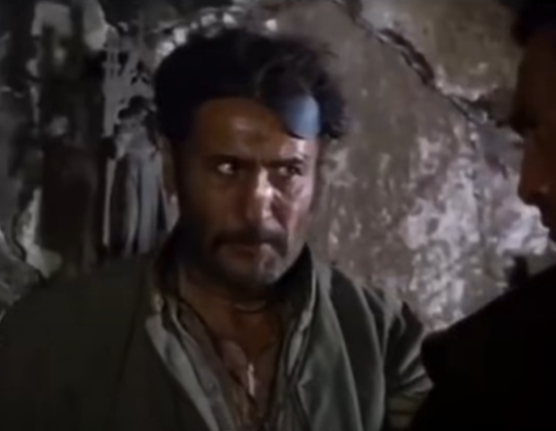
Tuco Ramírez, played brilliantly by Eli Wallach, is introduced as a loud, unpredictable, selfish, and often hilarious outlaw. He is a survivor who seems willing to do almost anything for money. He lies, cheats, escapes danger, and constantly searches for the next opportunity.
Yet there is another side to Tuco.
His meeting with his brother reveals that the outrageous outlaw is also a deeply wounded human being.
This moment is important because it gives the audience a glimpse of the man behind Tuco’s wild personality. Until then, Tuco can easily appear to be nothing more than a comic criminal. He is constantly shouting, complaining, arguing with Blondie, and finding himself in dangerous situations. His behavior often makes him one of the funniest characters in the film.
But when Tuco comes face to face with his brother, the comedy becomes something more serious.
The contrast is striking.
Tuco has chosen a life of crime and survival. His brother has chosen a completely different path. Their lives have separated them, not simply geographically but emotionally. They represent two possible directions for the same man: one built around faith, discipline, and sacrifice, and the other shaped by poverty, violence, greed, and survival.
This makes their encounter one of the most revealing scenes in the movie.
Tuco is not simply angry at his brother.
He is hurt.
His anger comes from years of disappointment, rejection, and the feeling that the people who should have protected him instead abandoned him. The scene suggests that Tuco’s personality was not created in a vacuum. His bitterness has roots.
That is what makes Eli Wallach’s performance so powerful.
Wallach never allows Tuco to become a simple villain. Even when Tuco behaves badly, the audience can sense that there is pain underneath his behavior. His humor becomes a defense mechanism. His anger hides insecurity. His constant pursuit of money reflects a man who understands what it means to have nothing.
When Tuco meets his brother, those layers become visible.
For a brief moment, the outrageous outlaw is forced to confront his past.
His brother represents everything Tuco could have been.
He represents a different kind of life, one based on faith and responsibility rather than violence. Tuco’s reaction makes it clear that this difference hurts him deeply.
The scene therefore becomes more than a family reunion.
It becomes a confrontation between two worlds.
Tuco’s brother has found meaning through religion and service. Tuco has found survival through crime. One has learned to accept sacrifice. The other has learned to fight for himself.
Neither man fully understands the other.
That misunderstanding is central to their relationship.
Tuco feels that his brother has forgotten what life was like for him. His brother seems to see Tuco as someone who made the wrong choices. But the audience is encouraged to see the situation from Tuco’s perspective.
Tuco may be a criminal, but he did not begin life as a criminal.
The hardships of his past helped shape him.
That does not excuse his actions, but it helps explain them.
This is one of the reasons The Good, the Bad and the Ugly remains more complex than a simple Western adventure. Sergio Leone’s film is filled with characters who are morally complicated. Blondie is not a traditional hero. Angel Eyes is ruthless and calculating. Tuco is selfish, violent, funny, frightened, loyal, and vulnerable all at once.
Tuco is perhaps the most human of the three.
He is constantly trying to survive.
He wants money because money means freedom.
He wants revenge because revenge gives him a sense of power.
He wants Blondie because their partnership is useful.
But beneath all of that is a man who still carries the wounds of his childhood.
His relationship with his brother exposes those wounds.
The scene also changes the way audiences understand Tuco’s relationship with Blondie. Throughout much of the film, their partnership appears almost entirely transactional. Blondie captures Tuco and turns him in for bounty money. Tuco survives the hanging, returns to Blondie, and eventually becomes involved in the search for the Confederate gold.
They constantly betray each other.
They threaten each other.
They argue.
They even try to kill one another.
Yet they repeatedly come back together.
Why?
Because both men understand survival.
Tuco may be chaotic, but Blondie understands the world that created him. Their relationship is built on distrust, but also on a strange form of loyalty.
The meeting with Tuco’s brother gives that relationship even more meaning.
Tuco’s brother sees only the outlaw.
Blondie sees the survivor.
The audience sees both.
That is the genius of the character.
Eli Wallach gives Tuco an extraordinary range. He can make audiences laugh one minute and feel sympathy for him the next. His facial expressions, voice, physical comedy, and emotional reactions create a character who feels completely alive.
Even in a film dominated by Clint Eastwood and Lee Van Cleef, Wallach manages to make Tuco impossible to ignore.
That is not easy.
Clint Eastwood’s Blondie is the picture of cool confidence. He speaks little and rarely shows emotion. Lee Van Cleef’s Angel Eyes is cold, controlled, and terrifying. Against these two characters, Tuco is loud, emotional, and unpredictable.
But that contrast is exactly why he works.
Tuco brings humanity to the film.
He makes mistakes.
He gets scared.
He becomes angry.
He becomes jealous.
He wants money.
He wants respect.
He wants to survive.
And when he meets his brother, he is forced to confront the possibility that the world may see him as nothing more than a failure.
That realization is painful.
The scene gives Tuco something the other major characters rarely receive: a direct connection to family.
Blondie has almost no visible family story.
Angel Eyes is defined primarily by his ambition and cruelty.
Tuco, however, has a brother who remembers the person he once was.
This makes Tuco’s past feel real.
It also explains why his anger can become so intense.
He is not simply angry at his brother for rejecting him.
He is angry because part of him still wants his brother’s approval.
That is an uncomfortable truth.
Tuco has built an identity around being tough. He survives through violence and deception. He constantly tries to prove that nobody can control him.
But in front of his brother, the mask becomes weaker.
For a moment, he is not the famous outlaw.
He is simply Tuco.
A man who remembers being a child.
A man who remembers hardship.
A man who remembers what it felt like to need someone.
That emotional complexity is what makes the scene so memorable.
It also fits perfectly with Sergio Leone’s approach to the Western genre. Leone was not interested in creating simple heroes and villains. His characters are often driven by greed, revenge, fear, and survival.
Even the title The Good, the Bad and the Ugly suggests that morality is not always straightforward.
Tuco belongs in the “ugly” category, but the word does not mean that he is completely evil.
He is flawed.
He is selfish.
He is violent.
But he is also capable of love, loyalty, and pain.
His relationship with his brother proves that.
The family storyline also adds emotional weight to the larger treasure hunt. The Confederate gold becomes a symbol of everything the characters want. For Blondie, it is money. For Angel Eyes, it is power and opportunity. For Tuco, however, money represents security.
He has spent his life without stability.
Gold could change that.
It could give him freedom.
It could give him control.
It could allow him to escape the world that created him.
But even with the gold waiting somewhere in the desert, Tuco cannot escape his past.
His brother reminds him of the life he left behind.
That is why the encounter matters so much.
It is not simply a scene inserted between gunfights.
It is a window into Tuco’s soul.
The audience suddenly understands that the man who jokes about death is also afraid of being forgotten.
The man who constantly demands money is also searching for dignity.
The man who appears selfish may still desperately want to be loved.
And the man who has spent years surviving alone still carries the memory of his family.
This makes Tuco one of the most memorable characters in Western cinema.
His story demonstrates that even the most unpredictable outlaw can have a complicated heart.
The Good, the Bad and the Ugly may be famous for its massive desert landscapes and legendary three-way showdown, but moments like Tuco’s meeting with his brother give the film emotional depth.
They remind us that beneath the guns, gold, and violence are people shaped by their past.
Tuco is not simply a comic relief character.
He is a survivor.
He is a product of hardship.
He is a man carrying old wounds while trying to survive a brutal world.
And Eli Wallach makes every part of that contradiction believable.
That is why audiences still remember Tuco decades after the film’s release.
He can make you laugh.
He can make you angry.
He can make you uncomfortable.
And, unexpectedly, he can make you feel sympathy for a man who has spent most of his life pretending that he needs nobody.
His brother sees the man Tuco used to be.
The audience sees the man Tuco became.
And somewhere between those two versions is the real character.
That is what makes their encounter so powerful.
In a film filled with legendary gunfighters, enormous stakes, and unforgettable action, Tuco’s family story offers something quieter but equally important.
It reminds us that every outlaw has a past.
Every survivor carries scars.
And sometimes the most dangerous man in the West is also the one still searching for forgiveness.
Tuco may chase gold across the desert, but his meeting with his brother reveals that the most valuable thing he has lost is not money.
It is the feeling of belonging.
And that makes Tuco’s story one of the most human parts of The Good, the Bad and the Ugly.