Few comedy teams in film history understood physical comedy as brilliantly as Stan Laurel and Oliver Hardy. Their unique combination of personalities—Stan’s innocent confusion and Ollie’s frustrated dignity—created countless unforgettable moments during Hollywood’s golden age of comedy. Among their most imaginative short films is Brats, released in 1930, a hilarious showcase of their ability to transform an ordinary family situation into complete chaos.
What makes Brats particularly memorable is its unusual concept. Instead of simply playing themselves as adults, Laurel and Hardy also portray the mischievous children of their characters. The result is a wonderfully surreal comedy in which Stan and Ollie must deal with miniature versions of themselves. Through clever camera work, physical gags, expressive performances, and escalating frustration, Brats turns a simple family setting into a playground for classic slapstick.
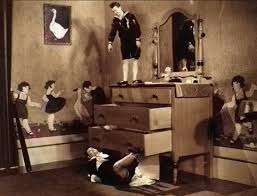
The short begins with Laurel and Hardy in a domestic environment, where their peaceful surroundings are quickly disrupted by their troublesome children. The youngsters are played by Laurel and Hardy themselves, creating the visual joke that immediately makes the film stand out. Seeing the familiar duo dressed and behaving like children is funny enough, but the real comedy comes from watching their personalities remain recognizable even in their younger versions.
Stan’s child character carries the same innocent, confused personality that audiences know from his adult performances. He can turn a simple activity into an unexpected disaster without ever seeming to understand what he has done wrong. Hardy’s child character, meanwhile, already displays hints of the confident and sometimes bossy personality associated with his adult character. Their interaction creates a miniature version of the classic Laurel and Hardy relationship.
One of the most fascinating elements of Brats is the way the film plays with perspective. Through carefully constructed sets and visual effects, the filmmakers create the illusion that the adult characters and their child counterparts occupy the same world. For audiences in 1930, this type of visual trickery added an extra layer of excitement to the comedy.
The technique is not used merely as a technical demonstration. Instead, it becomes part of the joke. Laurel and Hardy use the unusual setup to create situations that would be difficult to achieve in a conventional comedy. Their child characters can interact with their adult counterparts, creating a strange but hilarious family dynamic.
The comedy is driven primarily by physical action. Brats does not depend on complicated dialogue or elaborate storytelling. Instead, it builds humor through movement, reactions, timing, misunderstandings, and carefully constructed gags. This was one of Laurel and Hardy’s greatest strengths. They could make an audience laugh simply by walking across a room, looking at each other, or reacting to an unexpected accident.
Stan Laurel’s performance is especially effective because of his remarkable ability to appear completely innocent while causing trouble. His facial expressions often communicate more than words could. When something goes wrong, Stan’s confused reaction makes the situation even funnier. He rarely seems intentionally destructive. Instead, disaster simply appears to follow him wherever he goes.
Oliver Hardy provides the perfect contrast. Hardy’s character is usually concerned with maintaining order, dignity, and control. Unfortunately, being around Stan makes all three nearly impossible. His increasingly frustrated reactions create a rhythm that became one of the defining characteristics of the duo’s comedy.
In Brats, this familiar relationship becomes even more entertaining because the audience sees it repeated through the child characters. The little versions of Stan and Ollie behave like exaggerated reflections of the adults. It is almost as though Laurel and Hardy are being forced to confront their own personalities.
The film also demonstrates how important timing was to silent and early sound-era comedy. A successful slapstick gag requires precise movement. A character must enter at exactly the right moment, an object must fall at the correct time, and a reaction must occur immediately after the joke. Laurel and Hardy were masters of this rhythm.
Their comedy often follows a simple pattern: something appears harmless, one character makes a small mistake, the other reacts, and the situation gradually becomes more complicated. By the time the characters realize how much trouble they are in, the audience has already been taken through a series of escalating jokes.
This gradual escalation is a major part of the appeal of Brats. The comedy does not need an enormous plot. Instead, the film takes an everyday domestic situation and keeps adding complications until the characters are overwhelmed by their own actions.
Another reason the short remains fascinating is its visual creativity. Laurel and Hardy understood that comedy could be created not only through performance but also through filmmaking itself. The unusual visual effects allow the audience to see the duo in a completely different way. Their familiar faces and personalities become part of a playful fantasy.
The child costumes and performances also provide plenty of visual humor. Watching two grown men behave like mischievous children creates an immediate comic contrast. Their movements, expressions, and interactions exaggerate the difference between appearance and behavior.
At the heart of Brats, however, is the timeless chemistry between Stan Laurel and Oliver Hardy. Their comedy worked because they were fundamentally different characters who somehow made each other funnier. Stan’s innocence made Hardy’s frustration more amusing, while Hardy’s attempts to maintain authority gave Stan more opportunities to create chaos.
This formula would become one of the most recognizable partnerships in comedy. Whether they were working together, arguing, repairing something, traveling somewhere, or simply trying to complete an ordinary task, Laurel and Hardy could turn almost any situation into comedy.
Brats is therefore more than just another short from the early years of their career. It is an example of how creative the duo could be when given an unusual premise. By playing both adults and children, Laurel and Hardy create a playful world where their comic personalities are multiplied.
For modern audiences, the film is also a reminder of how much can be achieved with performance, timing, imagination, and simple visual storytelling. Long before modern digital effects, filmmakers could create convincing comic illusions through practical techniques, careful staging, and clever editing.
Most importantly, Brats remains entertaining because the humor is easy to understand. You do not need extensive knowledge of 1930s Hollywood to appreciate the sight of Stan getting into trouble or Ollie desperately trying to restore order. The physical comedy crosses generations because the basic emotions are universal: frustration, embarrassment, confusion, mischief, and the desire to keep things under control.
Nearly a century after its release, Brats still offers viewers a chance to experience the special magic of Laurel and Hardy. Their performances remind us that great comedy does not always require complicated stories or sophisticated technology. Sometimes, all it takes is two perfectly matched performers, a clever idea, excellent timing, and a situation that gets increasingly out of control.
For fans of classic Hollywood, silent comedy, and vintage slapstick, Brats is an especially enjoyable example of Laurel and Hardy’s creativity. The unusual premise gives the legendary duo a chance to play with their own identities while delivering the physical humor that made them famous.
Whether you are discovering Laurel and Hardy for the first time or returning to one of their classic shorts, Brats is the kind of comedy that invites you to simply sit back and enjoy the chaos. Stan and Ollie may think they are in charge—but when their miniature counterparts enter the picture, everything changes.
And that is exactly where the fun begins. 😂